
A puppy’s size changes more than the amount of space they take up on the couch. It can affect daily exercise, travel plans, grooming appointments, how children interact with the dog, and the rhythm of family life. When families ask me about a toy goldendoodle vs standard, I encourage them to look beyond what is cutest in a photo and think about the life they want to share with their new companion.
Both sizes can be affectionate, bright, people-loving dogs. Both need training, grooming, attention, and a real place in the family. The best choice is not about which size is better. It is about which puppy fits your household, your routines, and your heart.
Toy Goldendoodle vs Standard Goldendoodle: The Main Difference
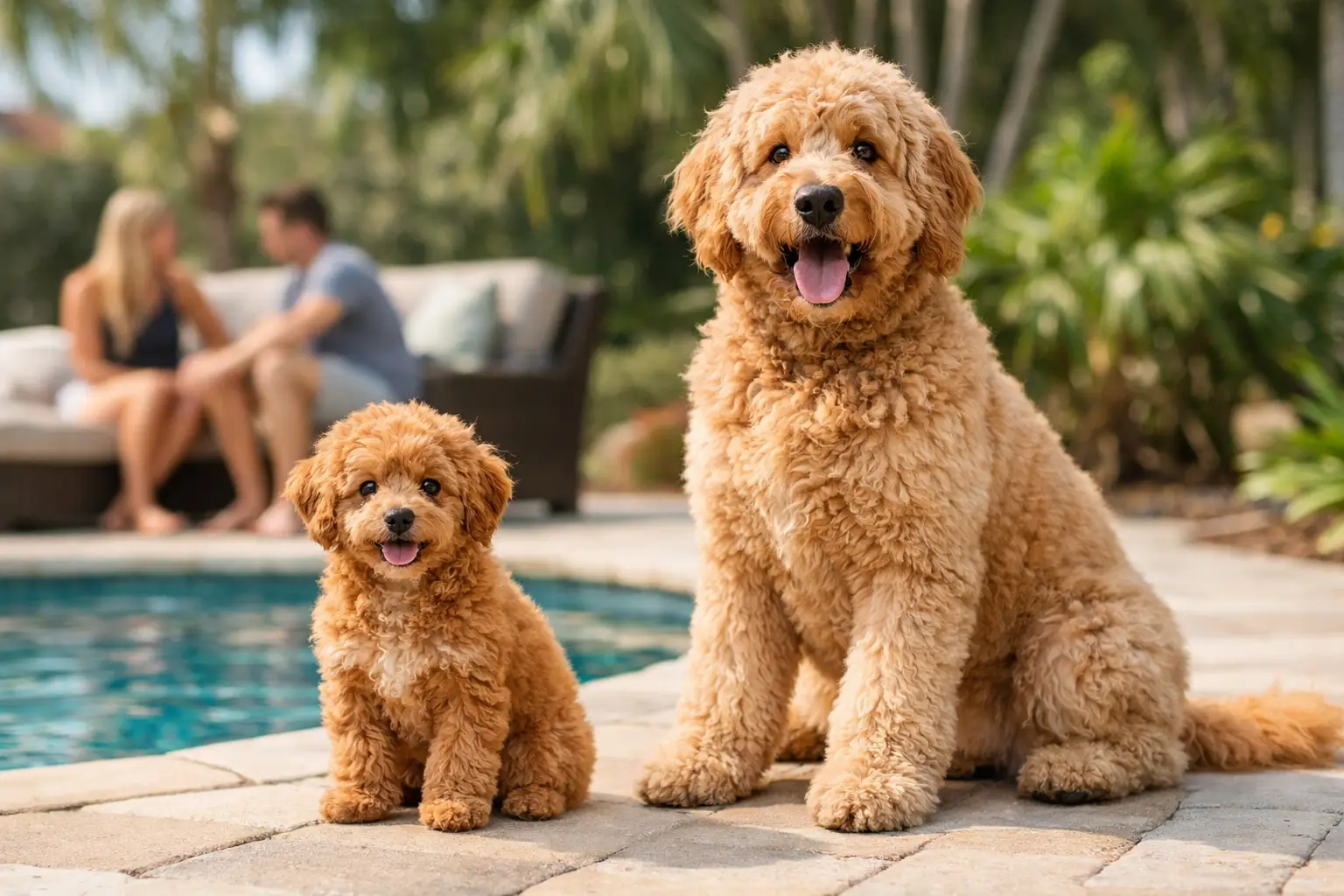
The most noticeable difference is, of course, adult size. A toy Goldendoodle is bred to be a smaller companion, while a standard Goldendoodle is a much larger dog with a bigger physical presence and often a more active stride. At Shalom Goldendoodles by Mary, my F1B Standard Goldendoodles typically grow to about 50 to 70 pounds. Toy Goldendoodles are considerably more compact, though each puppy’s expected adult size can vary based on the parents and genetics.
That difference matters in everyday ways. A toy Goldendoodle may be easier to lift into the car, bring along on a trip, or settle into a smaller home. A standard Goldendoodle may be a wonderful match for a family that enjoys a bigger dog beside them on walks, in the yard, and at the end of a busy day.
Size should never be the only factor. A small dog still needs a committed family, and a large dog is not automatically too much for a home with children. What matters most is whether a family is ready to meet that particular puppy’s needs consistently and lovingly.
Living Space and Daily Life
Toy Goldendoodles are often appealing to couples, retirees, apartment dwellers, and families who want the Goldendoodle personality in a smaller package. They generally take up less room in a crate, car, bed, and favorite spot beside you. For households with limited indoor space, that can make daily life feel more manageable.
Still, smaller does not mean inactive. Toy Goldendoodles are intelligent, playful companions that need daily walks, gentle play, training, and interaction with their people. A toy Goldendoodle can do very well in an apartment when their family gives them purposeful exercise and does not expect them to entertain themselves all day.
Standard Goldendoodles often fit beautifully into homes with a fenced yard, active children, or adults who enjoy a regular walking routine. Their larger size can make a game of fetch or a family outing especially fun, but they also need help learning how to be calm indoors. A well-raised standard should not feel like a whirlwind in the house. Early routines, kind boundaries, and consistent training make a big difference.
For Florida families, it is also wise to consider the heat. Both toy and standard Goldendoodles need exercise, but summer walks are usually safest in cooler morning or evening hours. A larger dog may tire more quickly in high heat, while a smaller dog can be more vulnerable to hot pavement. No matter the size, fresh water, shade, and sensible timing are part of responsible care.
Temperament: Expect Similar Roots, Not Identical Puppies
Families sometimes assume toy Goldendoodles are automatically calmer or that standard Goldendoodles are automatically more energetic. In truth, size alone does not determine personality. Goldendoodles are individuals. Their temperament is shaped by genetics, early experiences, socialization, training, and the loving guidance they receive after going home.
Both toy and standard Goldendoodles are often known for being affectionate, eager to please, and highly connected to their people. They can make lovely family companions and emotional support companions because they tend to enjoy being included in everyday life. Many are quick learners, especially when training is positive and consistent.
A standard Goldendoodle may feel more physically enthusiastic simply because a 60-pound dog greeting you with a wagging tail has more momentum than a smaller one. Young children need to be taught not to climb on, pull at, or tease any puppy, regardless of size. Likewise, puppies need to learn gentle manners around children from the beginning.
I always encourage families to choose based on the individual puppy’s personality as well as expected size. One puppy may be the quiet observer, another may be the playful leader, and another may be happiest curled up near your feet. The goal is a good match, not a label.
Exercise and Training Needs
A standard Goldendoodle often has longer legs, more strength, and the ability to join a family on longer walks or outdoor adventures as an adult. That can be a joy for active households. It also means training matters from puppyhood. Loose-leash walking, coming when called, polite greetings, and settling down are much easier to build before a puppy grows into a big dog.
Toy Goldendoodles need training just as much. Because they are easy to pick up, families can sometimes accidentally excuse behaviors they would correct in a larger dog, such as jumping, barking for attention, or guarding a lap. Small dogs deserve the confidence that comes from clear, gentle expectations. Teaching good habits early helps them grow into relaxed, pleasant companions.
For either size, I recommend short training sessions throughout the day rather than one long lesson. Practice their name, simple cues, crate comfort, potty routines, and calm greetings. A puppy’s brain can get tired quickly, so keep it cheerful. Praise, patience, and repetition go much further than harsh corrections.
Grooming and Coat Care
Toy and standard Goldendoodles can both have low-shedding coats, particularly in F1B generations, but no dog is completely non-shedding or guaranteed allergy-safe. Families with allergies should spend time around dogs when possible and speak honestly with their doctor or allergist before bringing home a puppy.
Coat texture can range from wavy to curlier, and it is not determined only by size. The curlier and denser the coat, the more regularly it will need brushing. Mats can form close to the skin, especially behind the ears, under the collar, around the legs, and in areas where harnesses rub.
The practical difference is the amount of dog to groom. A standard Goldendoodle has more body, more coat, and more surface area, so bathing, brushing, and professional grooming can take more time and may cost more. A toy Goldendoodle is not maintenance-free, but the physical task is usually easier for many families to manage at home.
Plan on regular brushing, routine professional grooming, nail care, dental care, and ear checks for either size. These simple habits are part of keeping a puppy comfortable and healthy, not just keeping them fluffy.
Travel, Costs, and Practical Planning
A toy Goldendoodle is usually easier to carry, fit into a smaller vehicle, and arrange care for when your family travels. Their food portions, crates, beds, and some medications may also cost less over time. Those savings can be helpful, but they should not be the main reason to choose a smaller dog.
A standard Goldendoodle may require a larger crate, more substantial supplies, more food, and a grooming budget that reflects their size and coat. They also need room to stretch out in the car and at home. In return, many families love the comforting presence of a bigger companion who can keep up with an active household.
Before deciding, picture a normal Tuesday rather than just puppy pickup day. Who will handle the morning potty break? Where will the crate go? Can everyone commit to brushing and training? What will exercise look like during a rainy week? The right choice is usually the one that fits your ordinary life well.
Which Goldendoodle Is Best for Your Family?
A toy Goldendoodle may be a lovely fit if you want a smaller companion, have limited space, travel often, or simply prefer a dog that is easier to manage physically. A standard Goldendoodle may be the better match if your family wants a larger dog, enjoys an active routine, and is prepared for the space, training, and grooming that come with a bigger companion.
Neither choice should be rushed. I raise my puppies inside my home with daily care and early socialization because I want them to begin life feeling secure, loved, and ready to become part of a family. My hope is always to help each family look honestly at their needs so their puppy has a forever home where they can truly thrive.
The puppy who fits your life may be tiny enough to ride comfortably in your lap or big enough to lean against your leg with their whole heart. What matters is that you are ready to give that puppy time, guidance, patience, and a lifetime of belonging.



[…] toys made for puppies, not powerful adult chewers, and select the correct size for your dog. An F1B Toy Goldendoodle may need a smaller, lighter option than a Standard Goldendoodle puppy. Still, a toy should always […]