

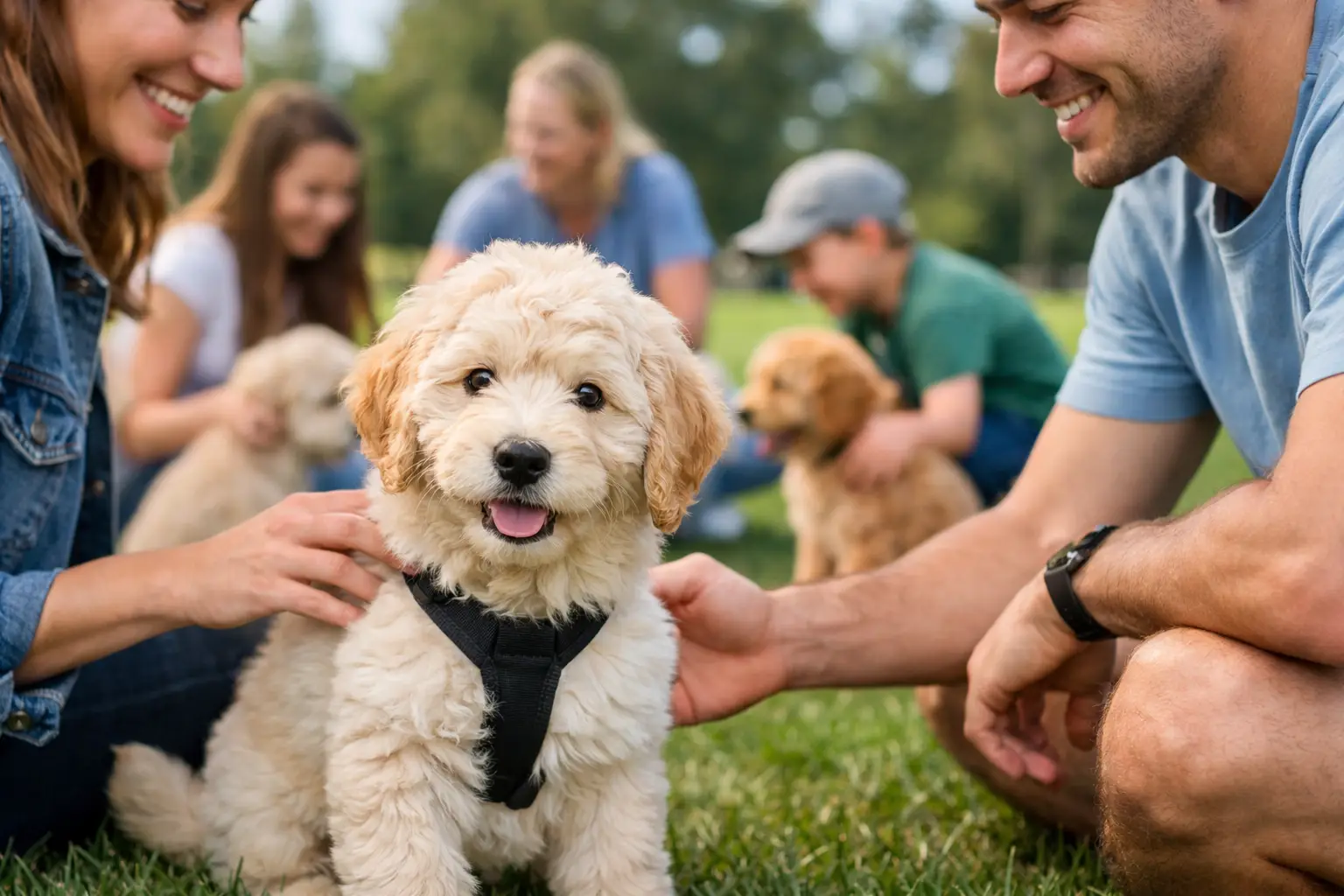
A well-socialized doodle puppy is not necessarily the puppy who runs up to every person, dog, and stroller with a wagging tail. A truly confident puppy can notice something new, feel safe, and look to you for guidance. When families ask me how to socialize a doodle puppy, I encourage them to think less about making every interaction exciting and more about helping their puppy learn that the world is a safe, manageable place.
Doodles are often affectionate, intelligent, and eager to be close to their people. Those wonderful qualities can make socialization feel easier, but every puppy is still an individual. Some are naturally bold; others need a little more time to observe before joining in. Gentle, positive experiences in the early months can make a lasting difference in how your puppy handles family life, visitors, car rides, children, grooming, and new places.
Start Early, but Keep It Gentle
The most valuable socialization period begins early in puppyhood, before and shortly after your puppy comes home. At Shalom Goldendoodles, I raise puppies inside my home so they begin experiencing normal household life from the start. They hear everyday sounds, receive loving handling, and grow accustomed to being around people in a family setting.
Once your puppy joins your home, your job is to continue that foundation without overwhelming them. New experiences should be short, calm, and paired with something pleasant, such as a tiny treat, cheerful praise, or the comfort of being near you. A puppy who sees a vacuum from across the room and receives a treat is learning. A puppy who is pushed toward the vacuum while it is running may become frightened instead.
Watch your puppy’s body language. A loose body, soft eyes, curious sniffing, and a relaxed tail usually show that your puppy is comfortable. Freezing, backing away, tucked tail, lip licking, yawning when not tired, or refusing treats can mean the experience is too much. There is no prize for rushing. Step back, make the situation easier, and let your puppy regain confidence.
How to Socialize a Doodle Puppy at Home
Home is the safest and most useful place to begin. Your doodle puppy does not need a packed social calendar to become well adjusted. Everyday family life offers plenty of meaningful lessons.
Introduce common sounds at a low level: the dishwasher, television, hair dryer, blender, doorbell, washing machine, and vacuum. Let your puppy investigate from a comfortable distance. If a sound makes them pause, speak calmly and offer a treat. You can gradually increase exposure as your puppy becomes more relaxed.
Create positive routines around handling, too. Doodles need regular coat care, so early grooming practice is a gift you can give your puppy. Briefly touch paws, lift ears, look at teeth, brush a few strokes, and gently hold the collar. Keep sessions very short and end before your puppy becomes squirmy or frustrated. A puppy who learns that hands bring kindness and treats is usually much easier to groom and care for as an adult.
It also helps to introduce different surfaces. Let your puppy walk across carpet, tile, grass, a bath mat, a wooden deck, and a shallow cardboard box. These small experiences build body awareness and flexibility. If your puppy hesitates, do not pull them across. Encourage them with your voice or a treat and allow them to choose their pace.
Make People Experiences Positive
Your puppy should meet a variety of kind, calm people, including adults of different ages and appearances. A neighbor wearing a hat, a friend carrying an umbrella, someone using a walker, or a delivery person at a distance can all become normal parts of life.
The key is to protect your puppy from being crowded. Ask visitors to let the puppy approach first. Instead of reaching over the puppy’s head, they can turn slightly sideways, speak softly, and offer a treat with an open hand. This is especially helpful for families with children, who may be excited to hold and hug a new puppy.
Children and puppies can become the sweetest friends when adults guide the relationship. Teach children to sit or kneel quietly, pet gently on the shoulder or chest, and give the puppy space while eating, sleeping, or resting in their crate. Avoid chasing games, loud squealing near the puppy, or allowing children to pick up a puppy who is trying to move away. Respecting those small signals helps prevent fear and teaches your puppy that children are safe and predictable.
Choose Dog Friends Carefully
Meeting other dogs is valuable, but more dogs does not always mean better socialization. One calm, healthy, vaccinated adult dog with good manners can teach more than a busy dog park ever will. Your puppy should have the option to sniff, play briefly, or simply observe from a comfortable distance.
Avoid forcing greetings on leash. Leashes can make some dogs feel trapped, even if both seem friendly at first. A parallel walk with plenty of space is often a calmer way for dogs to get acquainted. Keep the interaction brief and end while both dogs are still doing well.
Dog parks are not ideal for many young puppies. The play can be too intense, vaccination risks may be higher, and an unpleasant encounter can leave a strong impression. Ask your veterinarian when it is safe for your puppy to visit public areas based on their vaccine schedule and the risks in your local community. Until then, you can use safe options such as visits with known healthy dogs, carrying your puppy in pet-friendly places, or sitting outside a store and watching the world go by.
Take Small Field Trips
A confident puppy benefits from seeing life beyond the living room. Begin with easy outings, such as sitting on the front porch, taking a short car ride, or watching neighbors from a safe distance. Bring high-value treats and keep your expectations simple. The goal is not to walk far or meet everyone. The goal is for your puppy to notice something new and remain comfortable.
As your puppy grows, introduce places like a quiet park, a friend’s home, a pet-friendly hardware store, or an outdoor café where dogs are welcome. Be mindful of your puppy’s energy and attention span. Ten positive minutes can be far more helpful than an hour of stimulation.
Car rides deserve their own practice. Start with a few minutes in a secured crate or harness, then take short trips that do not always end at the veterinarian or groomer. A ride around the neighborhood followed by a happy return home teaches your puppy that the car is simply another normal part of family life.
Build Confidence Through Simple Training
Training and socialization work beautifully together because both teach your puppy to focus on you when life feels busy. Practice their name, come, sit, touch, and a simple “look at me” cue in calm settings first. Use treats and praise generously, especially when your puppy chooses to check in with you around a distraction.
A puppy class led by a qualified, positive-reinforcement trainer can be a wonderful next step once your veterinarian says it is appropriate. The best classes are not about perfect obedience. They allow puppies to practice being calm around other people and dogs while learning that their family is a safe place to return to.
If your puppy seems unusually fearful, grows more worried instead of more comfortable, or reacts strongly to people or dogs, reach out early to your veterinarian or a trusted trainer. Waiting for a puppy to “grow out of it” can make a concern harder to address. Early, kind support is one of the most loving choices you can make.
Let Your Puppy Set the Pace
Socialization is not a checklist to finish by a certain date. It is a continuing habit of showing your doodle puppy that new things can be handled with patience and support. Some days your puppy may be playful and adventurous. Other days, they may need a quiet walk, a nap, and the comfort of home. Both are completely normal.
Celebrate the little wins: your puppy calmly watches a cyclist pass, accepts a brush for thirty seconds, greets a visitor without jumping, or settles beside you at a family gathering. Those ordinary moments are where trust grows. With time, consistency, and a family that listens to their needs, your doodle puppy can become the loving, steady companion you hoped to bring home.



[…] not determine personality. Goldendoodles are individuals. Their temperament is shaped by genetics, early experiences, socialization, training, and the loving guidance they receive after going […]
[…] every Goldendoodle will naturally be calm in every situation. Puppies need time, consistency, and gentle exposure to the world. A puppy who is carefully raised around normal home sounds, caring people, handling, […]
[…] is one of the questions I hear most often from new puppy families. Your Goldendoodle needs gentle socialization early in life, but they also need protection from exposure to contagious illness. The answer is not […]