

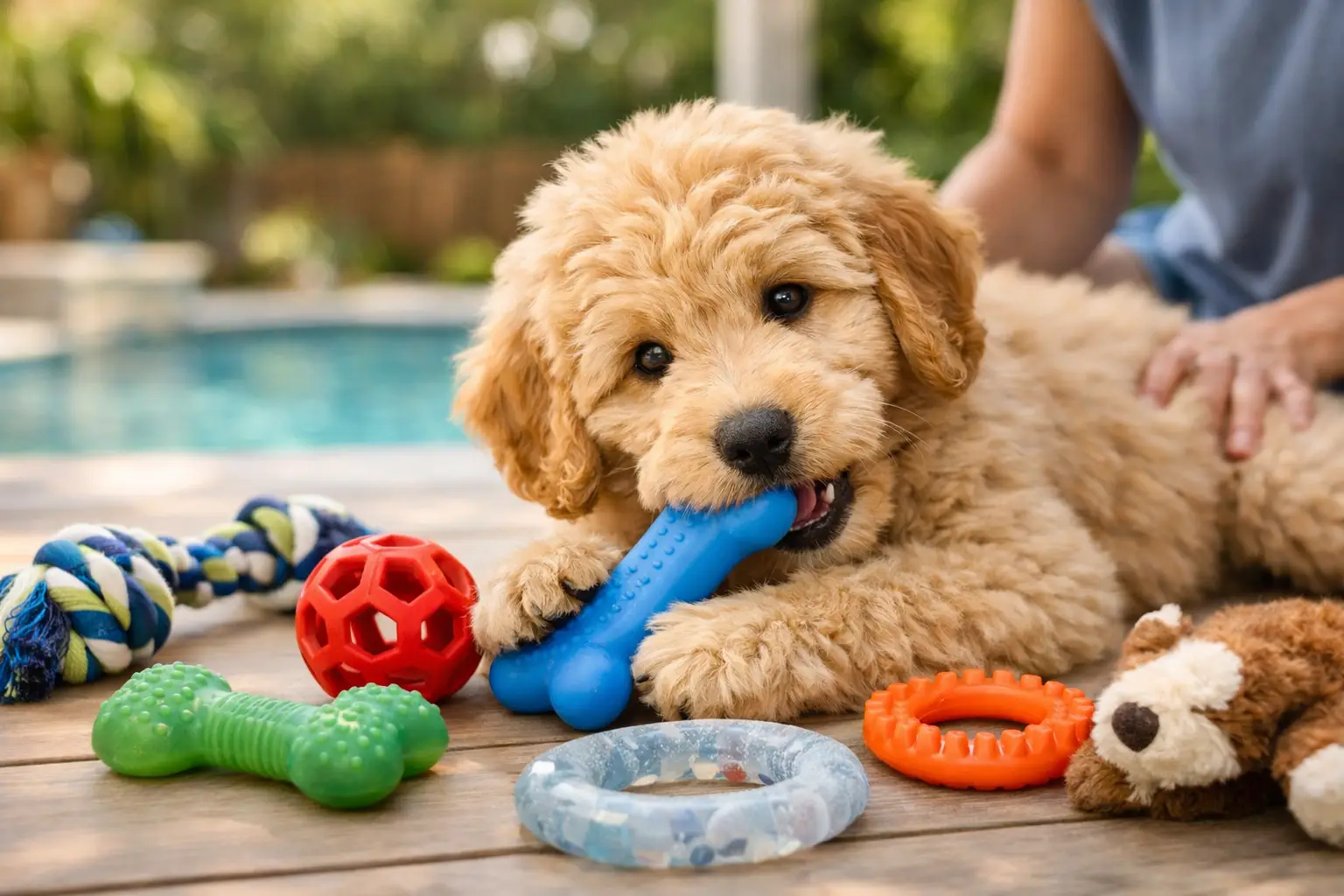
Those tiny puppy teeth can make a very big impression on table legs, shoelaces, children’s toys, and loving hands. When families ask me about the best toys for teething puppies, I remind them that chewing is not bad behavior by itself. It is a normal part of growing up. The goal is to give your puppy safe, satisfying choices so those growing teeth have somewhere appropriate to go.
For a Goldendoodle puppy, especially one who is bright, curious, and people-focused, the right chew toy does more than soothe tender gums. It helps build good habits from the beginning. A puppy who learns, “This is what I chew,” is much easier to guide than one who has discovered that the corner of the rug is interesting.
Why Teething Changes Your Puppy’s Chewing
Puppies begin losing their baby teeth around 12 to 16 weeks old, and adult teeth usually continue coming in until about six months of age. During that time, their gums may feel sore or itchy. Chewing provides comfort and gives them an outlet for all that natural puppy energy.
You may notice your puppy chewing more often, drooling a little, or occasionally finding a tiny baby tooth on the floor. Some puppies also seem more mouthy during play. That does not mean they are being aggressive. It often means they need a nap, a calmer activity, or a better chew option.
I encourage families to keep several appropriate toys available and rotate them every few days. A toy that seemed ordinary on Monday can become exciting again after a short break. Rotation also lets you inspect every toy closely for wear.
What Makes a Teething Toy Safe?
The best toy is not always the hardest one. In fact, overly hard chews can crack a puppy’s tooth. As a simple rule, if you cannot make a slight mark in the toy with your thumbnail, it may be too hard for a young puppy’s developing teeth.
Choose toys made for puppies, not powerful adult chewers, and select the correct size for your dog. An F1B Toy Goldendoodle may need a smaller, lighter option than a Standard Goldendoodle puppy. Still, a toy should always be large enough that it cannot be swallowed or lodged in the back of the mouth.
I also look for simple construction. A toy with no loose parts is usually easier to supervise than one with buttons, glued-on decorations, bells, or small pieces that can come free. Even a well-made toy is not indestructible, so check it every day during the teething months.
8 Best Toys for Teething Puppies
1. Soft rubber puppy chew toys
A flexible rubber toy designed specifically for puppies is often one of the most useful first purchases. The gentle give feels good on sore gums without being as harsh as hard plastic or dense nylon. Look for a one-piece shape with rounded edges and a size that fits your puppy’s mouth comfortably.
These are wonderful for supervised quiet time in a crate, puppy pen, or beside you in the living room. If your puppy is beginning to chew furniture, calmly redirect them to this toy every time. Consistency matters more than a correction.
2. Stuffable rubber toys
A hollow rubber toy that can hold a small amount of softened kibble or puppy-safe food turns chewing into a calming little project. For many puppies, working to get food from the center provides mental exercise as well as relief for their mouth.
Start simply. You can place a few pieces of regular puppy kibble inside, perhaps with a little wet puppy food to hold them in place. Avoid overfilling it with rich treats, especially if your puppy has a sensitive stomach. The toy should be a helpful part of their daily food routine, not a source of tummy trouble.
3. Chilled rubber toys
Cool temperatures can be comforting for tender gums, particularly on days when your puppy seems extra restless. Refrigerate a clean rubber puppy toy for a short time, then offer it while you are nearby. A chilled toy is generally a better choice than a rock-hard frozen object.
Be careful with freezing. Some materials become too hard in the freezer, and a solid frozen chew can be rough on young teeth. If you freeze a food-filled rubber toy, let it soften for a few minutes before offering it.
4. A clean, damp washcloth knot
This is a simple home option that many families already have on hand. Wet a clean, plain washcloth with water, wring it out well, tie a large knot in the middle, and chill it in the refrigerator. The soft, cool fabric can provide short-term gum relief.
This is not a leave-alone toy. Some puppies will pull threads loose or shred fabric quickly, so use it only with close supervision and remove it as soon as it begins to fray. If your puppy tries to swallow fabric, skip this option altogether.
5. Puppy-specific textured chew toys
Gentle texture can give puppies something interesting to explore without making the toy overly hard. Soft nubs, grooves, and ridges may massage the gums and encourage a puppy to chew the toy instead of your fingers.
Texture should be molded into the toy, not attached as small pieces. During play, run your fingers over it occasionally to make sure no edges have split or become sharp. When a toy begins looking chewed through, it has done its job and deserves retirement.
6. Soft, durable plush toys without small parts
Not every teething toy has to be a gum-soother. Some puppies enjoy carrying a soft toy, gently mouthing it, and settling down with it after play. Choose puppy plush toys with embroidered features rather than plastic eyes, and avoid anything with long strings, loose ribbons, or easily accessible stuffing.
A plush toy is best for puppies who are gentle with fabric. If your Goldendoodle is determined to dissect every stuffed animal in minutes, choose rubber or fabric-free options instead. Knowing your own puppy’s chewing style is more useful than following a label alone.
7. Puppy-safe rope toys for interactive play
A sturdy rope toy can be a nice way to redirect mouthiness during a game of gentle tug. Keep the game low and calm. Pulling too hard or jerking a toy upward can be uncomfortable for a teething puppy, and it may encourage overly excited play.
Rope toys need regular inspection because loose strands can be swallowed. Once the rope begins unraveling, replace it. I prefer using these as an activity we do together rather than leaving them in the crate all day.
8. Food-dispensing puzzle toys
Some chewing comes from boredom as much as teething. A puppy-safe puzzle toy that dispenses a small portion of kibble can slow down a meal and give your puppy’s mind something positive to do. This is especially helpful during busy family times when you need your puppy to settle nearby.
Use a level that matches your puppy’s ability. If the puzzle is frustrating, your puppy may give up or start chewing the toy itself. If it is too easy, it will not hold their attention for long. A little trial and error is normal.
Toys I Would Avoid During Teething
I would avoid antlers, bones, hooves, and extremely hard nylon chews for young puppies. They may last a long time, but that hardness can be tough on developing teeth. Rawhide can also create choking or digestive concerns, especially for puppies that swallow pieces rather than chewing them slowly.
Be cautious with toys marketed as “indestructible.” No toy is truly indestructible when it is in the mouth of a determined puppy. If a piece can break off, it can become a problem. Supervision is part of toy safety, not an optional extra.
How to Help Your Puppy Choose the Right Thing to Chew
Keep a chew toy within reach in the rooms where your family spends time. When your puppy starts nibbling a hand, pant leg, or chair leg, quietly offer the toy and praise them when they take it. There is no need for a big reaction. Calm redirection teaches the lesson clearly.
Also remember that tired puppies get extra mouthy. Young puppies need far more sleep than many families expect, often 18 to 20 hours in a day. If your puppy suddenly turns into a tiny land shark in the evening, a peaceful nap in their crate or pen may help more than another game.
If you see bleeding that does not stop, a broken tooth, ongoing refusal to eat, swelling, or signs of significant pain, call your veterinarian. Teething is normal, but your puppy still deserves prompt care when something does not seem right.
At Shalom Goldendoodles, I love seeing puppies head home prepared to become part of a family. A few thoughtfully chosen chew toys, a watchful eye, and patient redirection can make this short season much easier. Before long, those little teeth will be replaced by a beautiful adult smile, and the habits you teach now will still be helping your companion for years to come.



[…] first few weeks may include a crate, bed, leash, collar, identification tag, food and water bowls, toys, grooming tools, training treats, and puppy-safe cleaning supplies. Most families also schedule a first visit with […]