

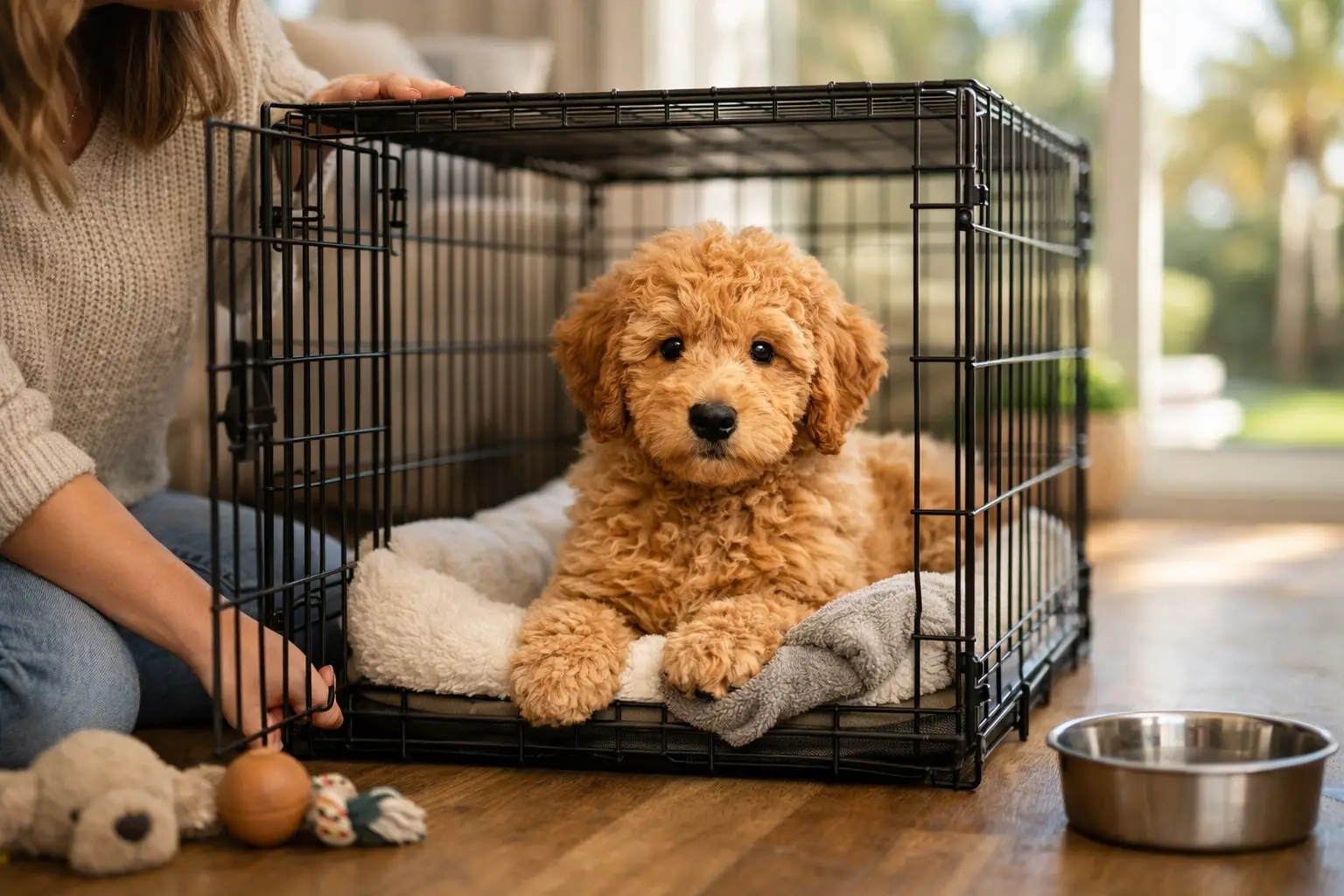
The first few nights with a new puppy can feel long. Your Goldendoodle has left the comfort of littermates, familiar smells, and the routine they have always known. That is why crate training a Goldendoodle puppy should never feel like a punishment. With patience, consistency, and a cozy setup, the crate can become a peaceful little bedroom your puppy chooses to rest in.
I always encourage families to think of the crate as one helpful part of puppy life, not a place to put a puppy away. It supports house training, keeps curious puppies safe when close supervision is not possible, and gives them a quiet place to settle in a busy home. Most of all, it teaches an important life skill that can make travel, vet visits, grooming appointments, and recovery from illness or injury less stressful later on.
Why Crate Training Helps Goldendoodle Puppies
Goldendoodles are bright, affectionate, and very people-oriented. Those wonderful qualities also mean many puppies would rather follow their family from room to room than take a needed nap. A crate gives your puppy a predictable place to slow down and rest.
For families with children, a crate can also create healthy boundaries. Your puppy needs breaks from play, noise, and attention just as children do. When everyone in the home understands that a puppy resting in the crate should be left alone, it helps build trust and prevents an overtired puppy from becoming nippy or overwhelmed.
Crate training also supports potty training because puppies naturally prefer not to soil their sleeping space. That does not mean a crate can make a puppy “hold it” for an unreasonable amount of time. Young puppies have small bladders and need frequent outdoor trips. The crate is a support for your routine, not a substitute for care and bathroom breaks.
Choose a Crate That Feels Safe, Not Spacious
A standard F1B Goldendoodle may grow into a larger dog, while a toy Goldendoodle will need a much smaller space. For either size, choose a crate that lets your puppy stand up, turn around, and lie down comfortably. It should not be so large that they can sleep at one end and use the other end as a bathroom.
Many families choose a wire crate with a divider panel. This lets you make the space appropriate for a small puppy now and expand it as they grow. A plastic travel-style crate can also work well, especially for car rides or puppies who settle better in a more enclosed space. There is no single best crate for every puppy. The best choice is one that is secure, properly sized, and easy for your family to use consistently.
Place the crate in a lived-in part of the home during the day, such as the family room or kitchen. Your puppy wants to feel close to you. At night, I often suggest starting with the crate near your bed. Hearing and smelling you nearby can be very reassuring during those early nights. Once your puppy is comfortable, you can gradually move the crate to its long-term location if that is your preference.
Keep the crate simple. A comfortable mat or bedding may be lovely for a puppy who does not chew or shred fabric, but some young puppies are safer with a bare crate tray at first. Never leave a collar, harness, or anything that could catch on the crate inside with an unsupervised puppy.
How to Begin Crate Training Your Goldendoodle Puppy
Start by leaving the crate door open and allowing your puppy to investigate at their own pace. Toss a few pieces of kibble inside, place a favorite toy nearby, or serve meals just inside the door. There is no need to push or place a hesitant puppy in the crate. The goal is for them to learn that good things happen there.
When your puppy is happily stepping inside, begin closing the door for very short periods while you remain nearby. A few minutes while they enjoy a safe chew or finish a meal is enough at first. Open the door before your puppy becomes upset whenever possible. Little successes build confidence much faster than asking too much too soon.
Over several days, slowly increase the time with the door closed. Sit beside the crate, then move around the room, then briefly step out of sight. Keep your tone calm and matter-of-fact. A dramatic goodbye can accidentally tell your puppy that being apart is something scary.
For many families, a simple routine is easier than watching the clock all day. Take your puppy outside after waking, eating, drinking a lot, playing, and spending time in the crate. Offer praise and a small reward when they potty outdoors. Then give them a little supervised playtime or a calm activity before the next nap.
Use the Crate for Naps, Not Only Bedtime
A puppy who only sees the crate when the family goes to bed or leaves the house may resist it more. Daytime naps help make the crate a normal, peaceful part of the day.
Goldendoodle puppies often need far more sleep than new families expect. A young puppy who becomes wild, mouthy, or unable to listen may simply be overtired. After a potty break and a little gentle activity, guide them to their crate with a treat or chew and give them a chance to settle. Some puppies fall asleep right away. Others need a few quiet minutes to relax.
It is perfectly fine if your puppy sometimes naps beside you instead. The purpose is not to crate your puppy every time they sleep. The purpose is to make sure they are comfortable resting there when needed.
What to Do When Your Puppy Cries
Some fussing is normal, especially during the first nights in a new home. Your puppy is adjusting, and they may need comfort or a potty break. The key is learning the difference between brief protest and a genuine need.
If your puppy has recently been outside, is safe, and fusses for a minute or two, give them a quiet moment to settle rather than immediately opening the door. If the crying continues, becomes more intense, or it has been a while since their last bathroom trip, take them outside calmly. Keep the trip boring and focused. No playtime, bright lights, or big conversation. After they potty, return them to the crate gently.
Avoid scolding a crying puppy. They are not trying to be difficult. They are communicating discomfort, uncertainty, or a need. At the same time, repeatedly letting a puppy out for play when they protest can teach them that crying opens the door to fun. A calm, predictable response is kindest.
Common Crate Training Mistakes to Avoid
The biggest mistake is moving too fast. A puppy who panics in the crate is not being stubborn. They may need shorter sessions, more positive practice, or a crate location closer to the family. Slowing down for a day or two is often more productive than trying to force progress.
Another mistake is using the crate for punishment. If your puppy has an accident, chews something they should not, or gets overly excited, guide them toward the behavior you want instead. The crate should remain a safe place, never a place associated with anger.
Families should also avoid crating a puppy for long stretches on a regular basis. Puppies need potty breaks, movement, training, affection, and supervised time with their people. If work or school keeps everyone away for longer than a young puppy can comfortably manage, arrange for a trusted family member, neighbor, or pet sitter to provide a break.
Finally, do not expect a perfect first week. Every puppy has a different adjustment period. Some settle quickly, while others need extra reassurance. Consistency matters much more than speed.
A Gentle Nighttime Routine
A calm evening usually leads to a calmer night. Offer your puppy a final potty trip right before bed, then guide them into the crate with a soft voice and a small treat. Keeping the crate close to your bed at first allows you to hear if they truly need to go outside.
Young puppies may need one or more nighttime potty trips. This stage does pass. Keep those outings quiet, brief, and predictable, then return your puppy to bed without turning the moment into a middle-of-the-night play session. As bladder control develops and your puppy learns the routine, most families can gradually extend the time between nighttime breaks.
When I send a puppy to a forever family, my hope is never that everything will be perfect overnight. My hope is that each family feels prepared to meet their puppy with patience. Your Goldendoodle is learning that this new home is safe, that you will listen to their needs, and that their little crate is a comfortable place to rest while they grow into the loving companion they are meant to be.