Picking a Goldendoodle size sounds simple until you picture real life. A puppy that looks tiny in your lap today may be 60 pounds before you know it, and that matters when you are thinking about kids, travel, your yard, your couch, and even how much dog you want leaning against you at the end of the day. That is why a goldendoodle size comparison chart can be so helpful. It gives families a clearer picture of what to expect, while also leaving room for the truth every breeder knows – dogs are individuals, and growth is never an exact science.
I always encourage families to think beyond what looks cutest as a puppy. The better question is, what size Goldendoodle fits your everyday life? Energy level, space, grooming, exercise needs, and how you want your dog to join your routine all play a part.
Goldendoodle size comparison chart
Below is a simple goldendoodle size comparison chart based on common adult ranges. Individual puppies can fall a little above or below these numbers depending on genetics, parent size, and build.
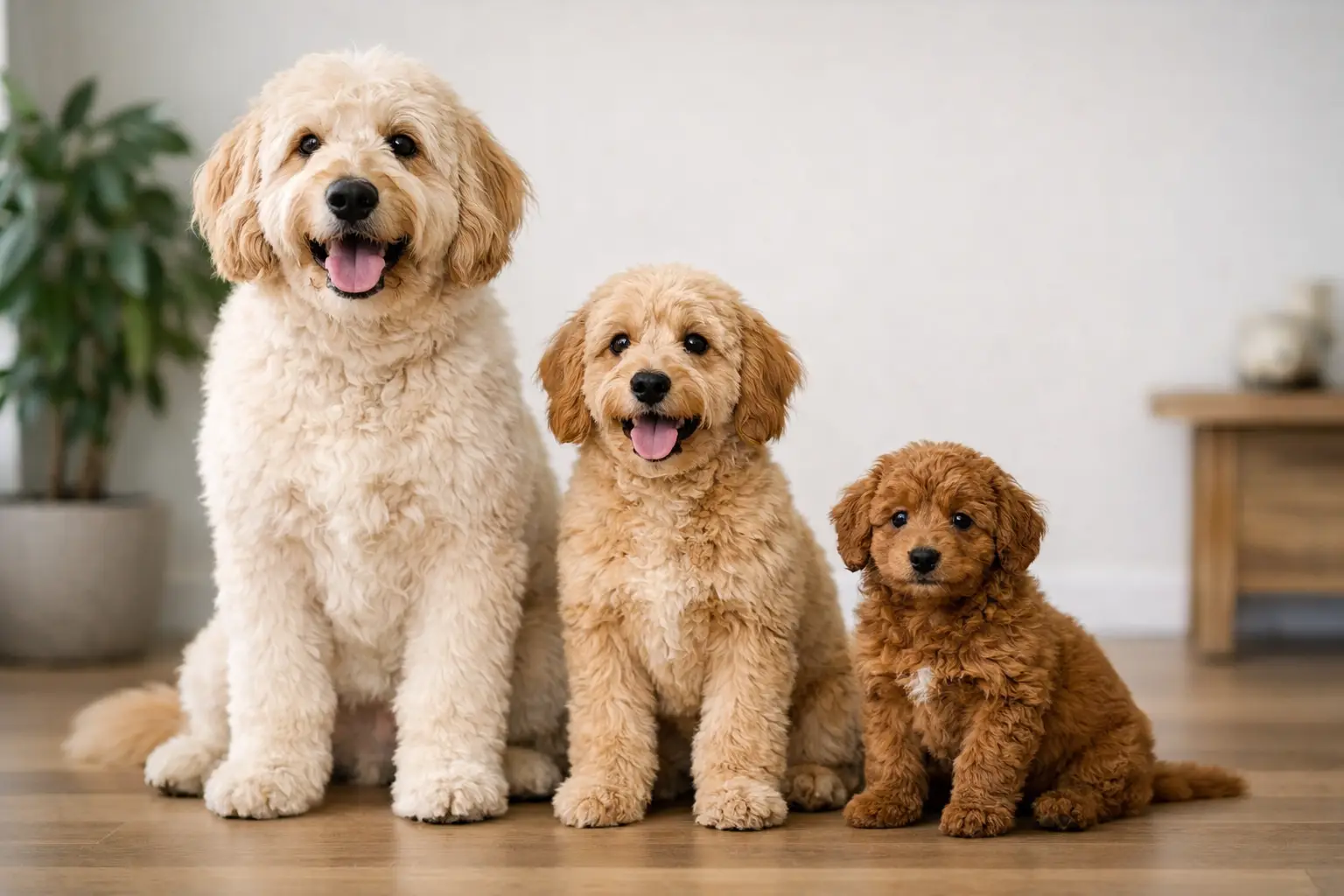
| Goldendoodle Size | Typical Height | Typical Adult Weight | Best Fit For | |—|—:|—:|—| | Toy Goldendoodle | 10-15 inches | 10-20 pounds | Apartments, travel, smaller homes | | Mini Goldendoodle | 13-20 inches | 15-35 pounds | Families wanting a smaller but sturdy companion | | Medium Goldendoodle | 17-20 inches | 30-45 pounds | Homes wanting a balance between compact and active | | Standard Goldendoodle | 20-26 inches | 50-70 pounds | Active families, larger homes, people wanting a bigger companion |
These ranges are helpful, but they are still estimates. Coat, bone structure, and body type can make two dogs with the same weight feel very different in person.
What each Goldendoodle size really feels like at home
Toy Goldendoodles
Toy Goldendoodles are the smallest option, and for many families, that means convenience. They are easier to pick up, easier to travel with, and easier to fit into a smaller home or apartment. If you want a dog that can curl up beside you on a chair or go along more easily on errands and trips, toy size can be a wonderful choice.
That said, smaller dogs are not always the best fit for every household. In homes with very young children, extra care is needed because toy-sized puppies are more delicate. They can absolutely be loving family dogs, but I always encourage gentle handling and supervision.
Mini Goldendoodles
Mini Goldendoodles are often the middle ground families ask about first. They are still compact enough for smaller spaces, but they usually feel a little sturdier than a toy. For many people, this size offers a nice blend of portability and playfulness.
A mini can be a great fit for couples, first-time dog owners, or families who want a cuddly house dog that still enjoys walks, games, and everyday family activity. If you want a dog that is not too small and not too large, this size often feels like a sweet spot.
Medium Goldendoodles
Not every breeder uses the medium category in the same way, but when people talk about medium Goldendoodles, they usually mean a dog between mini and standard. This size can work beautifully for homes that want more dog to hug and play with, without going all the way to a larger standard.
Medium-sized doodles often appeal to families who want an active companion that is still easier to manage physically than a bigger dog. They usually need solid exercise and training, just like any smart doodle, but they can fit a wide variety of lifestyles.
Standard Goldendoodles
Standard Goldendoodles are the size many people picture when they think of the breed. They are bigger, athletic, affectionate, and often wonderfully confident family companions. A standard has more presence in the home, and for families who love larger dogs, that is part of the charm.
My F1B Standard Goldendoodles typically mature around 50 to 70 pounds, which is a great size for families who want a substantial companion without getting into giant-breed territory. They are often excellent with children, highly trainable, and a lovely choice for active homes. But size does affect practical things. A bigger dog needs more room to stretch out, more food, and usually a bit more strength from the owner during training and walks.
Why Goldendoodle size is never just about pounds
When families compare sizes, they often focus on weight first. That makes sense, but weight alone does not tell the whole story. A 20-pound doodle and a 20-pound doodle with long legs and a tall frame may feel very different in your home. Height matters. Build matters. Temperament matters too.
A calm standard may feel easier than a busy mini, depending on your personality and routine. A smaller dog may be easier to carry, but a larger dog may be more durable for rough-and-tumble family life. That is why I tell families to think about the whole picture, not just the number on a chart.
What affects adult size?
A goldendoodle size comparison chart gives expected ranges, but several things influence where a puppy will land. The biggest factor is the size of the parents. Genetics from both the Poodle side and the Golden Retriever side matter, and even within one litter there can be some variation.
Generation can play a role too, especially when breeders are intentionally pairing for a certain size. Nutrition and overall health support healthy growth, but they do not turn one size category into another. A puppy bred from smaller lines will not become a standard just because he eats well.
Boys also tend to run a little larger than girls, although that is not a rule without exceptions. Some female puppies mature bigger than expected, and some males stay on the smaller end of the range.
Which Goldendoodle size is best for your family?
The best size depends on your home and what you want daily life with your dog to feel like. If you live in a smaller space, travel often, or want a very portable companion, toy or mini may be the better fit. If you have a little more room and want a bigger cuddle buddy who can keep up with an active household, medium or standard may make more sense.
For families with children, I usually encourage thinking about age and activity level. A tiny puppy in a busy home with toddlers needs extra protection and supervision. A standard can be wonderful with kids, but that larger size also means training matters early so the dog learns good manners and does not accidentally knock anyone over.
For first-time dog owners, there is no automatic perfect size. Some people do best with a smaller dog because they feel more manageable. Others prefer a standard because they like the temperament and physical presence of a larger companion. It really comes down to your confidence, your routine, and how involved you want your dog to be in everyday family life.
Goldendoodle size comparison chart and coat expectations
Families sometimes assume a smaller Goldendoodle will always be easier overall, but grooming can still be a big commitment no matter the size. Coat type, curl pattern, and maintenance needs are not just size issues. A toy Goldendoodle with a dense coat may need frequent brushing and regular grooming, just like a standard.
With F1B Goldendoodles, many families appreciate the lower-shedding coat, but that benefit comes with upkeep. So while size affects food cost, exercise space, and travel ease, coat care should be part of the conversation too.
A practical way to choose
If you are stuck between two sizes, picture ordinary moments. Where will your dog sleep? How often will you be loading the dog into the car? Do you want a dog that fits comfortably on your lap, or one that rests at your feet and takes up more space? Are your children old enough to respect a smaller puppy, or would a sturdier dog make you feel more comfortable?
I also think it helps to be honest about energy and training. Goldendoodles are intelligent and social, and every size needs time, structure, and companionship. Choosing a smaller dog does not remove the need for training. Choosing a larger dog does not automatically mean more difficulty. It is more about fit than about easy versus hard.
At Shalom Goldendoodles, I love helping families think through these details because the right puppy is not just about looks. It is about bringing home a companion who fits your family well for years to come.
If you are using a chart to narrow down your options, let it guide you, but do not let it be the only thing you trust. Ask questions, learn about the parents, and think carefully about your home, your children, and your day-to-day life. The best Goldendoodle size is the one that feels like it was meant for your family.


[…] Goldendoodle may be a lovely fit, especially if they are prepared for an adult dog typically in the 50 to 70 pound range. If their schedule, living space, or travel plans point toward a smaller dog, I may also talk with […]
[…] is another practical consideration. Standard F1B Goldendoodles may grow to roughly 50 to 70 pounds, while toy Goldendoodles are a […]