

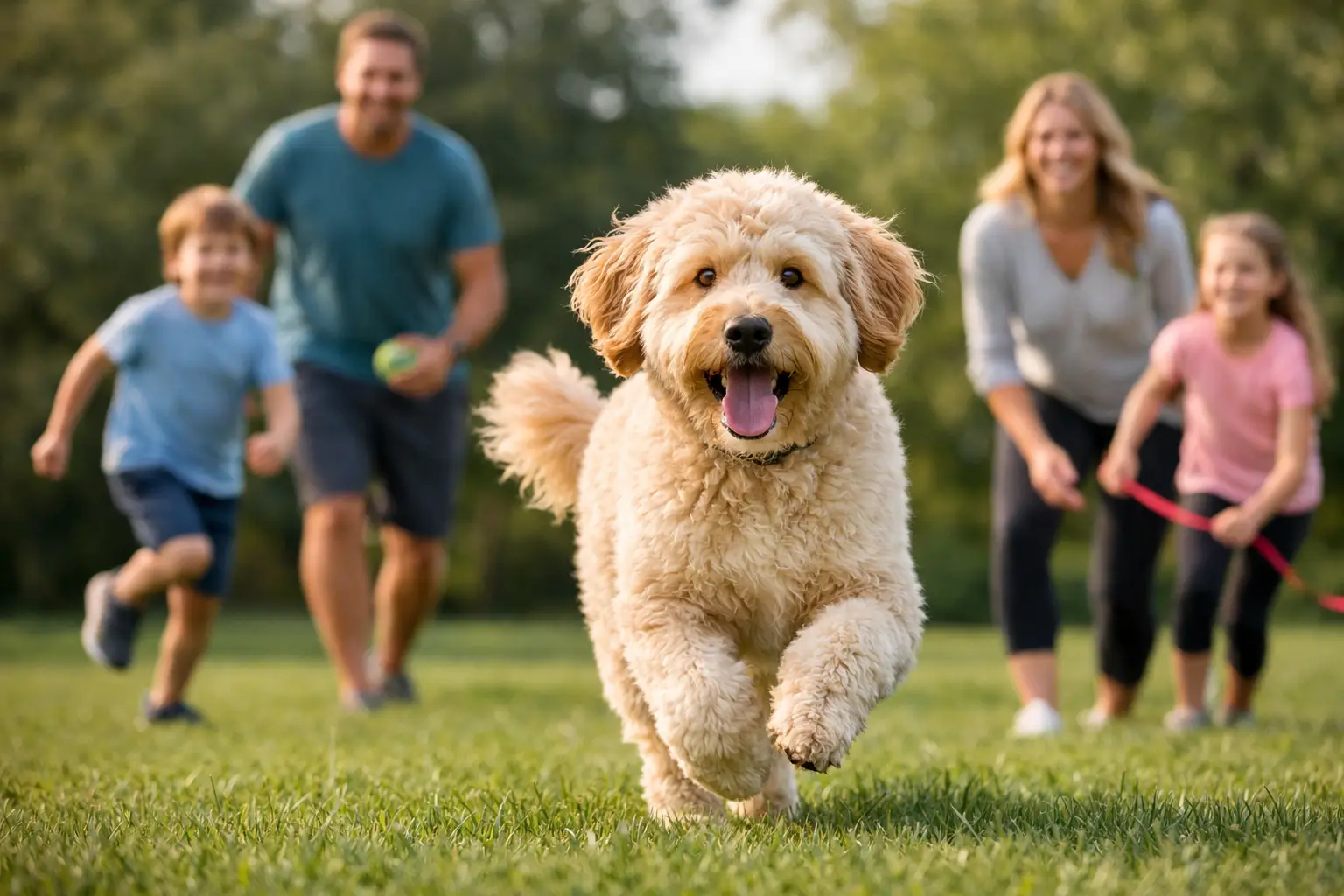
A Goldendoodle who has been waiting all afternoon to see her people rarely needs a marathon. She usually needs connection: a walk where she can sniff, a game in the yard, a little training, and time near the family she loves. This goldendoodle exercise needs guide is meant to help families build that healthy balance without asking too much of a growing puppy or leaving an energetic adult without an outlet.
Goldendoodles are bright, social dogs with a Poodle’s quick mind and a Golden Retriever’s love of people. That combination often makes them wonderfully fun family companions, but it also means exercise should be more thoughtful than simply opening the back door. Their needs change with age, size, health, personality, weather, and daily routine.
What Goldendoodles Need From Daily Exercise
Most healthy adult Standard Goldendoodles do well with about 60 to 90 minutes of activity spread throughout the day. For a smaller Toy Goldendoodle, 30 to 60 minutes may be plenty. Those numbers are a starting place, not a rulebook. A young, athletic dog may need more opportunities to move, while a calmer dog or senior may be happiest with shorter, gentler outings.
I encourage families to think in terms of several enjoyable moments rather than one long workout. A morning walk, a short training game before dinner, and playtime in the evening can meet both physical and emotional needs. A Goldendoodle does not need to be worn out every day. In fact, constantly trying to tire out a high-energy dog can build an athlete who needs more and more exercise to settle.
The goal is a dog who is content, healthy, and able to relax at home. After appropriate activity, your Goldendoodle should be comfortable resting with the family, not pacing, whining, or searching for trouble.
Goldendoodle Exercise Needs Guide by Age
Young puppies: protect growing joints
Puppies are full of enthusiasm, but their bones, joints, and growth plates are still developing. They need frequent chances to play and explore, yet they should not be asked to keep up with an adult dog on long walks. Short, easy outings on soft, safe ground are much kinder to a young body than miles of pavement.
For many puppies, a few five- to 15-minute walks or sniffing adventures each day are enough, along with free play at their own pace. A simple guideline some families use is about five minutes of structured walking per month of age, once or twice daily. It is only a rough guide, so pay attention to your own puppy and speak with your veterinarian if you have concerns.
Avoid repetitive high-impact exercise during puppyhood. Long runs, forced hikes, jogging beside a bike, and repeated jumping for a ball can put unnecessary stress on growing joints. Stairs should be managed carefully, especially with larger puppies, and furniture jumping is best discouraged when possible.
What puppies need most is not distance. They need safe movement, confidence-building experiences, gentle play, and plenty of sleep. A puppy who has a happy 10-minute outing, practices coming when called, and naps afterward has had a very good day.
Adolescents: busy minds in busy bodies
From roughly six months through young adulthood, many Goldendoodles become more energetic, curious, and independent. This is often the stage when families say, “My sweet puppy suddenly has so much energy.” That is normal, and it is also the perfect time to build dependable routines.
Increase walks gradually as your veterinarian recommends and as your dog matures. Add low-impact play, supervised yard time, and short training sessions. Recall practice, leash manners, place training, and polite greetings all use mental energy. A 10-minute session of focused learning can be surprisingly satisfying for an intelligent adolescent Goldendoodle.
This is also a season for patience. A teenage dog may look nearly full-grown while still needing puppy-level guidance. Consistency matters more than intensity.
Adults: a blend of movement and purpose
A healthy adult Goldendoodle often enjoys a brisk walk, a family hike, a game of fetch, swimming, or a playful romp with a compatible dog. Many love to join their people in everyday life, whether that means walking the neighborhood, visiting a pet-friendly outdoor space, or helping supervise the children’s backyard fun.
Choose activities that suit the dog in front of you. A Standard Goldendoodle may happily handle longer walks than a Toy Goldendoodle, but size alone does not tell the whole story. Coat type, body condition, temperament, and previous activity level all matter. Build endurance slowly, especially after a quiet season or a change in routine.
Seniors: keep moving gently
Older Goldendoodles still benefit from exercise, even when they cannot do what they once did. Short walks, easy sniffing time, gentle swimming if approved by a veterinarian, and simple food puzzles can support mobility and mood. Watch for stiffness, lagging behind, reluctance to rise, limping, or heavy panting. These are reasons to slow down and check in with your veterinarian.
Mental Exercise Counts Too
A Goldendoodle’s brain needs a job as much as her legs need movement. Many unwanted behaviors, including chewing, counter surfing, barking, and restless pacing, are signs that a dog needs more guidance, enrichment, or connection. They are not a sign that she is a bad dog.
You do not need complicated equipment to provide mental exercise. Scatter part of a meal in the grass and let your dog sniff it out. Practice a few cues before meals. Hide treats around one room. Offer a stuffed food toy during quiet time. Let your Goldendoodle use her nose on walks instead of hurrying her through every sniff.
Training is especially valuable because it strengthens the relationship between dog and family. A Goldendoodle who learns to wait at the door, come when called, settle on a mat, and walk politely on leash is not only mentally fulfilled. She is easier to include in the everyday moments that make family life richer.
How to Tell if Your Goldendoodle Needs More or Less
Every dog has an individual rhythm. A dog who needs more healthy activity may become restless in the evening, repeatedly bring toys, struggle to settle, or look for mischief. Before assuming she needs a longer run, consider whether she needs a sniff walk, training, or a calm play session with you.
On the other hand, too much exercise can show up as reluctance to walk, soreness, limping, excessive panting, or a puppy who becomes overtired and wild instead of settled. Puppies especially can look hyper when they actually need rest. If your dog has a sudden change in energy, appetite, gait, or behavior, a veterinarian should be your first call.
A well-exercised Goldendoodle is not necessarily sleepy every minute. She is able to enjoy activity and then settle peacefully when life is quiet.
Safe Exercise in Florida Heat
For Florida families, heat and humidity deserve special attention. Goldendoodles can overheat quickly, particularly with a thick or curly coat. Early morning and later evening are usually the best times for walks. Check pavement with the back of your hand. If it feels too hot for you to hold comfortably, it is too hot for paws.
Bring water on longer outings, seek shade, and keep activity shorter on humid days. Heavy panting, drooling, weakness, vomiting, confusion, or bright red gums can be warning signs of heat stress and need immediate attention. Never rely on a backyard alone for exercise during the hottest part of the day. A brief indoor training game may be the wiser choice.
A Family Routine That Feels Realistic
The best routine is one your family can maintain. For many adult Goldendoodles, that may look like a 20- to 30-minute morning walk, a few minutes of training or enrichment during the day, and evening play or another walk. On weekends, a longer family outing can be a lovely bonus, but it does not have to be the standard every day.
Children can be part of the routine with adult supervision. They may help toss a toy, practice simple cues, or join a short walk, but an adult should remain responsible for safety and handling. Teaching children to respect a dog’s rest time is just as meaningful as teaching them how to play.
At Shalom Goldendoodles, I love seeing puppies grow into companions who are included in family life, not simply exercised and then set aside. Start small, stay consistent, and learn what helps your own Goldendoodle feel joyful and settled. The best activity is often the one that gives your dog both a healthy body and more time close to the people she calls family.