

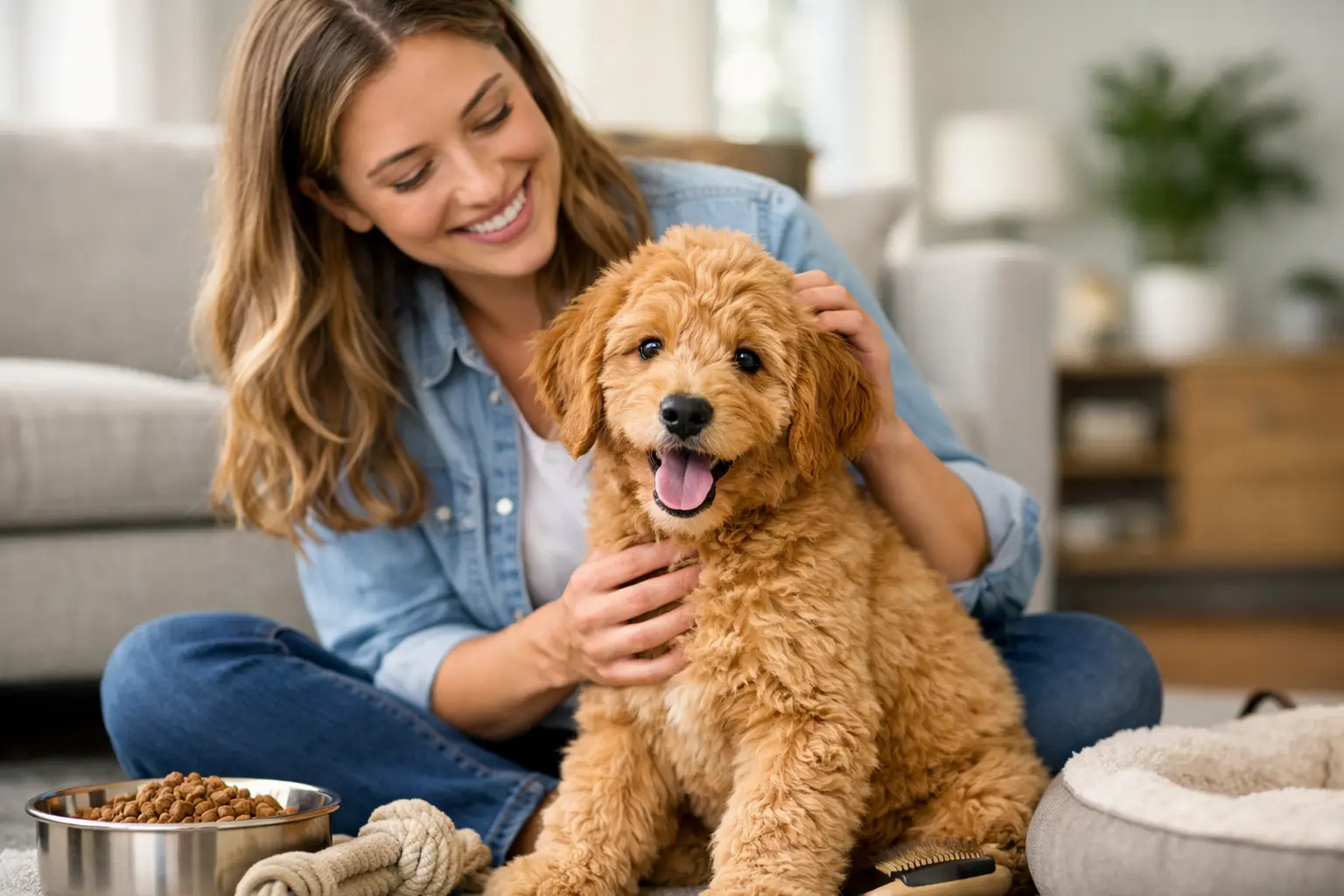
Bringing home a Goldendoodle is exciting, but those first few days can also feel like a blur of puppy kisses, chewing, potty breaks, and questions. If you are looking for a first time goldendoodle owner guide, the biggest thing I want you to know is this: a well-raised Goldendoodle can be a wonderful family companion, but they still need structure, training, and consistency right from the beginning.
Goldendoodles are loved for good reason. They are affectionate, smart, social, and often very in tune with their people. That combination makes them wonderful in family homes, but it also means they do not usually do well being ignored or left to figure everything out on their own. They thrive when they are included, guided, and given clear expectations.
A first time Goldendoodle owner guide starts with realistic expectations
One of the most common mistakes first-time puppy owners make is assuming a friendly breed will naturally be easy in every way. Goldendoodles are intelligent and eager to please, which absolutely helps with training. But intelligence also means they learn habits quickly, both good and bad.
If you laugh when your puppy jumps today, do not be surprised when that same puppy jumps on guests at 60 pounds. If you skip crate training because you feel guilty, you may end up with a dog who struggles to settle alone. These are not signs of a bad puppy. They are simply signs that puppies need leadership.
For most families, the first year is about building routines. Your puppy is not just learning where to sleep and when to eat. They are learning how life works in your home. That takes patience, repetition, and a little grace for yourself too.
Your first week home matters more than most people realize
The first week sets the tone. I always encourage families to keep life calm and predictable in those early days. It is tempting to invite everyone over to meet the new puppy, pack the schedule with outings, or let the puppy roam the whole house. Usually, that creates more stress than success.
Start small. Give your puppy a cozy sleeping area, a crate or safe space, a simple feeding routine, and frequent potty trips. Take them outside first thing in the morning, after meals, after naps, after playtime, and before bed. Young puppies need a lot of opportunities to get it right.
It also helps to keep the home environment steady. Too much freedom too soon often leads to accidents, chewing, and confusion. A puppy pen, baby gates, and close supervision can make those first weeks much smoother.
Potty training and crate training go hand in hand
If I could give every new owner one piece of advice, it would be this: be consistent before you try to be flexible. Potty training is usually faster when puppies have a reliable routine and a smaller space to manage.
Take your puppy to the same potty area often and praise warmly when they go. Keep your timing realistic. A young puppy cannot hold it for long stretches during the day, and accidents are part of the process. What matters most is responding calmly and staying consistent.
Crate training can feel hard at first, especially when your puppy cries. But when done kindly, a crate becomes a place of rest and security. It also helps with house training and prevents unsafe wandering when you cannot supervise. The goal is never punishment. The goal is helping your puppy learn to settle and feel safe.
Goldendoodles need training early because they are smart and social
This is where a first time goldendoodle owner guide needs to be honest. Goldendoodles are often described as easy to train, and many are. But easy does not mean automatic.
They need early training because they are people-focused, energetic, and quick learners. That is a lovely combination when you are teaching sit, come, and leash manners. It is less lovely if they are practicing barking for attention, counter surfing, or dragging you down the sidewalk.
Keep training sessions short and positive. Five minutes here and there adds up. Focus first on the basics: name recognition, coming when called, sitting politely, walking on a leash, and learning not to mouth hands or clothing. Reward the behaviors you want to see more of.
Socialization matters too, but it should be thoughtful. Socialization is not just meeting lots of people. It is helping your puppy experience the world in a calm, safe, positive way. New sounds, car rides, friendly visitors, grooming tools, children, and everyday household activity all count.
Grooming is where many first-time owners are caught off guard
Goldendoodles are often chosen for their low-shedding coats, and that can be a wonderful fit for many families. But low shedding does not mean low maintenance.
Depending on coat type, your puppy may need regular brushing, routine professional grooming, and early exposure to handling. If brushing is inconsistent, mats can form quickly, especially behind the ears, under the collar, on the legs, and around friction areas.
I always encourage families to start grooming habits early, even when the puppy is small and fluffy. Gently brush a little each day. Touch the paws, ears, and face. Let your puppy get used to being handled. This makes future grooming appointments much less stressful.
There is also some give and take here. A longer teddy bear look is adorable, but it requires more coat care. A shorter trim is easier to maintain. Neither choice is wrong. It just depends on how much grooming upkeep fits your routine.
Exercise is important, but so is learning to relax
Many first-time owners hear that Goldendoodles are active and assume they need constant entertainment. They do enjoy play, walks, and family activity, but an overtired puppy can act just as wild as an under-exercised one.
Puppies need a balance of movement, mental stimulation, and rest. Short walks, gentle play sessions, simple training games, and food puzzles can all help. So can scheduled naps. A puppy that never learns to settle may become frantic, mouthy, and difficult by evening.
As your dog matures, exercise needs will depend on size, age, and temperament. A Standard Goldendoodle may need more daily activity than a Toy Goldendoodle, but both still need connection and engagement. The best approach is not to create a canine athlete by accident. It is to build a healthy, manageable routine your family can keep long term.
Feeding, chewing, and everyday puppy behavior
Puppies explore the world with their mouths. That means shoes, chair legs, toys, and little hands may all seem interesting. This stage is normal, but it still needs guidance.
Make sure your puppy has appropriate chew items and redirect often. If your puppy is nipping during play, stop the interaction briefly and offer a toy instead. Consistency matters more than intensity. Harsh corrections often create confusion, while calm redirection teaches better habits over time.
Feeding should stay simple at first. Sudden food changes can upset a puppy’s stomach, so transitions should be gradual when needed. Keep fresh water available, feed on a schedule, and monitor body condition as your puppy grows. Your veterinarian can help you make adjustments based on your puppy’s age and development.
The emotional side of puppy ownership is real
I think this part deserves more attention. Even when you have wanted a puppy for years, there can be moments of doubt during the first few weeks. Sleep gets interrupted. Your routine changes. The puppy may cry at night or have accidents just when you think progress is happening.
That does not mean you made the wrong choice. It usually means you are in the middle of the adjustment period. Most families find that once routines are established and training starts to click, things feel much more joyful and manageable.
This is one reason I care so much about puppies being raised with early socialization and hands-on care before they ever go home. At Shalom Goldendoodles, I want families to feel supported, not overwhelmed, and I want every puppy to have the healthiest and most confident start possible.
What first-time owners usually need most
More than fancy gear or complicated advice, most new Goldendoodle owners need consistency, patience, and support. Your puppy does not need perfection from you. They need calm leadership, a predictable routine, and lots of positive interaction.
There will be days when everything feels easy and days when your puppy seems to forget every lesson. That is normal. Keep showing up. Keep repeating what matters. Keep building trust.
A Goldendoodle can bring so much joy, companionship, laughter, and love into a home. And when you begin with realistic expectations and a steady heart, those early puppy months become the foundation for a truly wonderful family dog.
If you are preparing to bring one home for the first time, give yourself permission to learn alongside your puppy. The relationship you build in these early days is what turns a cute little fluff ball into a loyal companion who feels like part of the family.