

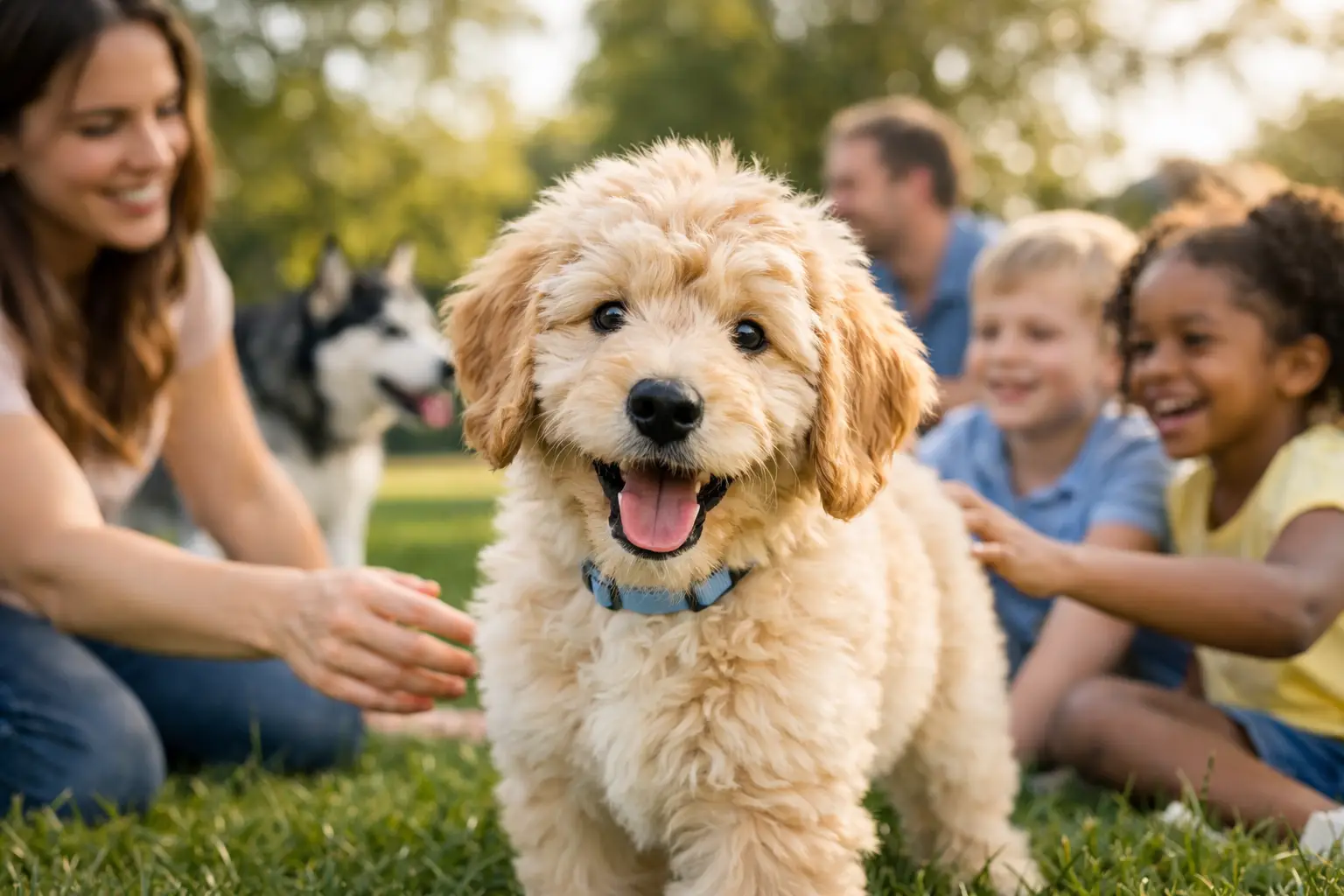
The first time a puppy hears the vacuum, meets a toddler, or feels grass under little paws, you can almost see the wheels turning. Those early moments matter. When families ask me for goldendoodle puppy socialization tips, I always tell them this is not about forcing a puppy into everything at once. It is about building confidence one positive experience at a time.
Goldendoodles are naturally affectionate, smart, and people-oriented, which is one reason families love them so much. But even a sweet, friendly puppy still needs gentle guidance to feel secure in a big world. Good socialization helps shape a dog who can settle into family life, handle new situations, and enjoy being around people without fear or overwhelm.
What socialization really means
A lot of people hear the word socialization and think it only means meeting other dogs. That is part of it, but it is much bigger than that. Socialization is helping your puppy become comfortable with everyday life. That includes sounds, surfaces, routines, car rides, children, visitors, grooming, the vet, and all the little surprises that come with being part of a home.
The goal is not to make your puppy love every single thing. The goal is to help your puppy learn, “New things are safe, and my people will guide me through them.” That kind of trust creates a more stable companion in the long run.
Why timing matters so much
The early puppy months are a window when learning happens quickly. Puppies are naturally curious during this stage, which makes it a wonderful time to introduce new experiences in a calm and thoughtful way. If that window is missed, it does not mean a puppy cannot learn later. It just may take more patience and repetition.
This is one reason I believe early home-raised experiences matter so much. Puppies who are lovingly handled, exposed to normal household life, and introduced to gentle everyday stimulation often adjust more smoothly when they go to their new families. That early foundation gives them something to build on.
Goldendoodle puppy socialization tips that truly help
Start small. A confident puppy is not created by one busy weekend of outings. Confidence grows when a puppy has many short, positive experiences and gets time to rest in between. If you introduce too much too fast, even a naturally social Goldendoodle can become stressed.
Pay close attention to your puppy’s body language. A wagging tail does not always mean comfort. If your puppy is crouching, turning away, yawning repeatedly, freezing, or trying to hide, that is a sign to slow down. Socialization should stretch your puppy gently, not flood them.
Use treats, praise, and a calm voice. Puppies remember how experiences felt. If meeting a new neighbor comes with gentle encouragement and a treat, that moment leaves a very different impression than being pushed into a scary interaction.
Let your puppy observe from a safe distance when needed. Not every lesson requires direct contact. Watching children play from across the yard or hearing traffic from the safety of your arms can still be valuable. Sometimes the best progress happens when a puppy gets to look, listen, and process without pressure.
The everyday experiences that matter most
Many families focus on the exciting parts of socialization, like meeting people at the park. That can be wonderful, but the ordinary parts of life are just as important.
Household sounds deserve attention. Dishwashers, doorbells, televisions, blenders, laundry machines, and hair dryers can all seem strange to a puppy. Introduce these sounds gradually. Keep the tone cheerful, and do not make a big fuss if your puppy startles a little. Calm reassurance goes a long way.
Handling is another big one. Touch your puppy’s paws, ears, mouth, and tail gently during relaxed moments. Brush the coat for short sessions. Open the collar, clip the leash on and off, and help your puppy get used to being picked up if they are small enough. These simple routines prepare them for grooming and vet care later.
Surfaces are easy to overlook, but they matter. Let your puppy walk on tile, wood floors, carpet, grass, gravel, and concrete. A puppy who only knows one or two textures may be hesitant in new places.
Socializing with people and children
Goldendoodles often adore people, but puppies still need to learn how to greet politely and stay calm around excitement. Invite kind, gentle visitors of different ages and appearances when you can. Hats, sunglasses, deeper voices, wheelchairs, and quick movements can all feel new to a puppy.
If you have children, teach them that socialization goes both ways. Puppies should not be chased, cornered, or passed around. Children should sit calmly, offer treats gently, and let the puppy approach. This helps build trust and protects both the child and the puppy from stressful interactions.
For shy puppies, less is often more. One calm visitor who understands puppies can be far better than a noisy gathering. Socialization is not about quantity alone. The quality of the experience matters most.
Dogs, outings, and public places
When people ask for goldendoodle puppy socialization tips, they often want to know how soon they should get their puppy out into the world. The answer depends on age, vaccine status, and your veterinarian’s guidance. Safety always comes first.
That said, socialization does not have to wait for full public access. You can carry your puppy in safe places, sit in the car and watch the world go by, or invite healthy, vaccinated dogs owned by trusted friends to meet in a controlled setting. Positive exposure can happen in many ways.
Choose dog introductions carefully. Not every adult dog enjoys puppies, and not every playful greeting is a good one. Look for steady, well-mannered dogs that will not overwhelm your puppy. A bad early experience can stick longer than people realize.
Public outings should be short and successful. A quick trip to hear carts at a garden center or watch people from a bench can be enough. End while your puppy is still doing well. That helps build a pattern of success instead of exhaustion.
Don’t forget rest and routine
One mistake I see sometimes is families trying so hard to socialize that the puppy never truly settles. Puppies need a lot of sleep. They also need quiet time to process everything they are learning.
A healthy routine creates security. Meals around the same time, potty breaks, naps, play, training, and cuddle time all help your puppy feel grounded. Socialization works best when it is woven into a stable daily rhythm instead of added as constant excitement.
There is also a trade-off to keep in mind. A puppy who goes everywhere but never learns to rest at home can become overstimulated and clingy. A well-socialized puppy should be able to enjoy activity and relax afterward.
What to do if your puppy seems nervous
Some puppies are naturally bold. Others are softer and more cautious. Neither is wrong. Your job is to work with the puppy in front of you.
If your puppy seems worried, go back a step. Increase distance, lower the intensity, and pair the experience with something pleasant. Maybe the goal today is simply hearing the garbage truck from inside the house. That still counts.
Avoid comforting fear with frantic energy. Be warm and reassuring, but steady. If you act like something is a huge problem, your puppy may believe it is. Quiet confidence helps your puppy borrow courage from you.
If fear is growing instead of improving, get help early from your veterinarian or a qualified positive reinforcement trainer. Early support can make a real difference.
A gentle foundation lasts a long time
At Shalom Goldendoodles, I care deeply about giving puppies a loving start, but socialization does not end when a puppy goes home. It continues in all the little moments that make up family life. Every kind introduction, every calm outing, and every patient response helps shape the dog your puppy is becoming.
You do not need to do everything perfectly. You just need to be thoughtful, consistent, and gentle. A puppy who feels safe with you can learn a great deal about the world. And that trust, more than anything, is what helps a Goldendoodle grow into the kind of happy, confident companion families hope for.



[…] Early socialization should be thoughtful, not overwhelming. Gentle exposure to friendly visitors, safe new places, car rides, grooming tools, household sounds, and well-mannered vaccinated dogs can help a puppy learn that the world is a safe place. Puppy classes can also be a valuable next step once your veterinarian says it is appropriate. […]
[…] socialization gentle and thoughtful. Socialization is not about meeting everyone at once. It is about helping your puppy have positive, […]
[…] are wisely putting more value on temperament and early socialization. They want a puppy who has been handled with care and introduced gently to a home environment. They […]