

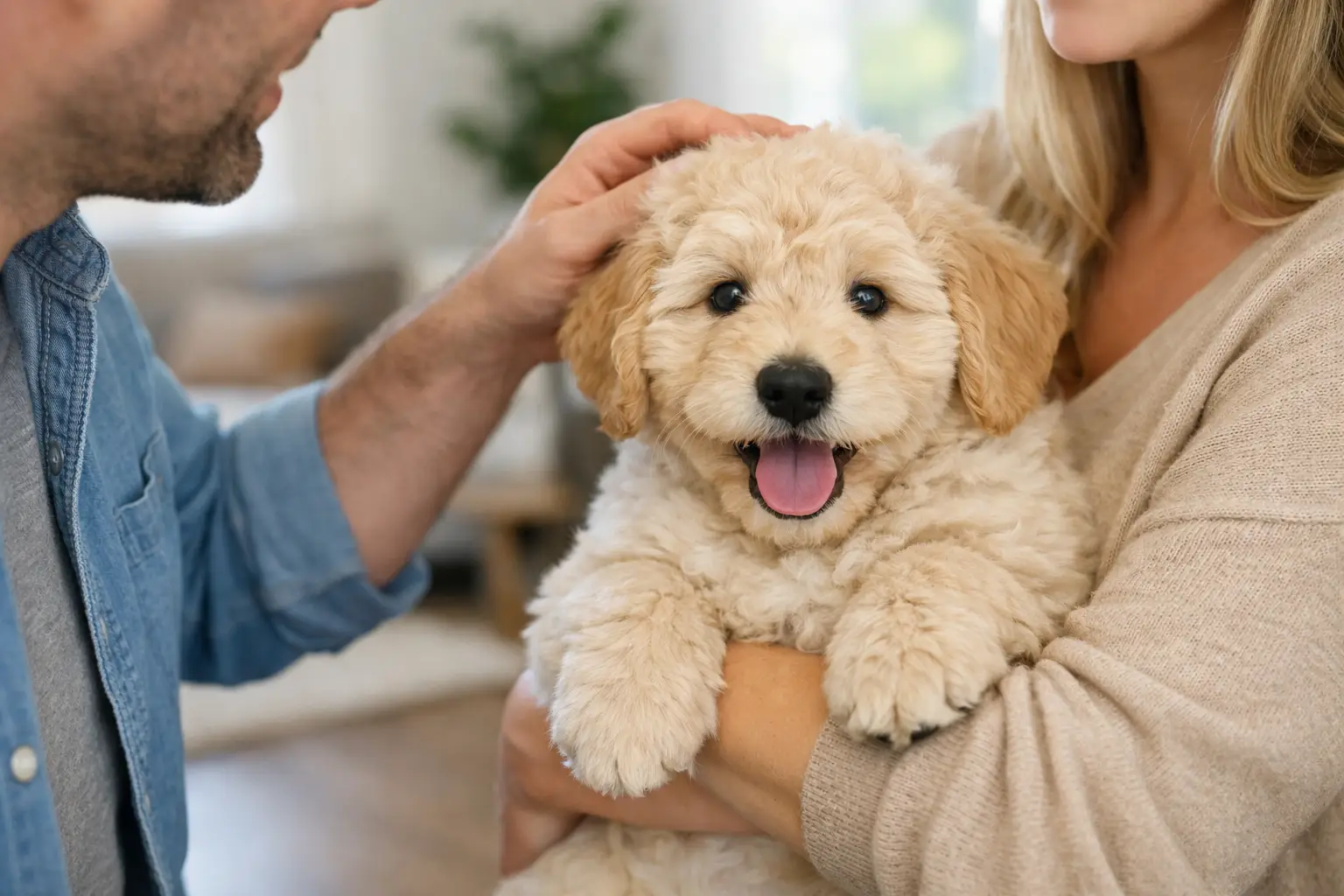
The first night matters more than most families expect. Bringing home a Goldendoodle puppy is exciting, emotional, and honestly a little tiring too. One moment you are soaking in that sweet puppy face, and the next you are wondering if the crate is in the right spot, why your puppy cried for ten minutes, or whether skipping one potty trip will set you back. That is all normal.
When I talk with new puppy families, I always remind them that the goal is not perfection on day one. The goal is a calm, loving transition. Your puppy has just left the only home, smells, and routine they have ever known. Even a well-socialized puppy needs a little time to settle in, and the way you handle those first few days can shape how confident and secure your puppy feels.
Before bringing home a Goldendoodle puppy
Preparation makes everything easier. Goldendoodles are smart, affectionate, and people-oriented, which is a wonderful combination for family life. It also means they notice change quickly and tend to do best when their new home feels structured from the start.
Before your puppy arrives, choose where the crate will go, where food and water will be offered, and which part of the yard will become the potty area. Try not to change those decisions too much during the first week. Puppies learn through repetition, and consistency helps them understand what you want.
You do not need a house full of gadgets. A crate, food and water bowls, a collar or harness, leash, a few safe chew toys, puppy food, and an enzyme cleaner will cover the basics. If you have children, it also helps to talk ahead of time about gentle handling, quiet voices, and letting the puppy rest. Children usually mean well, but puppies can become overwhelmed if every moment feels like playtime.
If you have other pets, think through those introductions carefully. A friendly older dog can help a puppy feel secure, but even a sweet adult dog may need space. Cats often do better when they can observe from a distance first. Slow and calm is almost always better than fast and exciting.
The ride home and the first few hours
The trip home is part of the transition, not just transportation. Some puppies fall asleep in the car. Others whine, drool, or feel unsure. Bring a towel or blanket and plan for a quiet trip if possible. If you are traveling with children, this is a good time to keep the mood gentle instead of overly stimulating.
Once you get home, take your puppy straight to the potty area before showing them the whole house. That first success matters. After that, let your puppy explore a small part of the home instead of giving full access right away. Too much space can lead to accidents and overstimulation.
I always encourage families to keep the first day simple. Skip the neighborhood parade and the stream of visitors. Your puppy does not need to meet everyone immediately. What they need most is to feel safe with you.
Bringing home a Goldendoodle puppy with kids
Goldendoodles are known for being wonderful family companions, but a puppy is still a baby. That means there is a learning curve on both sides. Children may expect an instant playmate, while the puppy may need naps, quiet time, and lots of short potty trips.
A few simple boundaries help the whole family. Teach children not to crowd the crate, not to wake a sleeping puppy, and not to carry the puppy unless an adult says it is safe. Encourage them to sit on the floor and let the puppy come to them. That gives the puppy more confidence and helps prevent rough handling.
It is also helpful to give children age-appropriate jobs. One child can help refill the water bowl, another can come along for potty trips, and an older child can practice simple training with adult supervision. When children are included in a calm, structured way, they build trust with the puppy instead of just excitement.
Your first week should feel boring in the best way
Many families think the first week should be full of activity so the puppy gets used to everything quickly. In reality, puppies usually do better when life feels predictable. A regular rhythm of potty trips, meals, naps, short play sessions, and bedtime creates security.
Take your puppy outside often, especially after waking, eating, drinking, and playing. Do not wait for perfect signals in the beginning. Young puppies need frequent opportunities, and catching accidents early is part of the process. If your puppy has an accident indoors, clean it thoroughly and move on. Harsh correction usually creates confusion, not faster training.
Sleep is another area where expectations matter. Puppies need a lot of rest, and a tired puppy can get mouthy, wild, or fussy. Families sometimes think the puppy needs more entertainment when what they really need is a nap. Quiet crate time during the day is often a gift to everyone.
Crate training, routines, and realistic expectations
A crate should feel like a safe little bedroom, not a punishment. Start with short periods, positive praise, and a calm attitude. Some puppies settle quickly, while others protest a bit at first. That does not mean crate training is wrong. It simply means your puppy is adjusting.
At night, it often helps to place the crate near your bed in the beginning. Your puppy has been used to sleeping near littermates and familiar sounds. Being close to you can make those first nights easier. Over time, you can decide whether the crate will stay there or move to another room.
Goldendoodles are very people-focused, which families love, but that can also mean they notice when they are alone. Building independence gently is important. Short, successful periods apart during the day help prevent your puppy from becoming too dependent on constant attention.
House training is not usually a straight line. There are good days and messy days. Teething starts, excitement increases, routines shift, and suddenly a puppy who did well for three days has an accident by the back door. That does not mean you are failing. It just means puppyhood is still puppyhood.
Feeding, grooming, and everyday care
One of the easiest ways to help your puppy adjust is to keep food consistent at first. Sudden diet changes can upset a puppy’s stomach, especially during a transition. Feed on a schedule rather than free-feeding, because regular mealtimes also help with potty training.
Goldendoodles also need grooming sooner than some families expect. Even young puppies benefit from getting used to brushing, touching their paws, looking in their ears, and handling around the face. Keep these moments short and positive. The goal at first is not a perfect grooming session. It is teaching your puppy that being handled is safe and normal.
Because Goldendoodles can have soft, curly, or wavy coats, grooming needs vary a little. Some coats mat more easily than others. What does not vary is the importance of starting good habits early. A puppy who learns to tolerate brushing and basic care will be much easier to maintain as an adult.
What surprises many first-time puppy owners
The biggest surprise is often how much supervision a puppy needs. Even an intelligent, well-started puppy still explores with their mouth, gets distracted, and forgets what they learned yesterday. That is why management matters so much. Baby gates, crates, and small play areas are not restrictive. They are helpful tools.
Another surprise is how quickly attachment forms. Families tell me all the time that within a day or two, it already feels like the puppy belongs. That bond is one of the sweetest parts of bringing a puppy home. It is also why patience matters so much during the hard moments. You are not just training behavior. You are building trust.
If you are bringing home a puppy from a family-raised breeder like Shalom Goldendoodles by Mary, your puppy may already be used to household sounds, daily handling, and human interaction. That can make the transition smoother, but it does not remove the need for consistency at home. A good start is only the beginning. What you do next still matters.
When to ask for help
Some adjustment struggles are normal. Ongoing diarrhea, refusal to eat, extreme lethargy, or signs of illness are not things to wait out. Stay in touch with your veterinarian and follow through with your puppy’s scheduled care.
Behavior questions matter too. New owners sometimes worry that asking for help means they are doing something wrong. It does not. Good puppy raising is not about knowing everything. It is about paying attention, staying teachable, and getting support when you need it.
The early days with a Goldendoodle puppy are sweet, messy, funny, and full of little learning moments. Give yourself room to grow into it. Your puppy does not need a perfect family. They need a loving one that shows up consistently, offers clear guidance, and makes home feel safe from the very beginning.