

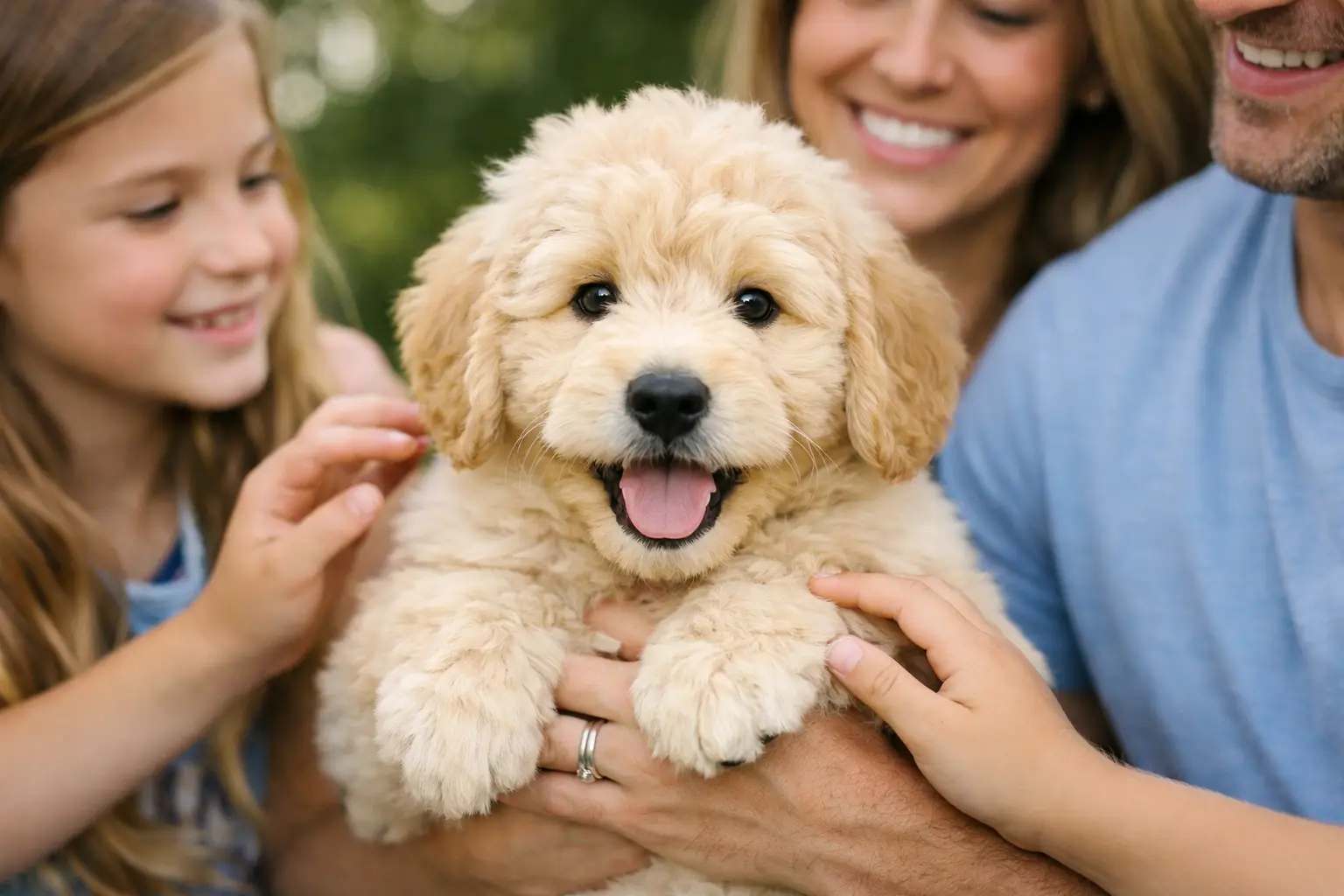
Bringing home a puppy is exciting, but it also comes with real decisions that shape the kind of experience your family will have for years to come. A good goldendoodle puppy adoption guide should help you look past cute photos and focus on what really matters – health, temperament, preparation, and finding a puppy that truly fits your home.
As a breeder, I have seen how much smoother the transition goes when families take their time on the front end. Goldendoodles are loving, intelligent, and incredibly people-oriented, but they are not one-size-fits-all dogs. The best adoption experience starts with honest questions, clear expectations, and a breeder who cares where each puppy is going.
What a goldendoodle puppy adoption guide should help you answer
Before you fall in love with a specific puppy, it helps to think about your everyday life. Are you looking for a larger dog that can keep up with an active household, or do you need a smaller companion that fits more comfortably in an apartment or smaller home? Do you have young children, work from home, or spend long hours away during the day?
These details matter because a puppy is joining your routine, not just your wish list. Goldendoodles tend to be social and eager to please, which makes them wonderful family companions, but they still need training, consistency, and time. A family with a flexible schedule may be ready for a standard puppy with lots of play and activity, while a smaller household may do better with a toy-sized Goldendoodle that is easier to manage physically.
Coat type matters too. Many families are drawn to Goldendoodles because of their low-shedding potential, especially F1B Goldendoodles, which often have curlier, more allergy-friendly coats. That said, low shedding does not mean low maintenance. Regular brushing and grooming are part of responsible ownership, and families should be prepared for that from the beginning.
Choosing the right breeder
This is where so much of the adoption journey is decided. A puppy’s early environment has a lasting effect on confidence, adaptability, and how smoothly that puppy settles into family life.
When I talk with families, I encourage them to ask how the puppies are raised, not just what they cost. A puppy raised inside a home, handled daily, and exposed to normal household life has a different start than one raised in a kennel setting with limited personal interaction. Early socialization, gentle handling, and daily attention help build the kind of steady, affectionate temperament most families are hoping for.
A trustworthy breeder should also be open about health practices. That includes veterinary care, age-appropriate vaccines, deworming, health records, and what kind of guarantee is offered. Transparency matters. You should feel comfortable asking questions about the parents, expected size, coat type, and personality traits. If a breeder seems rushed, vague, or unwilling to explain their process, that is worth paying attention to.
I also believe support after adoption matters more than many people realize. Questions come up once the puppy is home. Families may need guidance on feeding, crate training, potty training, or helping a puppy settle in during those first few nights. Having a breeder who stays available and genuinely cares makes a big difference.
Matching the puppy to your family
Not every adorable puppy is the right puppy for every home. That is not a bad thing. It is actually one of the most important parts of a thoughtful adoption process.
Some Goldendoodle puppies are naturally more outgoing and playful right away. Others are a little softer in personality and may prefer a calmer home or a gentler introduction to new experiences. A busy household with children may do well with a confident, social puppy, while a retired couple may love a puppy with a slightly calmer disposition.
Size expectations matter here too. Standard Goldendoodles often grow into wonderful companions for active families who want a larger dog by their side. Toy Goldendoodles can be a better fit for families wanting something smaller and easier to travel with. Neither is better across the board – it depends on your lifestyle, space, and comfort level.
This is one reason I always encourage families not to choose on color alone. Coat color can catch your eye first, but temperament, energy level, and fit with your home are what matter long term.
Preparing your home before adoption day
A solid goldendoodle puppy adoption guide should make one thing clear: preparation lowers stress for everyone. Puppies do best when their new home feels safe, calm, and predictable from day one.
Before your puppy arrives, it helps to have a crate, food and water bowls, a leash, collar, toys, grooming tools, and a simple sleeping setup ready. You do not need to overbuy. In fact, too much clutter can be overwhelming. What matters most is creating a clean, secure space where your puppy can rest and begin learning a routine.
You will also want to think through practical details. Decide where the puppy will sleep, where potty breaks will happen, and who will be home during those first few days. Puppies need frequent bathroom trips, supervision, and lots of reassurance. If everyone in the house understands the plan, the transition usually goes much more smoothly.
Families with young children should talk ahead of time about gentle handling, quiet rest time, and why puppies need patience. Children often mean well, but puppies can become overtired or overstimulated quickly. Setting expectations early helps build a positive relationship from the start.
The first week home
The first week is sweet, tiring, and sometimes a little emotional for both the puppy and the family. Even a well-socialized puppy is leaving the only environment they have known. It takes time to adjust.
During those first days, I usually tell families to keep life simple. Let the puppy get used to your voice, your home, and a basic schedule. Avoid too many visitors or exciting outings right away. A calm start builds confidence.
Crate training and potty training should begin immediately, but with realistic expectations. Young puppies need frequent breaks outside, especially after eating, waking, playing, and drinking water. Praise goes a long way. So does consistency. Accidents will happen, and that does not mean something is wrong.
Sleep can be one of the hardest parts for new owners. A puppy may cry at night for a little while, especially at first. That is normal. They are adjusting. Gentle reassurance, a consistent bedtime routine, and patience usually help more than dramatic changes or constant back-and-forth.
Health, grooming, and daily care
Goldendoodles are often chosen for their affectionate personalities and low-shedding coats, but families should understand the care that comes with that coat. Curlier coats usually need regular brushing to prevent tangles and matting. Professional grooming will also become part of the routine.
Health care begins early and continues throughout your dog’s life. Keep up with veterinary visits, vaccines, parasite prevention, and nutrition. A healthy start matters, but so does ongoing care at home. Good breeders lay the foundation, and families build on it.
Exercise needs can vary based on age and size, but most Goldendoodles thrive when they have both physical activity and mental engagement. Walks, training sessions, supervised play, and simple enrichment activities all help. Because they are intelligent and people-focused, they tend to do best when they are included in daily family life instead of left alone for long stretches without stimulation.
Common mistakes families can avoid
One of the biggest mistakes is underestimating the puppy stage. Goldendoodles are wonderful companions, but they are still puppies first. They chew, test boundaries, wake up early, and need structure. Going in with realistic expectations helps families stay patient.
Another common issue is waiting too long to begin routines. Puppies do not need a harsh environment, but they do need consistency. Clear habits around sleeping, potty breaks, feeding, and gentle training help them feel secure.
I also see families compare their puppy to someone else’s dog too quickly. Every puppy develops at their own pace. Some settle in right away. Others take a little longer. Progress is not always perfectly even, and that is okay.
Why the adoption process matters so much
A puppy is not just something you pick up and bring home. This is the beginning of a relationship that can shape your family’s daily life in beautiful ways. When the adoption process is thoughtful, families tend to feel more confident, and puppies tend to transition more successfully.
At Shalom Goldendoodles, that has always mattered deeply to me. I want families to feel informed, supported, and excited, but also prepared. The goal is not just to place puppies. It is to help each one join a loving home where they can thrive.
If you are in the early stages of your search, give yourself room to ask questions and trust what you learn along the way. The right puppy should feel like a good fit not only for your heart, but for your home, your schedule, and the life you are building together.