A dog becomes part of the everyday rhythm of your home – the child’s reading buddy, the walking companion, the happy face at the door. That is why the choice between goldendoodle breeder vs rescue adoption deserves more than a quick comparison of cost or availability. Both paths can lead to a deeply loved family companion, but they offer different kinds of information, preparation, and support.
I believe every family should make this decision with an open heart and clear expectations. A wonderful dog can come from a responsible breeder or a caring rescue. The best fit depends on your household, your experience, and what you need to feel prepared for the years ahead.
Goldendoodle Breeder vs Rescue Adoption: The Main Difference
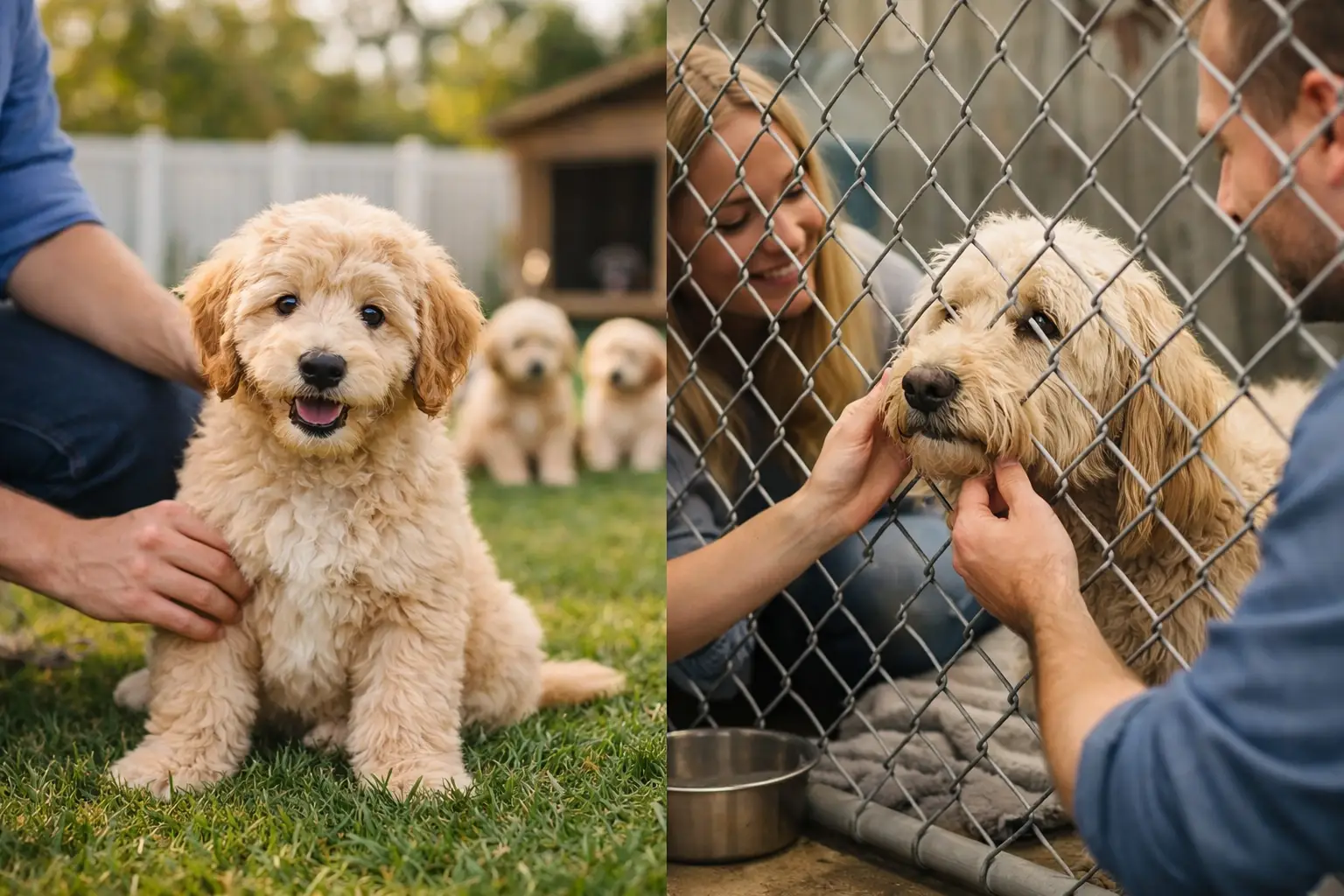
The biggest difference is predictability. With a responsible Goldendoodle breeder, families generally have more information about a puppy’s parents, early environment, expected adult size, coat type, health testing, and socialization from birth. With a rescue, a dog’s past may be partly known, fully known, or a complete mystery, depending on how that dog arrived in care.
Neither route is automatically better. Rescue adoption gives a deserving dog another chance and can be especially meaningful for families open to an adult dog, an older puppy, or a personality that has already begun to show itself. A breeder can be the better choice for families who want to prepare for puppyhood from the beginning and value knowing the foundation a puppy received in its first weeks of life.
What matters most is that the organization or breeder is honest, responsible, and willing to answer your questions. You should never feel rushed to make a decision about a dog who may share your home for 10 to 15 years.
What You Can Expect From a Responsible Breeder
When a puppy is raised responsibly, the work starts long before a family comes to pick one out. A caring breeder makes thoughtful decisions about the parent dogs, including temperament, health, and the traits that may be passed along to the puppies. Health testing and veterinary care are not extras. They are part of giving puppies the strongest possible start.
For families who are looking for an F1B Standard or Toy Goldendoodle, a breeder can often offer helpful guidance about likely adult size, coat care, energy level, and the kind of home that may suit a particular puppy. No breeder can promise the exact personality a puppy will have as an adult, because dogs are individuals. Still, knowing the parents and seeing how puppies are raised gives families useful context.
Early socialization is another meaningful part of the breeder experience. Puppies raised inside a family home hear normal household sounds, experience gentle handling, and begin learning that people are safe and comforting. They may be introduced to routines, grooming, crate time, and age-appropriate play. Those early moments do not replace continued training in a new home, but they can make the transition feel less overwhelming for both puppy and family.
I raise my puppies in my home because I want them to know family life from the beginning. At Shalom Goldendoodles by Mary, I also want puppy families to feel supported after pickup day. Questions about feeding, settling in, training, or those first nervous nights are normal. A responsible breeder should remain a resource, not disappear once a puppy goes home.
The Trade-Offs of Buying From a Breeder
A carefully raised puppy usually requires more planning. You may need to join a waitlist, place a deposit, and wait for the right litter or puppy. The upfront cost can also be higher than an adoption fee because responsible breeding includes health care, quality nutrition, parent-dog care, home raising, veterinary attention, and early puppy development.
You are also choosing puppyhood, with all its joy and work. Young puppies need frequent potty breaks, patient training, safe socialization, chewing supervision, and a steady routine. For a first-time dog owner, that can be a wonderful learning experience, but it is a real commitment. A low-shedding coat does not mean a no-maintenance dog either. Goldendoodles need regular brushing and professional grooming to keep their coats comfortable and free of mats.
What Rescue Adoption Can Offer Your Family
Rescue adoption can be a beautiful choice for families who want to provide a stable, loving home to a dog in need. Many rescued dogs are affectionate, resilient, and ready to build a new bond. Some may already be house-trained, sleep through the night, or have outgrown the most demanding puppy stages.
An adult dog can also make it easier to see certain traits. You may have a clearer sense of the dog’s size, exercise needs, comfort around children, and general personality. A foster-based rescue can be especially helpful because foster families often observe a dog in a home setting and can share what they have learned about daily habits.
Rescue organizations frequently know a great deal about the dogs in their care. They may provide veterinary records, behavioral observations, and a thoughtful adoption process designed to make good matches. Families should appreciate that careful screening. It shows that the rescue is taking the dog’s future seriously.
The Questions to Ask Before Adopting
A rescue dog may come with unknowns, and that does not make the dog less worthy. It simply means your family should ask clear questions and be ready to adapt. Find out what the rescue knows about the dog’s medical history, behavior around children and other pets, house-training, separation anxiety, guarding behaviors, and comfort with handling or grooming.
Ask where the dog has been living. A dog in a foster home may have a different adjustment period than a dog coming from a shelter environment. If possible, meet the dog more than once, bring other household dogs for a safe introduction, and include family members who will be involved in care. A rescue should welcome thoughtful questions and be honest when it does not have every answer.
If you are specifically hoping to adopt a Goldendoodle, remember that availability can be unpredictable. Purebred and doodle-type dogs do enter rescue, but there may be a long wait, and the dog’s exact mix or coat traits may not be known. If allergies are a concern, spend time with the individual dog before committing. No Goldendoodle, whether rescued or breeder-raised, can be guaranteed completely hypoallergenic.
Which Choice Fits Your Household?
A responsible breeder may be a strong fit if you want to know a puppy’s early background, prepare for a particular size range, and begin training and socialization from the start. It can also be reassuring for families with young children, first-time dog owners, or households seeking specific coat and temperament characteristics.
Rescue adoption may be the right fit if you are open to a dog with a developing or established personality, would prefer an older puppy or adult, and can offer patience as the dog adjusts. It is often a lovely path for families who have flexibility and a desire to meet the dog in front of them rather than search for a very specific age, look, or timeline.
Your lifestyle matters just as much as your preference. A busy household with little time for nighttime potty trips may do better with an adult rescue. A family excited to build routines around a young puppy may love the breeder experience. A calm retiree, an active couple, and a family with toddlers can all be wonderful dog homes, but their ideal match may not be the same.
How to Choose Responsibly Either Way
Whether you work with a breeder or a rescue, look for transparency. You should be able to ask direct questions without being made to feel difficult. A good breeder will discuss parent-dog health, veterinary care, living conditions, contracts, and how puppies are socialized. A good rescue will share medical and behavioral information it has, explain its adoption process, and help you think through whether a particular dog is a realistic fit.
Be cautious of pressure, vague answers, or a reluctance to discuss a dog’s history and needs. Avoid making your decision based only on a cute photo, a low price, or the fear that you will miss your chance. The right dog is worth a thoughtful pause.
Before bringing any dog home, talk as a family about daily responsibilities. Consider grooming, training, veterinary care, travel plans, exercise, and who will care for the dog during long workdays. The question is not simply whether you want a dog. It is whether you are ready to give one a safe, consistent, and loving life.
The happiest choice is the one that allows you to welcome a dog as a true family member, with patience for the learning ahead and room in your heart for the companionship that follows.