

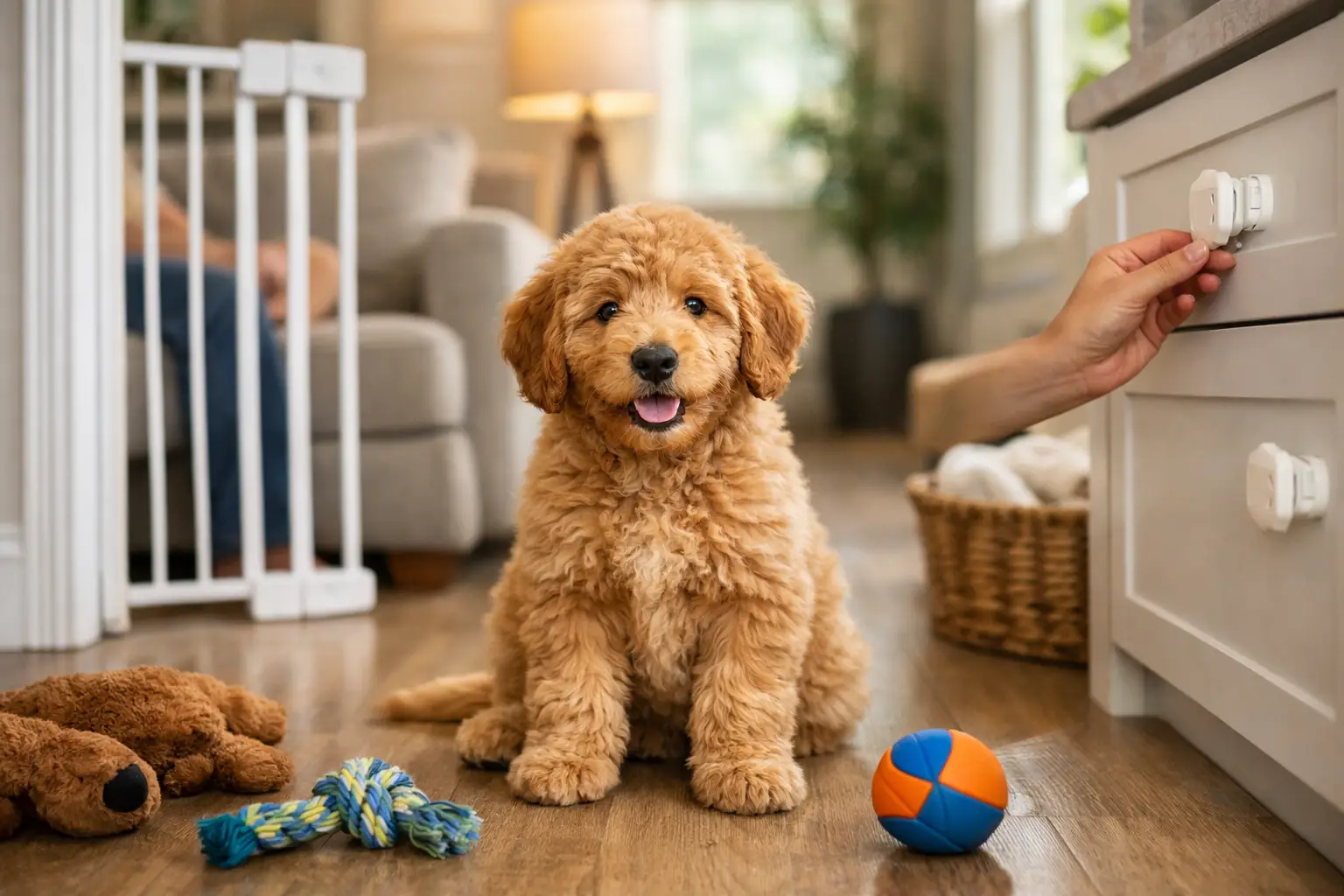
A puppy does not see your living room the way you do. A phone charger looks like a chew toy, a trailing tablecloth looks like something to tug, and the tiny space behind the recliner looks like the perfect place to investigate. When new families ask me how to puppy proof a home, I encourage them to get down at puppy level and look at every room with curious eyes.
The good news is that you do not need a perfectly bare house to welcome a puppy. You simply need a safe, manageable space where your new family member can learn good habits while you get to know one another. A little preparation before pickup day can prevent scary emergencies, protect your belongings, and make those first busy weeks feel much calmer.
How to Puppy Proof Your Home Room by Room
Start with the rooms where your puppy will spend the most time. For many families, that means the living room, kitchen, primary bedroom, and a designated sleeping or play area. You do not have to give your puppy access to the whole house right away. In fact, beginning with a smaller, puppy-safe area is usually easier for potty training, supervision, and helping a young puppy settle in.
Secure cords, outlets, and small objects
Electrical cords are one of the first things I would address. Bundle cords together, move them behind furniture when possible, or use cord covers designed to keep them out of reach. Unplug chargers when they are not being used. Puppies explore with their mouths, and chewing a live cord can cause a serious injury in seconds.
Walk through each room and pick up anything small enough to swallow. Coins, hair ties, batteries, jewelry, children’s toy pieces, socks, and remote controls are common trouble spots. A Goldendoodle puppy can be playful and clever, so do not assume an item is safe simply because it is sitting on a coffee table. If it can be knocked down, carried away, or chewed, put it away for now.
Keep trash cans covered or inside a cabinet. Kitchen trash may contain cooked bones, food wrappers, spoiled food, or other items that can cause choking or an upset stomach. Bathroom trash can include tissues, dental floss, medications, and personal-care products, all of which should stay well out of reach.
Make the kitchen a no-snack zone
The kitchen is full of exciting smells, which makes it a favorite place for many puppies. It is also full of foods that are not safe for dogs. Grapes and raisins, chocolate, onions, garlic, xylitol-containing gum or peanut butter, alcohol, and caffeine should never be left where a puppy can reach them.
Get into the habit of wiping counters and sweeping after meals. A dropped grape or a piece of onion may be easy for an adult to miss but easy for a puppy to find. Keep dish soap, dishwasher pods, cleaning sprays, and laundry products in latched cabinets or high storage areas.
If your family has young children, this is a wonderful time to create a simple house rule: food stays at the table, and everyone checks the floor before leaving the kitchen. It helps protect your puppy and teaches children how to care for their new companion thoughtfully.
Protect your puppy from furniture hazards
Recliners, sofa beds, rocking chairs, and reclining sofas deserve extra attention. Before using any moving furniture, make sure your puppy is not sleeping beneath or behind it. Small puppies can quietly slip into cozy spaces, especially when they are tired.
Block access behind entertainment centers, under beds, and around furniture with narrow gaps if you cannot easily reach your puppy there. You may also want to move delicate decorations, candles, and low houseplants during the early puppy months. This is not forever. It simply gives your puppy time to learn what belongs to them and what does not.
Create a Safe Puppy Zone
A crate, exercise pen, or gated-off room can be one of the kindest tools you use during the adjustment period. It is not a punishment. A properly introduced puppy zone gives your little one a quiet place to rest and keeps them from practicing unwanted behaviors when you cannot watch closely.
Include a comfortable bed or crate mat, fresh water, a few appropriate puppy toys, and nothing that could be chewed apart or swallowed. Choose toys made for puppies and inspect them regularly for loose pieces. Soft toys can be sweet, but some puppies are determined chewers, so the right toy depends on your individual pup.
For a Standard Goldendoodle, keep future adult size in mind when choosing a crate or pen. A puppy may look tiny at first, but many F1B Standard Goldendoodles grow into active, medium-to-large companions. A divider panel can make a larger crate practical while helping you adjust the space as your puppy grows. Toy Goldendoodles need safety precautions too, but their smaller size means they may fit through openings that look secure at first glance.
Baby gates can be especially helpful around stairs, laundry rooms, home offices, and rooms with more hazards. Make sure the gate is installed securely and has openings your puppy cannot squeeze through. For families with children, gates also create helpful quiet zones where puppy naps can happen without interruption.
Check Your Yard Before the First Potty Break
Puppy proofing does not stop at the back door. Before your puppy arrives, inspect your fence line closely. Look for loose boards, gaps near gates, holes under fencing, broken latches, and areas where a small puppy could slip out. Even a fenced yard requires supervision, especially during the first weeks at home.
Florida families should also think about heat. Puppies can overheat quickly, so plan for short outdoor potty trips during the hottest parts of the day and always provide access to fresh water. Hot pavement can hurt sensitive paws, too. If the ground feels uncomfortable against the back of your hand, it is too hot for a puppy to walk on comfortably.
Remove lawn chemicals, fertilizers, insecticides, and garden tools from places your puppy can access. Check your plants as well. Some common indoor and outdoor plants can be toxic to dogs, and a curious puppy does not know the difference between a safe leaf and a dangerous one. If you are unsure about a plant, move it out of reach until you can confirm it is pet-safe.
Pools, ponds, and water features need special planning. Never assume a puppy can safely swim or find the steps out of a pool. Use barriers when possible, supervise closely, and introduce water slowly and positively if swimming will be part of your family life.
Prepare for Chewing Without Expecting Perfection
Chewing is normal puppy behavior. It helps with teething, relieves boredom, and gives puppies a way to explore. The goal is not to expect your puppy never to chew. The goal is to make the right choice easy and the wrong choice unavailable.
Keep a variety of safe chew options nearby, especially in the rooms where your family spends time. If you catch your puppy chewing a shoe or table leg, calmly trade it for an appropriate toy. Avoid turning it into a chase game, because many puppies will find that very entertaining.
Shoes, laundry, backpacks, and children’s favorite stuffed animals are common targets because they carry familiar family scents. Closed closets, laundry hampers with lids, and a simple habit of putting belongings away will save a lot of frustration. Consistency matters more than a perfect home.
Put Medications and Household Products Away
Many accidental poisonings happen because a bottle, purse, or packet was left within reach for only a few minutes. Store prescription medications, vitamins, pain relievers, nicotine products, essential oils, and supplements in secure cabinets. Ask guests to keep purses and bags off the floor, too, since they may contain medication or gum.
This is also a good time to save the phone number for your veterinarian and a pet poison resource in your phone. If you ever think your puppy has swallowed something unsafe, do not wait to see whether symptoms appear. Contact a veterinary professional right away and bring the package or product information if you have it.
Include the Whole Family in the Plan
The best puppy-proofed home is one where everyone understands the plan. Before your puppy arrives, talk through who will handle meals, potty trips, nap times, and supervision. Young children should know to let a sleeping puppy rest, keep fingers away from the food bowl, and use gentle hands.
I also encourage families to agree on a few simple rules before the exciting first day. Decide which furniture is off-limits, where the puppy will sleep, which door will be used for potty breaks, and what words everyone will use for basic cues. Puppies learn faster when the people they love are consistent.
At Shalom Goldendoodles, I raise puppies in my home because I want them to be familiar with everyday household life. Still, every new home has different sounds, routines, and opportunities to explore. Give your puppy time, supervise generously, and remember that puppy proofing is something you adjust as your little one grows. A safe home gives your new companion the freedom to learn, rest, play, and become the beloved family dog you have been waiting for.



[…] children to be gentle during brushing and making grooming a calm, positive experience helps your puppy see it as normal family care rather than something to […]