

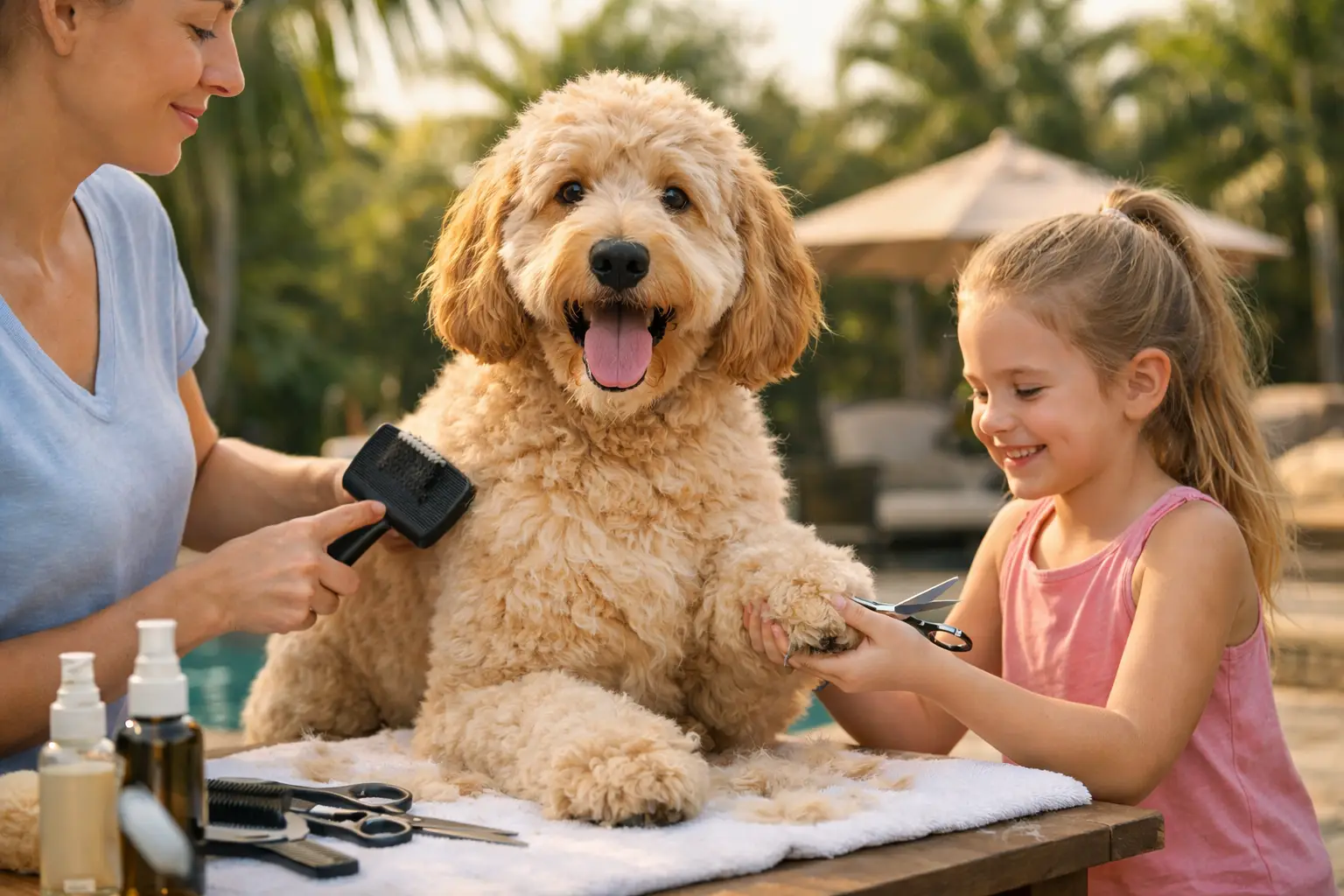
A fluffy Goldendoodle coat is one of the things families love most, but it needs regular care to stay soft, comfortable, and healthy. This goldendoodle grooming routine guide is meant to make that care feel manageable, especially for first-time doodle families. A few peaceful minutes of brushing throughout the week can prevent the painful mats and stressful grooming appointments that no one wants for their dog.
I always encourage families to think of grooming as part of everyday connection, not just a chore. Your Goldendoodle learns that being touched, brushed, and handled gently is safe. That trust carries over to vet visits, professional grooming, nail trims, and all the little moments of care you will share over the years.
Start With Your Goldendoodle’s Coat Type
Goldendoodles can have wavy, curly, or somewhere-in-between coats. F1B Goldendoodles, including the Standard and Toy puppies I raise, often have curlier, lower-shedding coats because of their Poodle heritage. Those beautiful curls can hold loose hair close to the skin, which means they can mat if brushing is skipped.
A wavier coat may be a little easier to brush through, while a tighter curly coat usually needs more frequent line brushing and more regular professional grooming. Coat texture can also change as a puppy grows. Many families notice that the soft puppy coat begins changing between about 6 and 12 months, and this is often when tangles become more persistent.
The right schedule depends on your individual dog, their haircut, outdoor activity, and how much time they spend in water. A short, practical trim is easier to maintain than a long, fluffy style. Neither choice is wrong. The best style is the one your family can keep comfortable and clean.
The Goldendoodle Grooming Routine Guide: Weekly Care
For most Goldendoodles, I recommend a thorough brush two to four times each week. Dogs with longer or curlier coats may need a quick daily check, especially around the areas that rub together. Regular care is much kinder than trying to work through a large mat later.
Set aside a calm time when your dog is relaxed. A non-slip surface, a few small treats, and a gentle voice go a long way. Begin with the parts of the body your dog accepts most easily, then work gradually toward more sensitive spots. If your puppy gets restless, end on a positive note and try again later. Building good feelings around grooming matters more than finishing every inch in one session.
Brush all the way to the skin
Simply brushing over the top of the coat can make it look neat while hidden tangles continue to build underneath. Instead, use a slicker brush to lift a small section of hair, then brush from the ends toward the skin in gentle layers. This is often called line brushing.
Follow with a metal comb. The comb is your best test: if it glides from the skin through the ends, that area is truly clear. If it catches, stop and carefully work on the small tangle before it becomes tighter. Never pull hard or rush. Mats can be uncomfortable, and a dog that is hurting will naturally become nervous about grooming.
Check the places mats love to hide
Pay special attention behind the ears, under the collar or harness, under the front legs, around the tail, along the belly, and between the back legs. These areas collect friction, moisture, and loose hair. Florida families may also find that humid weather, summer swimming, and rainy-day walks make the coat more likely to tangle.
After a swim or bath, rinse away chlorine, salt, or shampoo thoroughly, then dry the coat completely. Damp curls can tighten into mats surprisingly fast. Towel drying is a good first step, but a cool or low-heat pet dryer, used patiently, helps dry the coat down to the skin.
Bathing Without Drying Out the Coat
Most Goldendoodles do well with a bath about every four to eight weeks, unless they have rolled in something messy or their veterinarian recommends a different schedule. Bathing too often can dry the skin and coat. On the other hand, waiting too long can leave dirt, oils, and odors trapped in those curls.
Always brush and comb your dog before the bath. Water makes existing knots tighten, turning a small tangle into a difficult mat. Use a gentle dog shampoo, rinse very well, and consider a dog-safe conditioner if your Goldendoodle has a longer coat. Leftover product can cause itchiness, so rinsing is just as important as washing.
While bathing, take a moment to look at your dog’s skin, ears, paws, and teeth. You may spot redness, a sore area, a bump, or a tick sooner than you would otherwise. If something seems unusual or your dog is scratching often, call your veterinarian rather than assuming it is only a grooming issue.
Professional Grooming Is Part of Responsible Care
Home grooming keeps a Goldendoodle comfortable between appointments, but most families will also benefit from a professional groomer. Many Goldendoodles need a full groom about every six to eight weeks. A groomer can bathe, blow-dry, trim the coat, clean up the face and feet, clip nails, and check the ears with the right tools and experience.
For a young puppy, the first appointment should be short and encouraging. A puppy introduction groom may include gentle brushing, a bath, face and foot trimming, nail handling, and time to get used to the dryer. It does not need to be a dramatic haircut. The goal is to teach your puppy that grooming is a normal, safe part of family life.
Bring your groomer a photo if you have a style in mind, but also be honest about your home brushing routine. A longer teddy-bear look is lovely, but it requires commitment. If life is busy with children, work, school, and sports, a shorter clip may give your Goldendoodle more comfort and give your family more time to simply enjoy one another.
Ears, Nails, Teeth, and Paws Need Attention Too
A complete grooming routine is about more than the coat. Goldendoodles can have floppy ears that hold moisture, particularly after baths or swimming. Check the outer ear area weekly for odor, redness, discharge, or frequent head shaking. Clean only as your veterinarian has instructed, and never push anything down into the ear canal.
Nails should be checked every few weeks. If you hear clicking across the floor, it is often time for a trim. Long nails can change the way a dog stands and walks. If nail trimming makes you uneasy, your groomer or veterinarian can help, and there is no shame in leaving that task to a professional.
Teeth benefit from regular brushing with dog toothpaste. Even a few sessions each week can support healthier gums and fresher breath. For paws, check between the toes after outdoor play for burrs, debris, irritation, or small cuts. Keeping the hair around the feet neatly trimmed can make those checks easier.
Help Your Puppy Learn to Love the Process
The easiest Goldendoodle grooming routine begins long before a full haircut. At home, gently touch paws, lift the ears, hold the muzzle for a second, and reward calm behavior. Let your puppy sniff the brush and hear the dryer from a comfortable distance. Keep every early session brief, cheerful, and predictable.
I have seen how much confidence this gentle practice can build. A puppy who learns that handling brings praise and reassurance is more likely to become an adult dog who stands calmly for the groomer. Patience now protects their comfort later.
At Shalom Goldendoodles, I want every puppy family to feel supported as they learn the rhythms of life with their new companion. Grooming will not always be perfectly tidy, especially during the busy puppy months. What matters is staying consistent, asking for help when you need it, and making your Goldendoodle feel safe in your hands.



[…] Goldendoodles and Labradoodles benefit from thorough brushing several times a week. A curlier coat may need brief attention every day, especially around the […]