

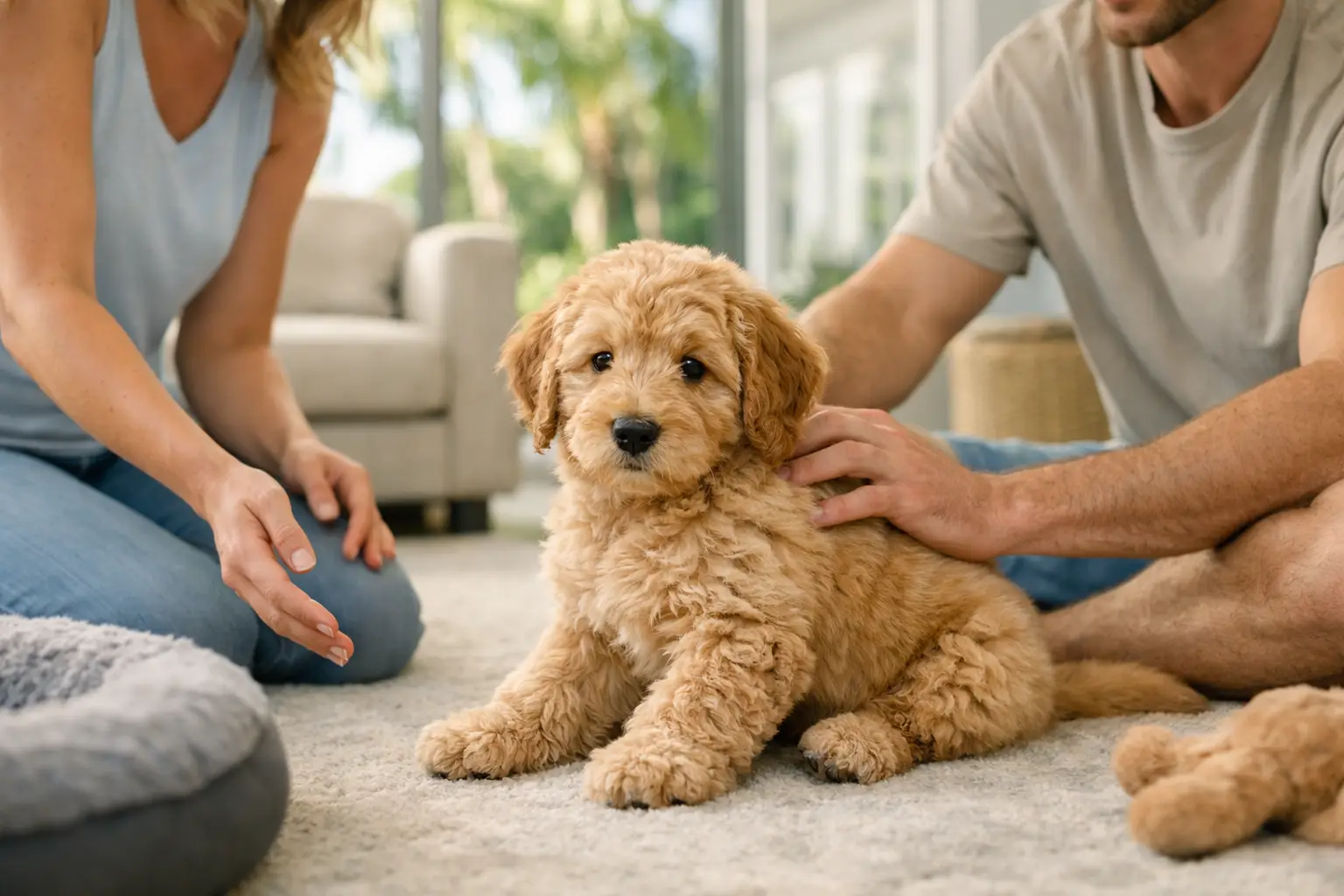
The first evening with a new puppy can feel a little like bringing home a newborn. Everyone is excited, the puppy is tired from a big day, and suddenly every little whimper can make you wonder if you are doing things right. When families ask me how to transition a new puppy home, I encourage them to keep the first few days quiet, predictable, and full of gentle reassurance.
A puppy does not need a packed schedule or a house full of visitors right away. What they need most is time to learn that this new place, with its new people and new sounds, is safe. The small routines you begin during that first week will help shape a confident, well-adjusted companion for years to come.
Prepare Your Home Before Puppy Arrives
Before pickup day, choose the areas of your home your puppy will use most often. Set up a comfortable crate or puppy pen in a spot where your family spends time, but not directly in the middle of constant activity. Puppies are social and do not want to feel isolated, yet they also need a calm place to rest.
Have fresh water available, along with age-appropriate food, a collar or harness, leash, safe chew toys, and a few cleanup supplies. I also recommend deciding in advance where your puppy will go potty. Consistency helps them understand the routine much faster than changing locations every day.
Puppy-proofing matters more than many new owners expect. Get down at puppy level and look for electric cords, small children’s toys, shoes, houseplants, medications, and anything that could be swallowed or chewed. A curious Goldendoodle puppy can find trouble surprisingly quickly, especially once they begin feeling comfortable.
How to Transition a New Puppy Home on Day One
The ride home should be as peaceful as possible. If you are traveling a longer distance, plan for a quiet potty break in a clean, low-traffic area if needed. When you arrive, take your puppy directly to the designated potty spot before introducing the whole house. Praise softly if they go, but do not worry if they are too distracted or nervous to potty right away.
After that, let your puppy explore one or two rooms at a time. A full house tour can be overwhelming. Keep voices gentle and movements calm, particularly if children are excited. Your puppy may be playful for a few minutes, then suddenly fall asleep. That is completely normal. Young puppies need a great deal of rest to process new experiences and grow.
Try to avoid inviting friends, neighbors, and extended family over on the first day. Socialization is valuable, but it should be positive and gradual. A puppy who is overwhelmed by too much attention may become tired, mouthy, or fearful. There will be plenty of time for happy introductions once your puppy has settled into your family.
Give Children a Simple Job
For families with children, I find it helps to explain that the puppy is not a stuffed animal or a playmate who can stay awake all day. Teach children to sit calmly on the floor, allow the puppy to approach, and pet gently on the chest or side instead of reaching over the puppy’s head.
Giving children small responsibilities can build a beautiful bond. They may help fill the water bowl, carry a toy, or join an adult on a potty trip. Adults should still supervise every interaction, especially during the first weeks while both puppy and children are learning each other’s boundaries.
Start a Gentle, Predictable Routine
Puppies feel secure when life begins to make sense. You do not need a strict minute-by-minute schedule, but regular patterns for meals, potty breaks, play, naps, and bedtime make house training and settling much easier.
Most young puppies need to go outside after waking up, after eating or drinking, after active play, and before bedtime. They may also need frequent trips between those times. Take them to the same potty area, wait quietly, and offer warm praise right after they finish. If an accident happens indoors, clean it thoroughly and move on. Scolding after the fact only creates confusion and can make a puppy nervous about pottying in front of you.
A simple first-week rhythm may look like a potty trip, breakfast, a few minutes of gentle play or training, and then a nap. Puppies often become extra energetic or nippy when they are overtired, not because they are being difficult. A calm rest period in their crate or pen can be the kindest answer.
Crate Training Should Feel Safe
A crate is not a punishment. When introduced patiently, it can become a cozy sleeping space and an important part of safe travel, bedtime, and house training. Keep the crate comfortable, offer a safe chew or toy, and let your puppy go in and out voluntarily during the day.
At night, many families find it helpful to place the crate beside their bed for the first few nights. Your puppy has just left the familiar sounds and warmth of littermates, so being close to you can be reassuring. If your puppy cries, pause for a moment before responding. They may settle on their own, but if the crying continues, take them quietly outside for a brief potty break and then return them to bed without turning it into playtime.
Every puppy is different. Some adjust quickly, while others need a little more comfort and patience. The goal is steady progress, not a perfect first night.
Keep Food and Health Care Consistent
The first week is not the best time to make major food changes unless your veterinarian advises otherwise. Sudden changes in diet, paired with the stress of a new environment, can upset a puppy’s stomach. If you plan to transition foods, do so gradually over several days according to your veterinarian’s guidance.
Schedule your puppy’s first veterinary visit soon after bringing them home, following the timeline provided by your breeder and veterinarian. Bring any health records, vaccination information, and questions you have written down. Your vet can guide you on vaccine timing, parasite prevention, feeding amounts, and safe exercise based on your puppy’s age and individual needs.
For families in Florida, it is also wise to ask about local parasite prevention and heat safety. Puppies can overheat quickly, so outdoor play should be brief and supervised during hot parts of the day. Fresh water and shade are essential.
Build Trust Before You Ask for Too Much
The first week is about connection, not obedience drills. Begin with simple, happy moments: saying your puppy’s name, rewarding them for looking at you, and praising them when they come close. Short training sessions of one or two minutes can be plenty for a young puppy.
Goldendoodles are bright, people-oriented dogs, and they often enjoy learning. Still, their attention spans are short. Use tiny treats, a cheerful voice, and repetition rather than expecting too much too soon. Start with practical skills such as coming when called indoors, sitting for a treat, and trading a toy rather than grabbing things from their mouth.
Gentle handling is equally valuable. Briefly touch your puppy’s paws, ears, collar, and mouth while offering praise or a treat. This helps prepare them for grooming, nail trims, and veterinary care. For a curly-coated F1B Goldendoodle, early positive grooming experiences are especially helpful because regular coat care will become part of life.
Expect an Adjustment Period
Some puppies walk into a new home ready to explore. Others may sleep more than usual, eat lightly for a meal or two, or follow their people everywhere. These can all be normal signs of adjustment. What matters is watching your puppy closely and reaching out to your veterinarian if you notice persistent vomiting, diarrhea, extreme lethargy, refusal to drink, or anything that concerns you.
Try not to measure your puppy’s progress against someone else’s. House training, sleeping through the night, and comfort with the crate happen at different speeds. Consistency, patience, and a loving response will carry you much further than pressure.
I raise my puppies inside my home because I want them to begin life familiar with family sounds, gentle handling, and everyday routines. Even with that early foundation, joining a new family is still a big change. Give your puppy grace during those first tender days, and give yourself grace too. Before long, the little puppy who seemed unsure of every new sound will be following you through the house like they have always belonged there.