

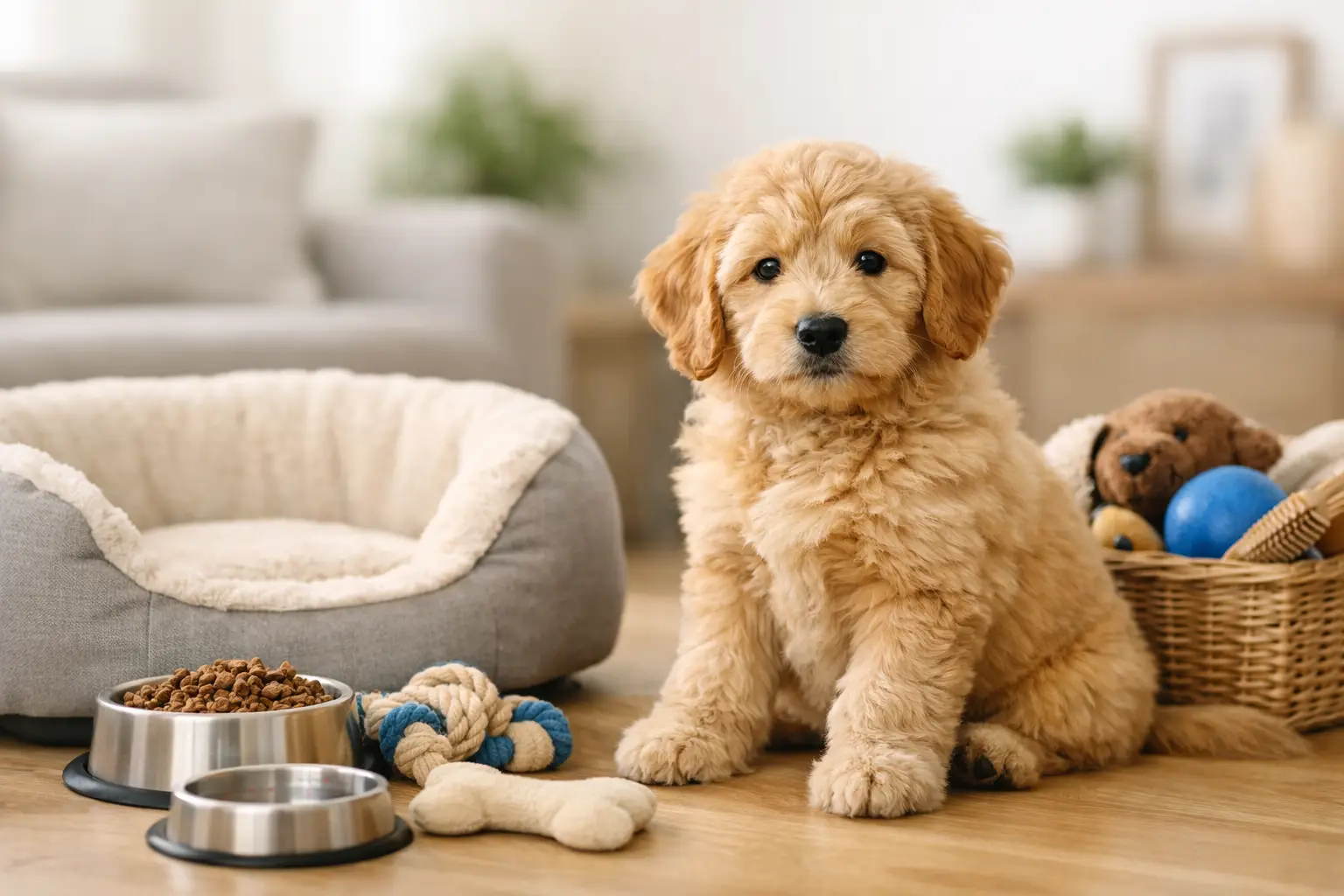
The first few days with a new puppy are sweet, exciting, and a little chaotic. One minute you are taking adorable photos, and the next you are wondering why your puppy is trying to chew a chair leg while falling asleep mid-play. If you are asking how to prepare for goldendoodle puppy life, the best thing you can do is get your home, schedule, and expectations ready before your puppy arrives.
Goldendoodles are loving, intelligent, and very people-focused. That is one of the reasons families adore them. It also means they do best when they are brought into a home that is ready to guide them with consistency, patience, and lots of affection. Preparing ahead of time makes the transition easier for your puppy and much calmer for your family.
How to Prepare for a Goldendoodle Puppy at Home
Before your puppy comes home, look at your space from a puppy’s eye level. Goldendoodles are curious, active, and quick learners, but they are still babies. If something is within reach, there is a good chance they will sniff it, taste it, or drag it across the room.
Start by putting away anything you do not want chewed. Shoes, phone chargers, children’s toys, houseplants, and loose cords are common trouble spots. Trash cans should be secured, and any cleaning products or medications should be placed well out of reach. If you have a yard, check fencing, gate latches, and any small openings a puppy might squeeze through.
It also helps to decide where your puppy will sleep, eat, and rest. Puppies do better when they have a simple setup instead of full access to the whole house right away. A crate, playpen, or gated area gives them a safe place to settle in. This is not about keeping a puppy isolated. It is about creating structure and helping them feel secure.
Set Up the Essentials Before Pickup Day
You do not need a house full of gadgets, but a few basics make a big difference. I always tell families to focus on comfort, safety, and routine first.
Your puppy should have a crate that is large enough to stand up and turn around in, but not so large that one side becomes a bathroom area. You will also want food and water bowls, a collar or harness, a leash, a bed or crate mat, puppy-safe toys, grooming tools, and enzymatic cleaner for inevitable accidents. Keep a good supply of puppy food ready before arrival, especially if you plan to continue the same food during the first transition period.
Toys matter more than many people expect. Goldendoodles are bright and playful, so they need healthy things to chew and interact with. A mix of soft comfort toys, chew toys, and simple enrichment toys can help prevent boredom and redirect nipping.
If you have children, this is also the time to talk through puppy rules. Little ones often mean well, but they may want to hug, chase, or carry a puppy too much. Calm, gentle handling helps build trust from the beginning.
Prepare Your Schedule, Not Just Your House
One of the biggest parts of how to prepare for a Goldendoodle puppy is making room in your daily routine. Puppies need frequent potty breaks, short training sessions, supervised play, meals on schedule, and a lot of sleep. They are not difficult because they are bad. They are simply young and still learning everything.
During the first couple of weeks, someone should be available often enough to keep the puppy on a predictable routine. Young puppies usually need to go outside after waking up, after eating, after playtime, and before bed. Waiting too long almost always leads to accidents, and that can slow down house training.
If everyone in the household works long hours away from home, it is wise to make a plan in advance. That might mean arranging a family schedule, hiring a trusted pet sitter, or asking for help from someone experienced with puppies. Goldendoodles are very social, and long stretches alone can be hard on them, especially at the beginning.
The First Night and First Week
Many families picture the first night as magical and quiet. Sometimes it is. Often, it includes a little crying, a potty trip or two, and not much sleep for anyone. That is completely normal.
Your puppy has just left the only home they have known. New smells, new people, and a new routine can feel overwhelming at first. Keep the first evening calm. Avoid a house full of visitors and too much excitement. Let your puppy explore a small area, offer water, take them out often, and begin the bedtime routine you want to continue.
Some puppies settle best with the crate close to your bed at first. That allows them to hear and smell you, which can be comforting. It does not mean they will always need that arrangement. It simply helps ease the transition.
The first week should focus on bonding and routine more than entertainment. You do not need to do everything at once. A puppy does not need a packed social calendar. They need consistency, gentle exposure, and time to feel safe.
Feeding, Potty Training, and Daily Rhythm
Puppies thrive on predictability. Feed meals at about the same times each day, take your puppy out on a reliable potty schedule, and keep bedtime and wake-up times as consistent as possible. This helps with digestion, house training, and overall confidence.
When it comes to potty training, quick praise and consistency matter. Take your puppy to the same general potty spot, use a simple cue if you like, and reward success right away. If an accident happens indoors, clean it thoroughly and move on. Harsh correction usually creates confusion, not faster learning.
Goldendoodles tend to catch on quickly, but every puppy is different. Some are confident and adaptable right away. Others are a little more sensitive and need extra reassurance. Progress is rarely perfectly straight. One good day does not mean training is complete, and one accident does not mean you are failing.
Training Starts on Day One
A lot of people think formal training begins later, but puppies start learning the moment they come home. They learn what gets attention, where they are allowed to go, how people respond to nipping, and whether the world feels safe and predictable.
Keep early training short and simple. Focus on name recognition, coming when called, sitting politely, and getting used to handling. Touch paws, ears, and face gently so grooming and vet visits are easier later. Reward the behavior you want with praise, treats, and calm consistency.
Because Goldendoodles are smart and eager to connect, they usually enjoy training. The trade-off is that they can also learn bad habits quickly if the household is inconsistent. If one person allows jumping and another does not, your puppy will be confused. Clear expectations help everyone.
Grooming Preparation Matters More Than People Realize
Goldendoodles are known for their beautiful coats, but that coat needs care. Families sometimes prepare for training and forget to prepare for grooming, and then they are surprised by tangles, brushing struggles, or a puppy that dislikes being handled.
Start early and keep it positive. Even if your puppy does not need a full groom right away, brushing practice should begin young. Gentle brushing sessions, touching paws, wiping faces, and getting used to bathing sounds all help build confidence. Short, happy sessions are better than waiting until the coat mats and grooming becomes stressful.
Coat type can vary, even within Goldendoodles. Some coats are curlier and more prone to tangling, while others are looser and easier to maintain. That means grooming needs are not exactly the same for every puppy. It is better to expect regular coat care from the beginning rather than hope for a low-maintenance surprise.
Prepare the Whole Family for Life With a Puppy
Bringing home a puppy changes the rhythm of the household. That is part of the joy, but it helps to be honest about it. There will be moments of mess, interrupted sleep, and training frustration mixed in with all the sweetness.
Talk ahead of time about who is responsible for morning potty breaks, feeding, training practice, grooming, and cleaning up accidents. If children are involved, adults still need to oversee most of the care. Kids can absolutely help, but puppies need consistency that matches their age and stage.
If you have other pets, introductions should be thoughtful and gradual. A friendly resident dog may still need time to adjust. A cat may prefer distance at first. Slow, supervised introductions usually go much better than expecting instant friendship.
What Your Goldendoodle Puppy Really Needs Most
Families often worry about buying every perfect item before pickup day. The truth is, your puppy needs something more valuable than a long shopping list. They need a home that is prepared to be patient, present, and consistent.
A Goldendoodle puppy will bring energy, affection, and plenty of personality into your home. When you prepare with realistic expectations, a safe environment, and a gentle routine, you are giving that puppy the kind of start that builds trust for years to come. And that is what turns those busy little puppy days into a beautiful life together.



[…] week or two, keep your puppy’s world small. Let them get to know their sleeping area, potty spot, food and water bowls, and the people in the household before introducing every room, visitor, and outing. This is not […]
[…] Puppy-proofing matters more than many new owners expect. Get down at puppy level and look for electric cords, small children’s toys, shoes, houseplants, medications, and anything that could be swallowed or chewed. A curious Goldendoodle puppy can find trouble surprisingly quickly, especially once they begin feeling comfortable. […]