

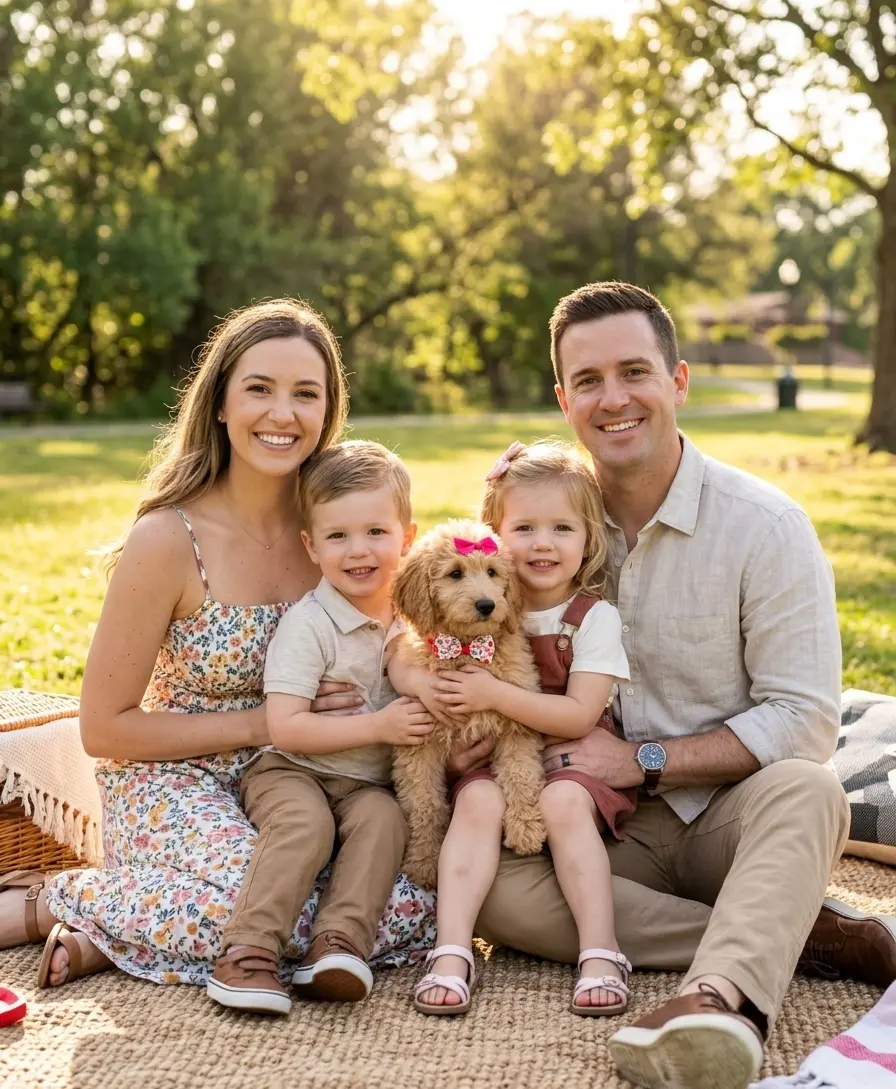
Goldendoodle puppies are energetic, intelligent companions that thrive when they receive the right amount of daily exercise. Regular activity helps support healthy growth, build strong muscles, improve socialization skills, and prevent boredom-related behaviors. However, too much exercise can be just as problematic as too little, especially while puppies are still developing. Understanding how much exercise your puppy needs each day can help create a healthy routine that supports both physical and mental well-being.
Key Takeaways
- Gauge the physical impact by strictly matching daily workout limits to skeletal maturity markers.
- Limit workout duration to brief, low-impact tracking drills rather than forced road work.
- Engage working drives through heavy cognitive puzzle toys to drain mental battery packs.
- Scale up stress slowly as bone density and baseline muscular endurance naturally mature.
- Protect growth plates by banning high-impact vertical jumps on slick hardwood floors.
- Enforce set patterns to stabilize cortisol levels and neutralize anxious boundary-testing habits.
How Much Daily Exercise Do Goldendoodle Puppies Need at Different Ages?
A puppy’s physical threshold shifts every few weeks. Young dogs require micro-sessions spaced out by heavy, uninterrupted sleep cycles. Older juveniles can finally handle proper leash work and heavier field exercises. Track these developmental milestones to keep from burning out your dog’s joints before they fully form.
1. Puppies Under 3 Months Need Gentle Play and Exploration
At eight to twelve weeks, formal training is out. Keep physical conditioning limited to self-directed backyard tumbling and basic environmental exploration. Let them dictate when to stop and rest. Short exposures to varied floor textures build solid confidence without placing unnecessary mechanical stress on their soft skeletal system.
2. Puppies Between 3 and 4 Months Can Begin Short Walks
Four months mark the start of real leash conditioning. Use the standard handler rule of five minutes of walk time per month of age. A sixteen-week-old pup handles a twenty-minute structured stroll perfectly. Keep the pace casual. Stop immediately if you notice lagging or dipping in their topline.
3. Puppies Between 5 and 6 Months Benefit From Increased Activity
Coordination hits a turning point at five months. You can safely ramp up the difficulty with longer trail walks and controlled retrieve games. Mix short, low-impact fetch sessions with basic hand signals. This combination builds raw athletic stamina while taxing their growing brains.
4. Puppies Between 7 and 9 Months Need Consistent Daily Exercise
Adolescence triggers a massive spike in raw working drive. Skipping workouts right now invites major behavioral problems at home. Use structured tracking walks and off-leash field work to channel this surge. Keep them working on focused tasks so they do not invent their own destructive jobs.
5. Puppies Between 10 and 12 Months Can Handle Longer Sessions
Your juvenile dog now boasts serious physical endurance. They can manage longer trail hikes without breaking a sweat. However, keep them away from hard pavement running or high-agility barriers. Their growth plates are still fusing, so keep the impact low.
6. Adult Goldendoodles Typically Need 60 to 90 Minutes Daily
Full physical maturity demands an hour or more of dedicated field time daily. Split this schedule between fast-paced retrieving and heavy obedience tracking. Keep their routines varied. A stagnant routine creates a bored working dog who will quickly find a way to escape your yard.
Let’s Find Your Perfect Match! Contact Us Today!
Why Is Exercise Important for Goldendoodle Puppies?
Conditioning is about way more than just draining a dog’s physical battery. Regular, controlled resistance movement builds clean muscle tone and stabilizes unstable joint capsules. It prevents early obesity, which destroys soft cartilage. Plus, structured field work provides a safe playground for real-world socialization.
Regular exercise helps:
- Build skeletal density through consistent, low-impact resistance work on natural turf.
- Regulate caloric burn to keep excess weight off vulnerable, growing growth plates.
- Sharpen balance skills by conquering unstable surfaces like logs and gravel beds.
- Condition neutral responses to strange sights and high-distraction public environments.
- Drain working energy to eradicate stress-induced barking and pacing inside the home.
- Boost cognitive focus through tracking novel scent lines across complex terrain.
These dogs carry heavy working genes from poodles and retrievers. That mix delivers high drive and great problem-solving skills. If you do not give that brain a job, it will choose a bad one. Expect severe chewing, digging, and constant nuisance barking if they sit idle.
Every field session also locks in your position as the handler. Walks and retrievals are not just play. They are active communication drills. Every rep builds deep engagement and ensures absolute clarity under pressure.
What Types of Exercise Are Best for Goldendoodle Puppies?
Do not just chuck a ball down a steep hill until your dog collapses. High-impact twisting will ruin a young frame. Stick to low-impact, high-focus drills instead.
Some ideal exercise options include:
- Train loose-leash tracking on soft dirt or grass paths to shield paw pads.
- Execute low-profile retrieves to keep their front paws firmly on the deck.
- Utilize structured tugging to install a clean, immediate release on your command.
- Run rapid obedience intervals to build fast engagement using high-value food rewards.
- Load frozen puzzle blocks to build independent, calm problem-solving skills inside.
- Arrange neutral pack walks alongside stable, older dogs to teach social manners.
- Introduce tracking games to force them to use their nose across open fields.
Cognitive stress is your best tool for calming an over-stimulated dog. Ten minutes of precision heel work drains energy faster than an hour of mindless running. Work on sit-stays and hard recalls daily. Forcing them to lock eyes and concentrate satisfies their natural drive to work.
Too many handlers focus purely on physical exhaustion. That approach just builds an anxious canine athlete with zero off-switch. Balance their routine with heavy mental puzzles alongside physical movement. That is how you build a stable companion.
How Can You Tell if Your Goldendoodle Puppy Needs More or Less Exercise?
You have to read your dog’s body language daily. Both underworking and overworking cause major physiological issues.
Signs that a puppy may need more exercise include:
- Shredding household items like shoes, pillows, or drywall.
- Whining and demand-barking the second you sit down.
- Frantic pacing indoors during scheduled downtime blocks.
- Restless sleep patterns after eating their regular evening meal.
- Nipping at your heels to force you into an interaction.
On the other hand, signs that a puppy may be getting too much exercise include:
- Heavy, dry panting that persists long after the work ends.
- Stiff, guarded movement when releasing from a long crate rest.
- Dropping behind you on a walk or dropping to the floor.
- Deep, unshakeable lethargy that bleeds heavily into the following day.
- Flinching or pulling away when you check their leg joints.
No two litters possess the same baseline energy. High-drive lines require significantly more cognitive tasks to settle down. Watch how your specific pup recovers from a workout, then adjust your field time to match.
If you spot persistent hitching or slow recovery times, call your vet immediately. Let them check joint clearances and growth milestones before you run the dog again.
Let’s Find Your Perfect Match! Contact Us Today!
How Can You Create a Healthy Exercise Routine for Goldendoodle Puppies?
A rigid, predictable clock builds security and lowers baseline stress. Puppies adapt fast when they know exactly when to work and when to sleep.
A healthy daily routine may include:
- Run an early morning trail stroll to clear out the bladder.
- Initiate quick focus reps before feeding breakfast to build food drive.
- Execute a midday training drill to sharpen basic obedience commands.
- Allow open sniff time across the yard during peak afternoon hours.
- Provide a loaded puzzle toy to encourage calm, quiet evening behavior.
- Enforce mandatory crate blocks throughout the day to avoid overtired tantrums.
Consistency dictates how fast your dog learns boundaries. Keep meals, field work, and sleep times on a locked schedule.
Modify the workload as the skeleton grows. A yard sniff session works at twelve weeks, but it will not touch a nine-month-old’s drive. Scale the distance and mental complexity up slowly to avoid field injuries.
Keep every session highly rewarding. You are not trying to break the dog’s spirit or run them ragged. Deliver structured, winning experiences that set them up for long-term structural success.
Frequently Asked Questions
Q: Can Goldendoodle puppies go on long walks every day?
A: No. Forced distance walking on hard concrete will damage developing joints. Break their daily requirements into three short, low-stress sessions instead. Gradually add distance only after their muscles thicken, and their stamina naturally improves.
Q: Do Goldendoodle puppies need both physical and mental exercise?
A: Yes. Physical movement conditions the heart and muscles, but mental work prevents neurotic behaviors. Use scent tracking, obedience reps, and food puzzles to challenge their brains. Burning mental energy stabilizes their mood and creates a calmer household companion.
Q: Is running safe for Goldendoodle puppies?
A: Do not take a young pup jogging on pavement. The repetitive, hard impact destroys unclosed growth plates. Wait until they hit full skeletal maturity—usually around fourteen to eighteen months—before introducing structured running or distance bike pacing.
Q: How much sleep do Goldendoodle puppies need each day?
A: Most young pups require eighteen to twenty hours of deep rest daily. Their bodies process physical growth and mental conditioning while they are completely out. Use structured crate rests to prevent them from getting overtired and nippy.
Q: Can bad weather replace outdoor exercise for a day?
A: Yes. When storms hit, move your field work indoors. Work on tight heel positioning, run hidden scent games, or use interactive puzzle feeders. Pushing a dog to solve indoor mental challenges drains their battery just as effectively as a muddy walk.
Give Your Puppy the Healthy Start They Deserve
Balancing low-impact field work with intense mental tracking is the best way to raise stable goldendoodle puppies. Respect their physical limits early on. If you build their minds while protecting their joints, you will eliminate the vast majority of behavioral frustrations before they even start.
If you are looking for a structurally sound, highly stable companion, or if you need expert advice on handling your young dog, Shalom Goldendoodles is ready to step in. Call our team today at +1 863-388-9969 to check our available litters and find the absolute perfect match for your home.