

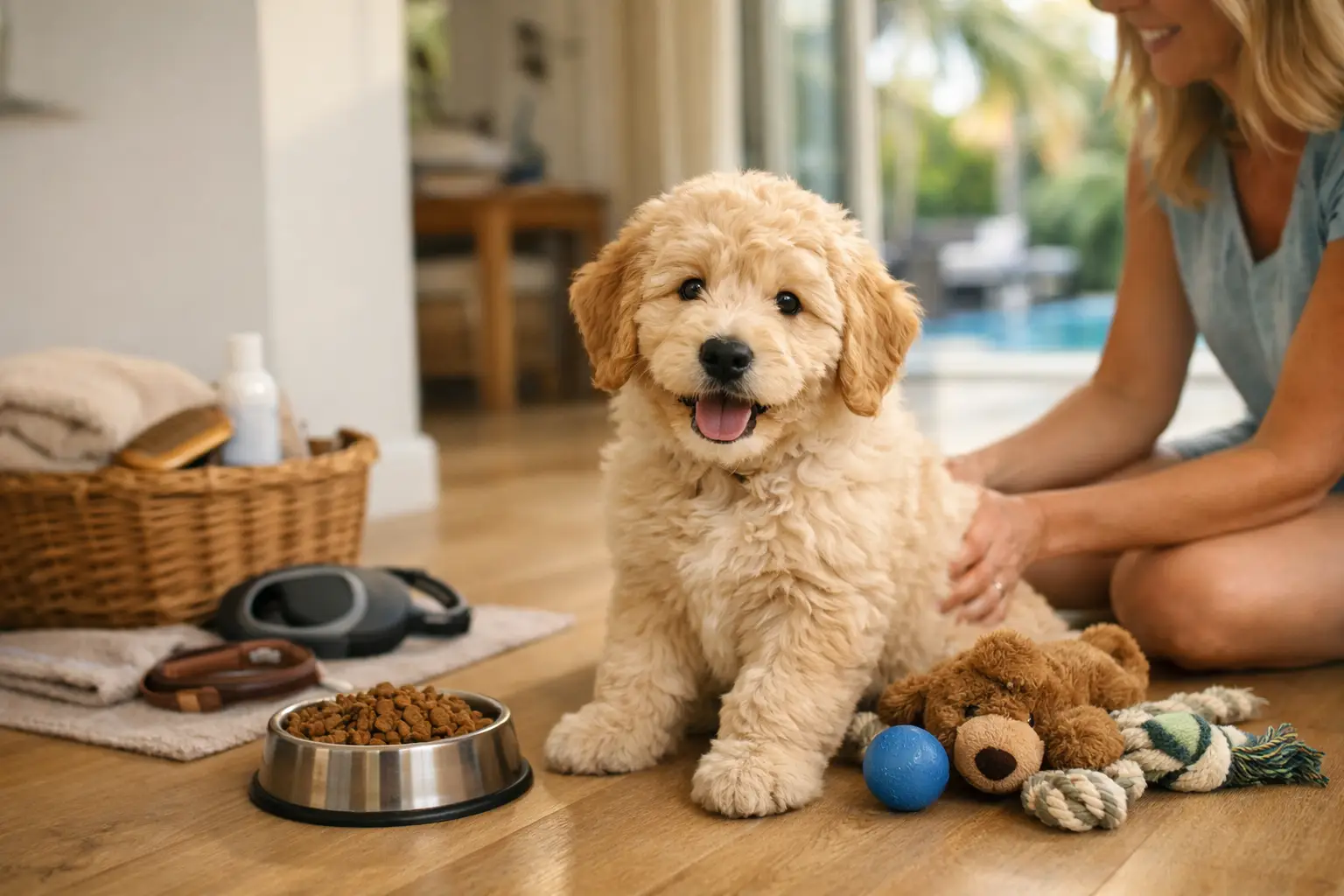
The day you bring your Goldendoodle puppy home is exciting, a little busy, and often more emotional than families expect. One minute you are admiring those soft curls, and the next you are wondering where the puppy should sleep, whether the children are being too loud, and why the water bowl has already been tipped over. This goldendoodle puppy checklist will help you prepare for the practical details so you can focus on helping your new puppy feel safe, loved, and at home.
Start With a Safe, Simple Puppy Space
Before your puppy arrives, choose one calm area of your home that can become their first little home base. A crate, exercise pen, or gated kitchen area works well. The goal is not to isolate your puppy, but to give them a secure place to rest when the household is active.
Set up a comfortable crate with bedding that is easy to wash, along with a safe chew toy. Keep the crate close to where your family spends time during the day. At night, many families find it helpful to place the crate beside their bed for the first few nights. Your puppy has just left the familiar sounds, smells, and companionship of their litter, so being nearby can make the transition much gentler.
Puppy-proofing matters just as much as choosing the right supplies. Get down on the floor and look at your home from a puppy’s point of view. Electrical cords, children’s small toys, shoes, medications, cleaning products, plants, and loose trash all deserve attention. Goldendoodles are bright, curious dogs, and a curious puppy can find trouble surprisingly fast.
Goldendoodle Puppy Checklist: What to Buy First
You do not need every cute puppy item in the store before pickup day. In fact, starting with a few dependable essentials often makes those first weeks easier. Your puppy will need:
- A properly sized crate and an exercise pen or baby gates
- Food and water bowls, plus the puppy food recommended for their transition
- A flat collar, ID tag, lightweight leash, and a properly fitted harness
- Enzyme cleaner, poop bags, paper towels, and puppy-safe cleaning supplies
- A variety of safe chew toys, soft toys, and puzzle toys
- A brush, comb, puppy shampoo, nail trimmers or a grinder, and dog-safe toothpaste
Ask your breeder what food your puppy is currently eating and continue it at first. A sudden food change, combined with the excitement of moving to a new home, can upset a young puppy’s stomach. If you decide to switch foods later, do it gradually over several days with your veterinarian’s guidance.
For grooming tools, do not wait until your puppy has a tangle. F1B Goldendoodles often have curlier, low-shedding coats that need regular care. A simple daily brushing routine of just a few minutes helps your puppy learn that grooming is normal, pleasant family time. It also helps prevent mats, which can become uncomfortable quickly.
Plan Potty Breaks Before the First Accident
A young puppy does not yet understand your schedule, and they cannot hold it for long. The most successful potty training plans are built around prevention rather than correction. Take your puppy to the same outdoor potty spot after waking up, eating, drinking, playing, and before bedtime. Praise warmly and immediately when they go in the right place.
Expect to make many trips outside at first. Consistency is more valuable than perfection. If an accident happens indoors, clean it thoroughly with an enzyme cleaner and move on. Scolding after the fact only creates confusion and can make a puppy nervous about going potty in front of you.
In Florida, summer heat adds another layer of care. Choose cooler morning and evening times for outdoor play, offer fresh water often, and keep sessions short when temperatures are high. Pavement can burn sensitive paws, so check it with the back of your hand before heading out.
Create a Routine Your Whole Family Can Follow
Puppies thrive when life feels predictable. Your routine does not have to be rigid, but it should include regular meals, potty trips, naps, short training moments, playtime, and quiet time. Puppies need far more sleep than many new owners realize. A puppy who becomes wild, mouthy, or unable to settle is often overtired, not misbehaving.
Talk as a family before your puppy comes home. Decide who handles morning potty breaks, feeding, brushing, play sessions, and cleanup. Children can be wonderful helpers, but adults should remain responsible for supervision and consistency. Teach children to let a sleeping puppy rest, avoid hugging tightly, and give the puppy space while eating or chewing a favorite toy.
I also encourage families to choose a few simple house rules from day one. Will your Goldendoodle be allowed on the couch? Which rooms are off limits? What word will everyone use for cues like “come,” “sit,” or “outside”? There is no single right answer, but mixed messages make training harder for a puppy who is still learning what life in their new family looks like.
Make the First Week Quiet and Positive
It is tempting to invite every friend and neighbor over as soon as your puppy arrives. Your puppy is adorable, and everyone will be eager to meet them. Still, the first few days should be calm. Let your puppy learn the people in their immediate household, explore one room at a time, and rest often.
Gentle socialization is very valuable, but it is not the same as overwhelming exposure. Introduce new sounds, surfaces, people, and experiences in small, positive ways. Let your puppy hear the vacuum from across the room, walk on grass and tile, ride briefly in the car, and meet calm, healthy people who respect the puppy’s space. Pair new experiences with praise and tiny treats.
Until your veterinarian confirms it is safe, avoid high-risk public areas where many unknown dogs may have been. Puppy socialization should protect both emotional confidence and physical health. A well-raised puppy brings a wonderful foundation, but the patient experiences you provide at home continue shaping that confidence.
Schedule Veterinary Care and Keep Records Together
Choose a veterinarian before bringing your puppy home, then schedule a new-puppy visit according to the timeline provided by your breeder and vet. Bring any health records, vaccination information, deworming details, feeding notes, and questions you have collected. Keep these papers in one folder or save digital copies where you can find them easily.
At the first appointment, ask about the remaining vaccination schedule, parasite prevention, microchip registration, safe socialization, spay or neuter timing, nutrition, and local health concerns. This is also a good time to discuss your puppy’s expected adult size. A Standard F1B Goldendoodle may grow into a 50 to 70 pound companion, while a Toy Goldendoodle is much smaller. That difference affects crate sizing, exercise needs, travel plans, and even the strength of the leash and harness you choose.
A responsible breeder should be open about the puppy’s care and available to answer transition questions. At Shalom Goldendoodles, I want every family to feel supported well beyond pickup day because bringing home a puppy is the beginning of a relationship, not the end of one.
Begin Training With Connection, Not Pressure
Your puppy does not need long training sessions. Start with their name, coming when called, sitting for a treat, and learning that hands are not chew toys. Keep sessions short, cheerful, and frequent. Goldendoodles are intelligent and usually eager to be close to their people, which makes kind, reward-based training especially effective.
Mouthing is normal during puppyhood, particularly when teething begins. If teeth touch skin, calmly pause the interaction and offer an appropriate chew toy instead. Avoid rough hand games that teach your puppy that fingers are part of play. Patience now creates better habits later.
It also helps to practice brief moments of independence. Give your puppy a safe chew in their crate or pen while you remain nearby, then gradually build up short periods apart. This can help prevent the puppy from feeling worried every time a family member leaves the room.
Your home does not need to be perfect before a Goldendoodle puppy arrives. It needs to be prepared, patient, and full of people willing to learn alongside a young dog. The little routines you begin now – a calm bedtime, a happy potty trip, a gentle brush, a kind word after a brave new experience – are the moments that grow into a deeply loved family companion.



[…] to finish your shopping and setup before pickup day. It is much easier to focus on your puppy when you are not making an extra stop […]