

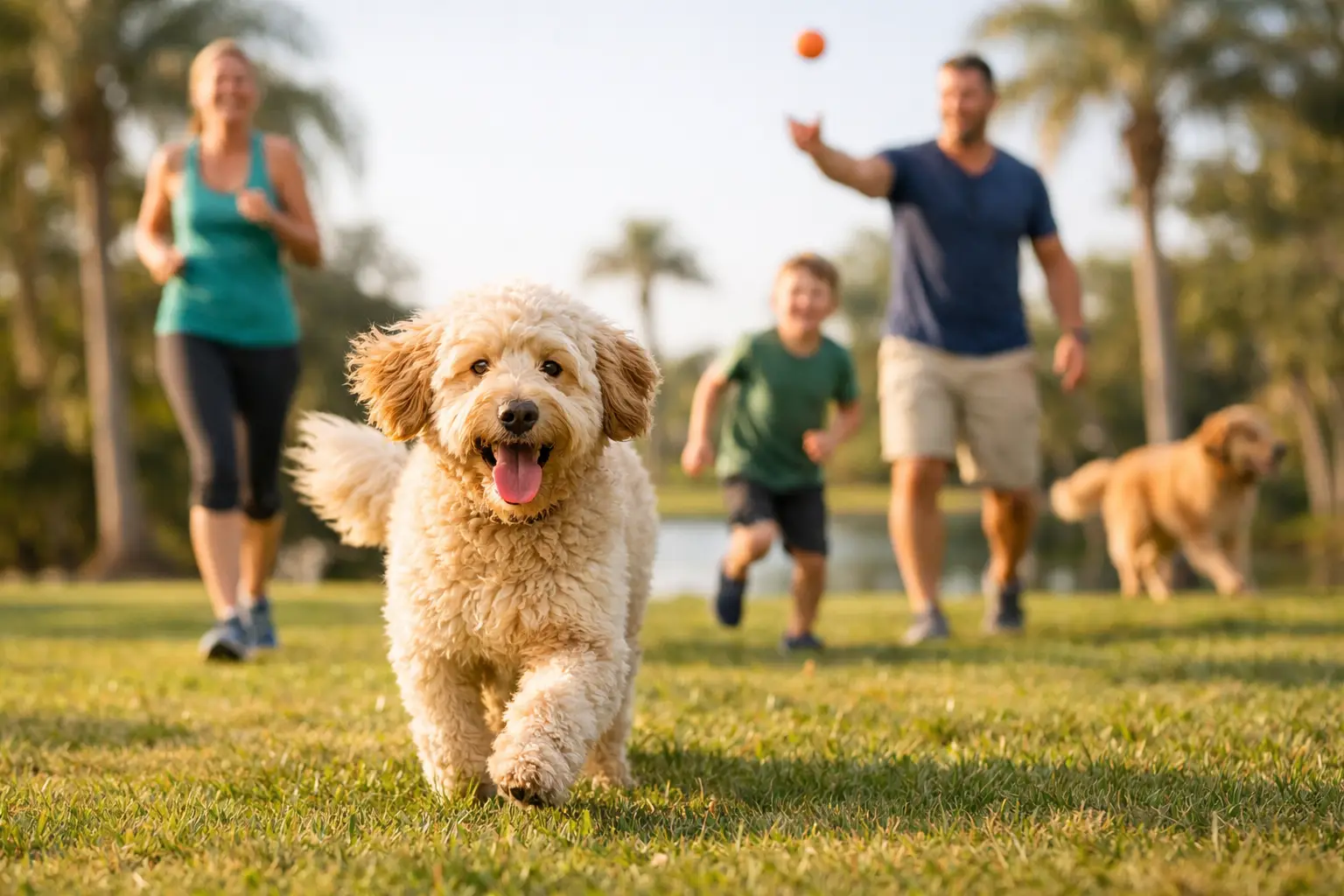
A Goldendoodle who has been cooped up all day may not simply be “full of energy.” They may be asking for movement, a chance to use their mind, and time with the people they love. Families often ask me how much exercise Goldendoodles need, especially when they are preparing for life with a playful, intelligent puppy. The honest answer is that there is no single number that fits every dog, but a healthy daily rhythm makes a wonderful difference.
Goldendoodles are often active, people-focused companions. They tend to enjoy walks, games, training, and being included in family life. The goal is not to wear your dog out completely. It is to offer enough physical activity and mental engagement that they feel content, relaxed, and connected at home.
How Much Exercise Do Goldendoodles Need?
Most healthy adult Goldendoodles do well with about 60 to 90 minutes of activity spread across the day. For many families, that might look like a morning walk, a playful afternoon session, and a shorter evening walk or backyard game. Some dogs will be happy near the lower end of that range, while energetic young adults may need more.
Exercise does not have to mean a long run every day. A sniff-filled neighborhood walk, a game of fetch, a gentle hike, supervised yard play, and a few minutes of training all count. In fact, a dog who is allowed to sniff, explore, and think on a walk is often more satisfied than a dog who is hurried through the same route.
Your Goldendoodle’s needs will depend on age, size, health, temperament, and routine. F1B Standard Goldendoodles are generally larger and may have more stamina than a smaller F1B Toy Goldendoodle. Still, a smaller dog can be wonderfully lively, and a larger dog may be naturally calm. It is best to learn the dog in front of you instead of relying only on a breed description.
Puppies Need Play, Not Endurance Training
Goldendoodle puppies have plenty of enthusiasm, but their growing joints and bones need protection. A young puppy should not be expected to take long forced walks, jog beside a person, or keep up with an adult dog for miles. Repetitive, high-impact exercise can be too much while they are still developing.
Short, frequent play periods are a better fit. A few minutes of tug, gentle fetch on grass, exploring the yard, or practicing simple cues can tire a puppy in a healthy way. Many puppy families find that several brief activity sessions work better than one big outing.
A helpful general guideline is about five minutes of structured walking per month of age, once or twice daily, though every puppy is different. For example, a four-month-old puppy may be comfortable with a 20-minute easy walk, but heat, excitement level, and the puppy’s individual condition all matter. Let your veterinarian guide you if you have questions about your puppy’s growth or activity level.
Just as important as exercise is rest. Puppies need a surprising amount of sleep, often 18 to 20 hours in a day. An overtired puppy can become extra mouthy, wild, or fussy, which people sometimes mistake for a need for more exercise. Often, what that puppy truly needs is a calm nap in a safe, quiet space.
Adult Goldendoodles Thrive on a Daily Routine
Once a Goldendoodle is fully grown, regular exercise becomes part of keeping them physically healthy and emotionally settled. I encourage families to build movement into normal life instead of treating it as one more chore at the end of a busy day.
A morning walk can help your dog begin the day calmly. A family game in the yard after school or work gives them time to reconnect with everyone. A short evening stroll can help them settle before bedtime. These small routines also create the closeness that makes Goldendoodles such treasured companions.
If your household enjoys an active lifestyle, a healthy adult Goldendoodle may love longer walks, nature trails, swimming, or outings where dogs are welcome. Increase activity gradually, especially if your dog is new to it. Watch for signs that they are struggling, such as lagging behind, excessive panting, limping, reluctance to move, or difficulty recovering after exercise.
Mental Exercise Matters Just as Much
Goldendoodles are bright dogs, and many become bored when their minds are left out of the routine. A 10-minute training session can be as valuable as extra time throwing a ball. Teaching sit, stay, come, place, loose-leash walking, and polite greetings gives your dog a job to do while strengthening the bond between you.
Food puzzles, treat hunts around the house, and “find it” games are also wonderful on rainy days or during the hottest part of the Florida afternoon. You can scatter a portion of your dog’s kibble in the grass and let them sniff for it, as long as the area is safe and free of lawn chemicals. This lets them use natural instincts without adding stress to their joints.
Variety helps. Walking the same route every day is perfectly fine, but changing direction occasionally, practicing a new cue, or visiting a calm new place gives your Goldendoodle something interesting to process. A mentally fulfilled dog is often easier to live with than a dog who has only had physical exercise.
Adjust Exercise for Florida Heat and Humidity
For families in Florida, weather is a real part of the exercise conversation. Goldendoodles can overheat quickly, especially those with thicker or curlier coats. On warm, humid days, plan walks early in the morning or later in the evening. Choose shade when possible, bring fresh water, and keep outings shorter when temperatures climb.
Hot pavement can burn paw pads. Place the back of your hand on the sidewalk for several seconds before heading out. If it feels too hot for your hand, it is too hot for your dog’s paws. Indoor games, short training sessions, and a shaded play break may be the wiser choice that day.
Never assume a dog will stop before they become overheated. Heavy panting, drooling, weakness, vomiting, bright red gums, confusion, or collapse require immediate attention. Move your dog to a cool area, offer small amounts of water, and contact a veterinarian right away if you suspect heat illness.
Signs Your Goldendoodle May Need More or Less Activity
A Goldendoodle who needs more healthy engagement may pace, steal household items, bark at every sound, dig, jump constantly, or have trouble settling in the evening. These behaviors are not a sign of a bad dog. They are often a sign that the day has not included enough movement, attention, or mental work.
On the other hand, more exercise is not always the answer. If your dog seems sore, reluctant to walk, unusually tired, or stiff after activity, scale back and speak with your veterinarian. Senior dogs, dogs recovering from illness or surgery, and dogs with joint concerns need a gentler plan tailored to their needs.
Weight is another useful clue. Regular activity and balanced meals work together to support a healthy body condition. If you are unsure whether your Goldendoodle is at a healthy weight, your veterinarian can help you make a plan that is realistic for your family.
Make Exercise a Family Connection
The best routine is the one your family can keep. You do not need a perfect schedule or hours of free time to raise a happy Goldendoodle. A consistent morning walk, a few minutes of obedience practice before dinner, and playtime with the children can add up to a very fulfilling day.
I raise my puppies with the hope that they will become true family companions, and exercise is one of the sweetest ways to build that relationship. Pay attention to what brings your Goldendoodle joy, keep their age and health in mind, and let daily movement become one more simple way of sharing life together.