

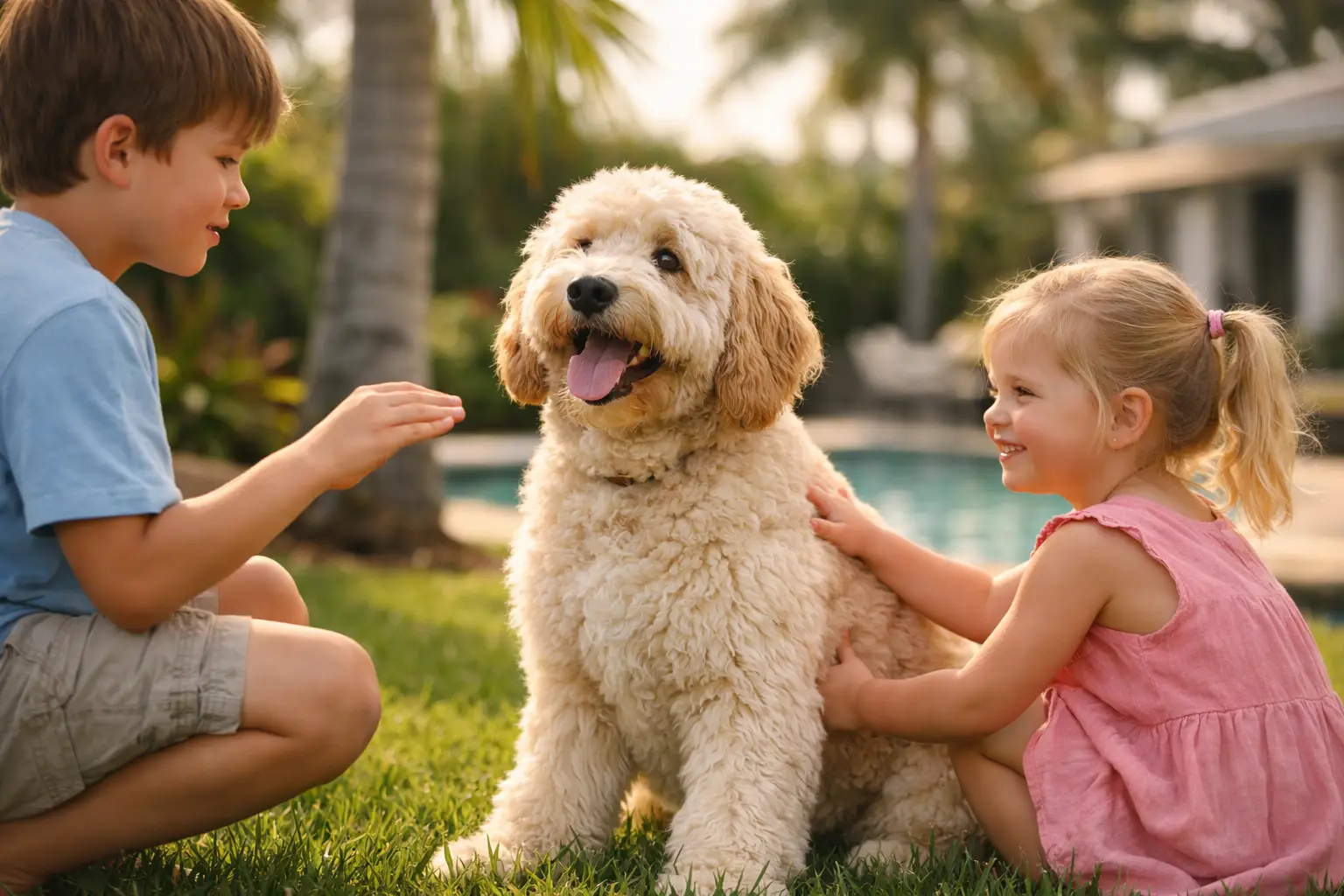
A Goldendoodle puppy may be full of cuddles one minute and bouncy enthusiasm the next. That happy energy is one reason families love the breed, but it also means a puppy needs clear, gentle guidance when children are part of the household. When families ask me how to train a Goldendoodle around children, I remind them that the goal is not simply teaching the puppy to behave. It is teaching both children and puppy how to feel safe, understood, and calm together.
The best results come from consistency, supervision, and patience. A well-raised Goldendoodle is often naturally affectionate, social, and eager to please, but every puppy is still learning the rules of a brand-new home. With a few simple routines in place, children can become a wonderful part of that learning process.
Start With Safe, Calm Introductions
The first few days at home set the tone. A new puppy has just left familiar smells, littermates, and the routine they knew. Even a confident puppy may become overstimulated by excited voices, busy rooms, and lots of hands reaching toward them.
I encourage families to let their children meet the puppy at the puppy’s level. Have them sit quietly on the floor, speak softly, and allow the puppy to approach on their own. Gentle petting along the shoulder or chest is usually less overwhelming than reaching over a puppy’s head. Children should avoid picking up a puppy unless an adult says it is safe and helps them do so properly.
Short, peaceful interactions are much better than one long, exciting play session. Your puppy will learn that children are kind, predictable people, not something to fear or something to tackle.
Teach Children the Puppy Rules First
Training should never fall entirely on the dog. Children need loving boundaries, too. This is especially true with young puppies, who explore the world with their mouths and can become overly excited very quickly.
Explain that a puppy needs space while eating, sleeping, chewing a special treat, or resting in their crate. The crate should be treated as the puppy’s quiet bedroom, never as a place for children to climb into, tease the puppy, or pull them out of. Giving a puppy a protected place to rest helps prevent cranky, overtired behavior.
Children should also learn to keep games gentle. No hugging tightly around the neck, pulling ears or tail, chasing the puppy through the house, or waving hands in the puppy’s face. These actions can encourage jumping, nipping, or fear, even in a sweet-natured dog.
For younger children, it helps to use simple language: gentle hands, quiet voices, and feet on the floor. Praise your child when they make a good choice. The same positive approach we use for puppies works beautifully for children, too.
How to Train a Goldendoodle With Children Using Positive Rewards
Goldendoodles are often quick learners, especially when training feels like a game and good choices are rewarded. I recommend keeping treats small and sessions brief, usually just a few minutes at a time. A puppy’s attention span is limited, and stopping while they are still successful keeps training happy.
Start with everyday skills that make family life easier: sit, down, come, leave it, drop it, and place. “Place” can mean going to a bed or mat when the doorbell rings, when dinner is being prepared, or when children are playing nearby. It gives the puppy a clear job and creates calm without scolding.
Children can help with simple training once an adult has shown them how. They might ask for a sit before setting down a toy, reward the puppy for coming when called in a fenced area, or toss a treat onto the puppy’s bed when practicing place. An adult should always supervise so the child uses the same cue and rewards the right moment.
Consistency matters more than perfection. If one person allows jumping on the couch and another corrects it, the puppy receives a confusing message. Choose family rules together and use the same words whenever possible.
Prevent Jumping Before It Becomes a Habit
Many Goldendoodles grow into medium or larger dogs, particularly Standard Goldendoodles. A tiny puppy jumping up may seem adorable, but a 50- to 70-pound adult dog jumping on a small child can be unsafe, even if the dog is only trying to say hello.
Teach your puppy early that greetings happen with four paws on the floor. When the puppy approaches a child calmly, offer praise and a treat. If they jump, the child should turn slightly away and become still rather than squealing, pushing, or running. The moment the puppy settles, reward that calm behavior.
Ask visiting children to follow the same greeting routine. Puppies do not understand that jumping is allowed for some people but not for others. Clear expectations help them learn faster.
Handle Puppy Nipping Gently and Consistently
Puppy nipping is normal, particularly during teething and exciting play. It does not mean your puppy is aggressive. Still, it needs to be redirected right away so children do not become nervous around the dog.
When teeth touch skin, calmly stop the game. Say a short phrase such as “all done,” stand up, and offer an appropriate chew toy once the puppy settles. Avoid yelling, hitting, holding the muzzle shut, or encouraging rough wrestling. Those responses can make a puppy more excited or more confused.
Children often need help recognizing when a puppy is getting too worked up. Fast zooming, grabbing clothing, barking, and repeated nipping are signs that play needs a break. A potty trip, a chew in the crate, or a quiet nap may be exactly what the puppy needs. Puppies require much more sleep than many families expect.
Build Daily Routines Children Can Help With
A predictable routine helps a Goldendoodle feel secure. Regular meals, potty breaks, naps, playtime, and short training sessions reduce accidents and make it easier for everyone to know what the puppy needs.
Depending on their age, children can help refill a water bowl, join an adult on a supervised potty trip, practice a few cues, brush the puppy gently, or help choose a quiet chew toy. These little responsibilities teach children respect and help create a real bond. The adult should remain in charge of feeding, leash walking, grooming tasks that require handling, and any situation where the puppy may become overwhelmed.
In my experience, children often feel proud when they can participate in a puppy’s care. Just keep the tasks simple and make safety the priority. A dog is a beloved family member, not a child’s responsibility alone.
Watch Body Language From Both Sides
A friendly Goldendoodle may enjoy attention, but every dog has limits. Teach children to notice when the puppy is asking for space. Turning away, lip licking, yawning when not tired, stiffening, hiding, or trying to leave are signs that the puppy may be uncomfortable or overwhelmed.
Likewise, pay attention to your child. If they seem worried, do not force interaction because you want them to bond. Sit with them, let them toss treats from a comfortable distance, and allow trust to grow slowly. This is especially helpful for children who have had a frightening experience with a dog before.
Adult supervision is essential, not because you expect trouble, but because puppies and children both make quick, unpredictable choices. Even the gentlest dog should not be left alone with a young child. Being present lets you calmly guide the moment before it becomes too exciting.
Make Exercise and Rest Part of Good Behavior
Goldendoodles are intelligent, active companions, and they need appropriate outlets for their energy. A puppy who has had a short walk suited to their age, a little training, sniffing time outdoors, and a chance to chew is more likely to settle nicely near the family.
At the same time, more activity is not always the answer. Overtired puppies can act wild, mouthy, and unable to listen. If your puppy becomes extra rambunctious in the evening, try a quiet nap period instead of another high-energy game. Finding the right balance depends on your puppy’s age, personality, and daily environment.
At Shalom Goldendoodles by Mary, I begin socializing puppies in a family-home environment so they are familiar with everyday household sights, sounds, and loving interaction. Once a puppy goes home, your patient training and steady routines continue that foundation.
The sweetest family relationships are built in ordinary moments: a child offering a gentle treat, a puppy settling beside the couch, and an adult guiding both of them with calm confidence. Give your Goldendoodle time to learn, give your children simple rules they can follow, and let the friendship grow one peaceful day at a time.