

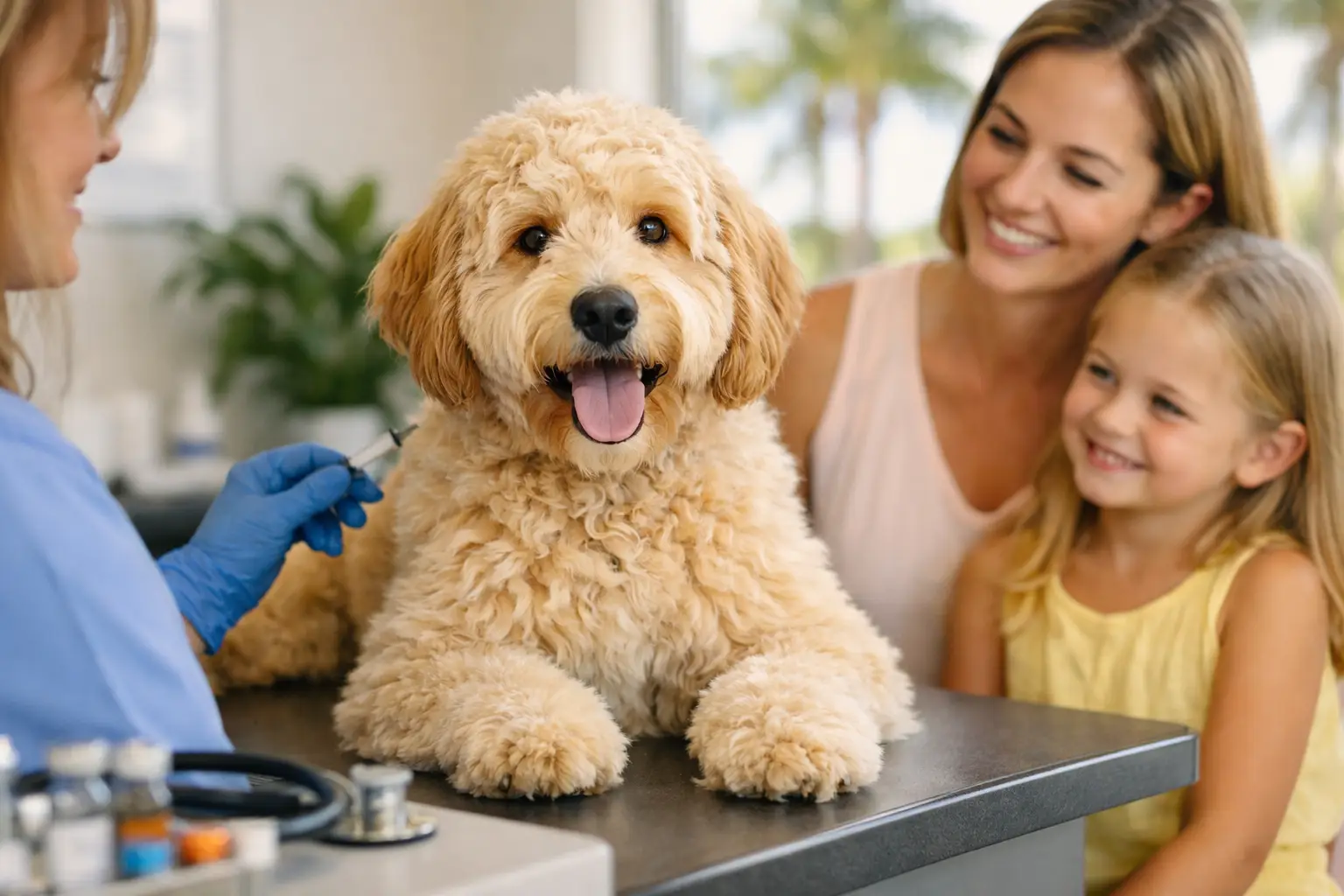
Bringing home a Goldendoodle puppy is full of sweet firsts: the first sleepy car ride, the first night in a new bed, and the first happy introduction to your family. A Goldendoodle vaccination schedule guide can make one part of those early weeks feel much less confusing. Vaccines are a simple but meaningful part of giving your puppy a healthy start, especially while their young immune system is still developing.
As a breeder, I want every puppy family to feel prepared rather than overwhelmed. Your veterinarian is the right person to create a plan for your individual puppy, but knowing the usual timing, what each vaccine protects against, and when it is safe to begin exploring can help you ask good questions with confidence.
Why Puppy Vaccines Are Given in a Series
Puppies receive some disease-fighting protection from their mother before and shortly after birth. This maternal protection is a blessing, but it gradually fades. The tricky part is that every puppy’s protection fades at a slightly different pace.
That is why puppy vaccines are not given as one single appointment. They are given in a series, usually a few weeks apart, to help protect your puppy as that maternal immunity decreases. A shot given very early may not be fully effective if maternal antibodies are still active. Repeated doses give the puppy’s immune system more opportunities to build lasting protection.
The schedule can vary based on your puppy’s age when they come home, their prior veterinary records, the diseases common in your area, and their expected lifestyle. A puppy in a quiet household has different exposure risks than one who will visit dog-friendly patios, attend grooming appointments, or spend time at daycare.
Goldendoodle Vaccination Schedule Guide: Typical Timing
Most Goldendoodles follow the same general vaccination guidance used for other dogs. Goldendoodles do not need a breed-specific vaccine schedule, but they do benefit from a plan that fits their environment and family life.
Six to Eight Weeks: The First Core Vaccine
The first core combination vaccine is commonly given around six to eight weeks of age. It is often called DHPP or DAPP. The letters may differ slightly by clinic, but this vaccine generally protects against distemper, adenovirus or hepatitis, parvovirus, and parainfluenza.
Parvovirus and distemper are two reasons families should take early precautions seriously. Both can be severe, especially for young puppies. A puppy may appear bright, playful, and perfectly healthy while still being vulnerable to disease exposure in areas frequented by unknown dogs.
Before bringing a puppy home, ask for a clear record of any vaccines already given, the date they were administered, and when the next dose is due. Your veterinarian will use that information to continue the series correctly rather than starting over unnecessarily.
Ten to Twelve Weeks: Building Protection
A second DHPP dose is often given at approximately 10 to 12 weeks. At this visit, your veterinarian may also discuss non-core vaccines based on your family’s routine.
Bordetella is one vaccine commonly considered for puppies who may be groomed, boarded, attend training classes, or have close contact with many dogs. It is often associated with kennel cough, though respiratory illness can have several causes. Canine influenza may also be recommended in some communities or for dogs with frequent social exposure.
For Florida families, your veterinarian may talk with you about leptospirosis as well. Leptospirosis can be spread through the urine of infected wildlife and may be a concern around standing water, wooded areas, farms, and places where wildlife is active. It can affect people, too, which is one reason your vet may recommend it depending on your location and your puppy’s activities.
Fourteen to Sixteen Weeks: A Crucial Final Puppy Dose
The final DHPP dose is commonly given at 14 to 16 weeks or later. This appointment is especially significant because it is timed to provide protection after maternal antibodies are more likely to have faded.
Rabies vaccination is also usually given around 12 to 16 weeks, following state and local requirements. Your vet will tell you the appropriate timing and provide the documentation you will need. Rabies vaccination is not just a routine detail. It protects pets, people, and the wider community.
Some puppies may need a vaccine series adjusted because of their starting age, medical history, or a missed appointment. That does not mean something has gone wrong. It simply means your veterinarian will help get the timing back on track.
When Can Your Goldendoodle Safely Go Outside?
This is one of the questions I hear most often from new puppy families. Your Goldendoodle needs gentle socialization early in life, but they also need protection from exposure to contagious illness. The answer is not to keep them isolated indoors until every vaccine is complete. It is to make careful choices.
Your puppy can enjoy your own clean, private yard if unknown or unvaccinated dogs have not been using it. They can be carried through pet-friendly places, meet healthy vaccinated dogs you know well, ride in the car, hear everyday household sounds, and welcome calm visitors into the home.
Until your vet says your puppy has enough protection, avoid dog parks, shared apartment potty areas, pet store floors, public dog water bowls, and places with heavy unknown-dog traffic. In Central Florida, where warm weather encourages year-round outdoor activity, this can take a little planning. A blanket in a shopping cart or carrying your puppy during a family outing can offer safe new sights and sounds without unnecessary risk.
The goal is balance. A well-socialized puppy grows through positive experiences, but no outing is worth a preventable illness. Ask your veterinarian when your puppy can begin neighborhood walks, puppy classes, and other dog-friendly activities in your particular area.
Keep a Simple Vaccine Record
I encourage every family to keep their puppy’s health paperwork together from day one. A folder or phone photo album works well. Save the vaccine name, date, clinic information, and the date of the next recommended dose.
You will be glad to have those records when you schedule grooming, enroll in training, travel, board your dog, or change veterinary clinics. If you have children helping with puppy care, this is also a wonderful way to teach them that loving a dog includes being responsible for their health.
After vaccination, many puppies are a little sleepy or tender at the injection site for a day. A quiet evening, fresh water, and extra cuddles are usually all they need. Call your veterinarian promptly if you notice facial swelling, hives, repeated vomiting, trouble breathing, collapse, or any reaction that concerns you. Serious vaccine reactions are uncommon, but they require immediate veterinary guidance.
What Happens After the Puppy Series?
Vaccinations do not end after those first few months. Your veterinarian will recommend a booster visit about a year after the puppy series, then establish an adult schedule. Some core vaccines may be given at longer intervals after that, while lifestyle vaccines such as Bordetella, leptospirosis, or canine influenza may be recommended more often.
There is no one-size-fits-all adult plan. A homebody Goldendoodle and a Goldendoodle who visits daycare each week do not face the same risks. Your vet can help you make thoughtful decisions based on your dog’s health, travel plans, grooming needs, and exposure to other animals.
A Healthy Start Is Built One Appointment at a Time
Vaccines are only one piece of raising a happy companion, alongside good nutrition, parasite prevention, gentle training, grooming, and plenty of patient love. Still, keeping up with your puppy’s veterinary visits gives your Goldendoodle the protection they need to grow into the confident, affectionate family member you have been waiting for.
When your puppy comes home, bring their health records to your first veterinary appointment and let that relationship guide you forward. A caring vet, a thoughtful schedule, and a family that pays attention to the little things can make those early puppy months feel joyful instead of uncertain.