

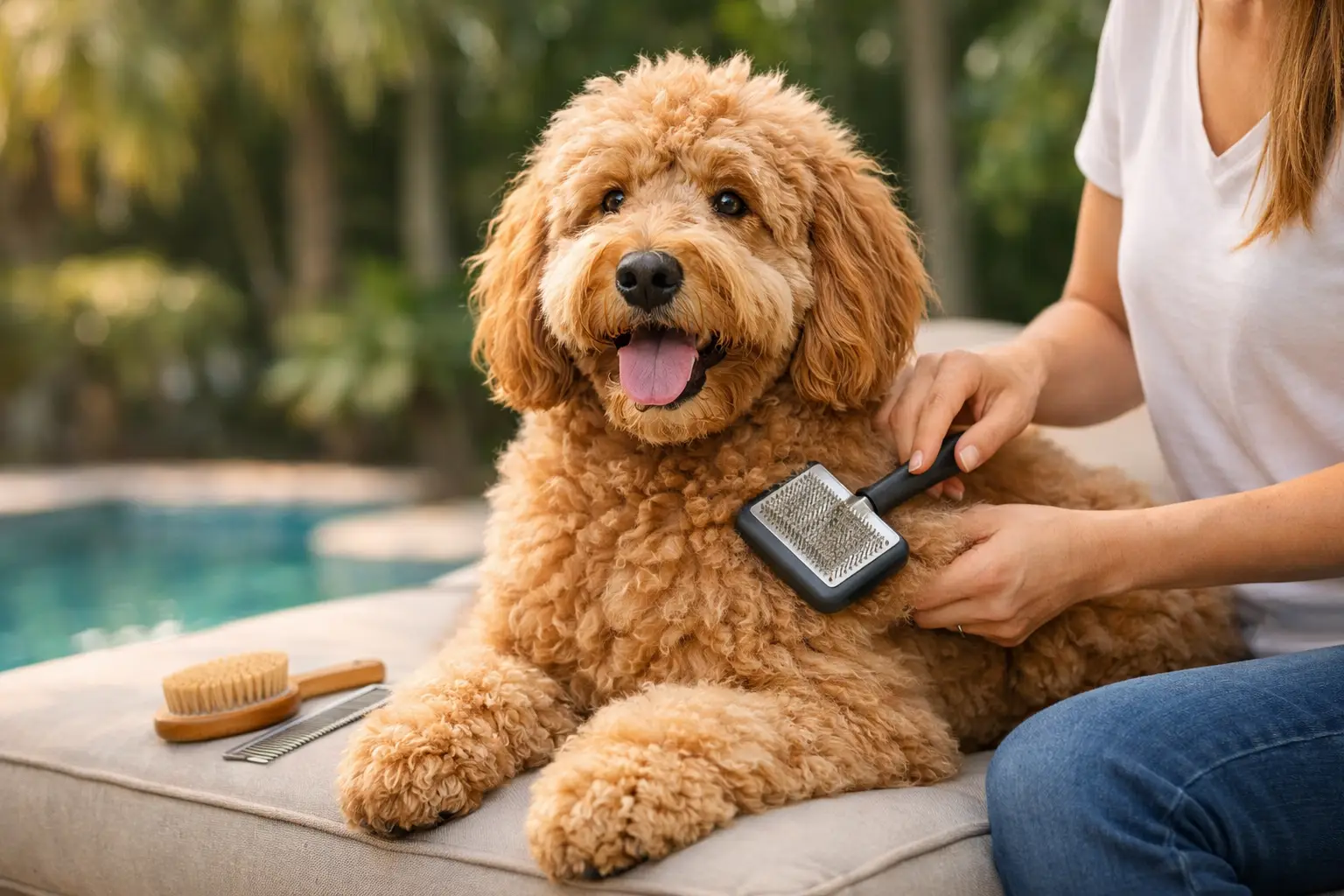
A curly Goldendoodle coat can feel like a soft, lovable cloud, but those beautiful curls can hide tangles closer to the skin. Learning how to brush curly Goldendoodles well is one of the kindest things you can do for your dog. Regular brushing is not only about keeping your pup fluffy and photo-ready. It helps prevent tight, uncomfortable mats, lets you notice skin changes early, and gives your dog peaceful one-on-one time with you.
I always encourage my puppy families to make grooming part of normal home life from the beginning. A Goldendoodle who learns that brushing means calm hands, gentle praise, and a little patience is much more likely to enjoy the process as an adult.
Why curly Goldendoodle coats need special attention
F1B Goldendoodles often have curlier, lower-shedding coats because they have more Poodle influence. Hair that does not shed freely can remain caught in the coat. As loose hair mixes with moisture, dirt, friction, and active puppy play, it begins to twist around healthy hair and form tangles.
A few small tangles can turn into mats surprisingly fast, especially behind the ears, under the collar or harness, in the armpits, around the legs, and near the tail. Mats pull on the skin and can trap dampness underneath. That is why brushing should reach all the way down to the skin, not simply glide across the fluffy top layer.
How often your dog needs brushing depends on coat length, curl pattern, activity level, and whether they swim often. For many curly Goldendoodles, a thorough brushing every other day is a good starting point. A longer coat may need brief daily attention, while a shorter groomed coat can be more manageable. In Florida’s warm, humid weather, dogs that enjoy water or outdoor adventures may need extra checks because damp curls tangle more easily.
The grooming tools I recommend keeping at home
You do not need a drawer full of complicated supplies, but the right tools make a real difference. Keep a slicker brush, a sturdy metal comb with both wider and narrower teeth, a gentle detangling spray made for dogs, and a few small treats nearby. A grooming table can be helpful for a large Standard Goldendoodle, but a non-slip mat on the floor works well for many families.
Choose a slicker brush with flexible pins and use a light touch. A slicker brush is excellent for loosening hair and gently working through the coat, but pressing too hard can scratch sensitive skin. The metal comb is your best mat-checking tool. If the comb cannot pass through a section of hair down to the skin, there is still a tangle there.
Please avoid using scissors to cut mats out at home. A mat can pull the skin upward, making it far too easy to accidentally cut your dog. For a tight mat or a heavily matted coat, a professional groomer is the safest choice. Sometimes a shorter haircut is necessary, and while that can be disappointing, comfort must come first.
How to brush curly Goldendoodles step by step
Start when your dog is relaxed, perhaps after a walk or a quiet time at home. For puppies, keep early sessions short. Even five happy minutes builds a wonderful foundation. Let your dog sniff the brush, offer praise, and give small treats for standing calmly.
Begin with a dry, lightly misted coat
Never try to brush a soaking-wet curly coat. Wet tangles tighten as they dry, and pulling through them can be uncomfortable. Your Goldendoodle should be fully dry before a full brushing session.
If the hair feels dry or has a little static, lightly mist one small section with dog-safe detangling spray. You want the coat slightly dampened, not wet. This gives the brush more slip and helps prevent hair breakage.
Work in small sections from the bottom up
The gentlest approach is called line brushing. Begin low on the body, such as near a back leg or the belly. Use one hand to hold the hair above the area you are brushing, close to the skin. This keeps your dog from feeling every pull.
With the slicker brush, brush a thin line of hair outward from the skin. Once that small line is clear, move slightly upward and repeat. Continue section by section instead of brushing over the top of the coat. This may take a little longer at first, but it is the best way to find hidden tangles before they become mats.
After brushing each small area, run your metal comb through it. Start with the wider end if the curls are thick, then use the finer end where appropriate. The comb should move without catching. If it snags, go back with the slicker brush and gently work that spot again.
Give extra attention to high-friction areas
Your dog will usually need the most help where the coat rubs, bends, or stays damp. Check behind and beneath both ears, under the chin, around the neck, in the armpits, inside the back legs, around the feet, and beneath the tail. Harnesses, collars, rain, swimming, and enthusiastic play can all create tangles in these places.
Do not forget the legs. Curly hair around the feet can collect grass, sand, and little bits of debris. Hold the leg gently and brush in the direction the hair grows. If your Goldendoodle is wiggly about having paws handled, work on this in very short sessions and reward generously. Building trust is more valuable than finishing every inch in one sitting.
Finish with a calm face and ear check
Use a comb rather than a slicker brush around the eyes, muzzle, and ears. Brush slowly and keep hair out of your dog’s eyes. Lift each ear flap and look for redness, odor, excessive wax, or signs of irritation. Brushing is a nice opportunity to notice changes, but do not put tools deep into the ear canal.
End each session with praise, a treat, or a favorite activity. Your dog should leave grooming time feeling safe, not worn out or worried.
What to do when you find a tangle
A small, loose tangle can often be handled at home. Hold the hair near the skin, add a small amount of detangling spray, and use your fingers to gently separate the outer edges. Then use short, light strokes with the slicker brush, working from the ends of the hair toward the skin. Pulling from the roots outward is uncomfortable and usually makes the knot tighter.
If the tangle is firm, sits tightly against the skin, or covers a larger area, stop trying to brush through it. Your dog may need a groomer to safely clip or shave that spot. There is no shame in getting help. The goal is a comfortable dog, not saving every last inch of coat.
Create a routine your Goldendoodle can enjoy
Consistency matters more than marathon grooming sessions. A quick daily check of the ears, collar area, armpits, and legs can catch problems early. Then set aside time for a full line-brushing session every few days based on your dog’s coat. Many families find that brushing during a favorite evening television show or after the kids settle down makes it easier to keep the habit.
Professional grooming is still helpful even with excellent home care. Your groomer can trim around the eyes, feet, and sanitary areas, maintain a coat length that suits your family’s lifestyle, and give you feedback about areas that are starting to mat. Most curly Goldendoodles benefit from regular appointments, often every six to eight weeks, though the right schedule depends on coat length and condition.
At Shalom Goldendoodles, I love seeing families grow confident in caring for their puppy’s coat. Brushing can become a quiet little rhythm in your home – a chance to care for your companion, check in on their wellbeing, and remind them that they are deeply loved.