

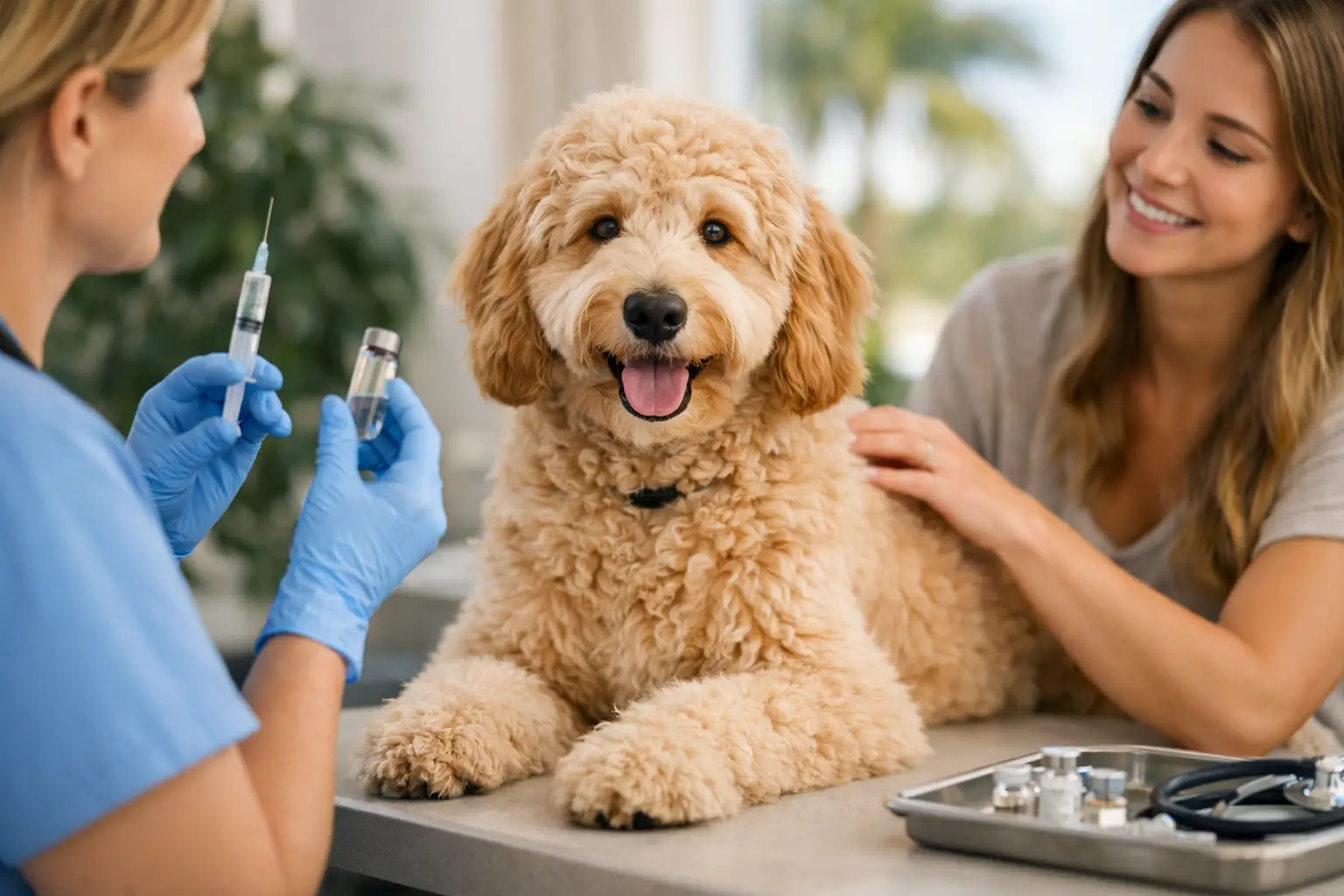
A new Goldendoodle puppy can make a family want to do everything at once: choose a bed, plan the first photos, introduce the children, and start training. Then the practical Goldendoodle vaccination questions come up. Which shots has my puppy already received? What does she need next? Can we safely take her outside in Florida?
I understand why this can feel confusing. Vaccines are one of the best ways to protect a puppy during a very vulnerable stage of life, but every puppy’s schedule should be guided by the veterinarian who knows that puppy, the local disease risks, and the family’s lifestyle. My goal is to help puppy families understand the basics so they can walk into those first vet appointments feeling prepared, not overwhelmed.
Why Goldendoodle Puppies Need a Vaccine Series
Goldendoodles do not have a special vaccination schedule simply because they are Goldendoodles. Like all dogs, they need protection from contagious illnesses that can be severe, costly to treat, and sometimes fatal. Puppies are especially at risk because their immune systems are still learning how to respond to the world around them.
Puppies receive some early disease protection from their mother through her milk. Those maternal antibodies are a wonderful gift, but they fade at different times in different puppies. They can also interfere with a vaccine if they are still present in high enough levels. That is why puppy vaccines are given as a series rather than one single shot. Repeating doses at carefully timed intervals gives a puppy’s immune system the best opportunity to build reliable protection as those maternal antibodies fade.
This timing is also why it is wise not to assume that one vaccine visit means a puppy is fully protected. A cheerful, healthy-looking puppy can still be vulnerable to illness before the full series is complete.
Goldendoodle Vaccination Questions About Core Shots
The vaccine most families hear called the “distemper shot” is usually a combination vaccine often written as DAPP, DHPP, or a similar abbreviation. The exact letters can vary by veterinary practice, but this core combination generally protects against distemper, adenovirus or hepatitis, parvovirus, and parainfluenza.
Parvovirus is one reason veterinarians are so careful with young puppies. It can survive in the environment and spread through contaminated stool, soil, shoes, paws, and surfaces. A puppy does not have to meet a sick dog face-to-face to be exposed. Parvo can cause serious vomiting, diarrhea, dehydration, and rapid decline, especially in young dogs.
Rabies is another core vaccine, and it is required by law in Florida and throughout the United States. Your veterinarian will let you know when your puppy is old enough for the first rabies vaccine and when boosters are due. Beyond meeting legal requirements, rabies vaccination protects both your family and the community from a disease that is almost always fatal once symptoms begin.
Your veterinarian may also recommend non-core vaccines based on your puppy’s actual life. These may include Bordetella for dogs who will visit groomers, boarding facilities, training classes, or dog daycare; leptospirosis for dogs exposed to wildlife, standing water, or outdoor areas; and canine influenza in areas or settings where it is a concern. “Non-core” does not mean unimportant. It simply means the decision should be based on risk, not treated as identical for every dog.
For example, a Toy Goldendoodle who spends most days at home but will be professionally groomed may have different needs from an active Standard Goldendoodle who hikes, visits dog-friendly events, and stays at boarding facilities. Honest conversations about your plans help your veterinarian make thoughtful recommendations.
What does a typical puppy schedule look like?
Many puppies begin their core vaccine series at approximately 6 to 8 weeks of age. Additional doses are commonly given every 2 to 4 weeks until the puppy is at least 16 weeks old. Rabies is often given around 12 to 16 weeks, depending on local law and the veterinarian’s protocol. After the puppy series, boosters are scheduled according to the vaccine, your veterinarian’s guidance, and local requirements.
Those ages are a general framework, not a substitute for your puppy’s medical record. If a dose is delayed because your puppy was ill or because family timing changed, do not panic or try to guess how to catch up. Call your veterinarian. They can tell you whether the schedule needs adjustment.
When a puppy joins a family from Shalom Goldendoodles, I provide the health information and vaccination record for the care already completed. I encourage every family to schedule a new-puppy veterinary visit promptly after bringing their puppy home. That gives you a trusted medical partner from the start and helps keep the remaining vaccines on track.
Can My Puppy Go Outside Before All Vaccines Are Finished?
This is one of the most common and reasonable questions. The answer is not simply yes or no. Puppies need safe exposure to the world during their early socialization period, but they also need protection from disease. The goal is to avoid high-risk environments without keeping your puppy isolated.
Your puppy can enjoy a clean, private yard that is not used by unknown dogs. You can carry her through a pet-friendly store, sit with her on a clean blanket at an outdoor café, invite healthy vaccinated dogs you know into a controlled setting, and let her hear normal household and neighborhood sounds. Car rides, supervised visits with friends, and gentle handling by kind people can all build confidence.
What I would avoid until your veterinarian says your puppy is adequately protected: dog parks, shared apartment dog runs, pet store floors, public grassy areas frequented by many dogs, and places where you cannot know the health history of the animals who have been there. In Central Florida, where warm weather means dogs are outside year-round, this extra care is especially worthwhile.
Puppy classes can be a wonderful part of socialization and training. Ask whether the class requires age-appropriate vaccinations, uses clean indoor surfaces, separates puppies by size and play style, and has a clear illness policy. A well-run puppy class can offer a much safer option than casual public dog play.
What to Expect After a Puppy Vaccine
Most puppies do very well after vaccination. A little sleepiness, tenderness where the injection was given, or a lower appetite for a day can happen. Plan a calm evening, offer water, and let your puppy rest. There is no need to make vaccine day a big adventure.
Call your veterinarian promptly if you notice facial swelling, hives, repeated vomiting, trouble breathing, collapse, severe weakness, or symptoms that concern you. These reactions are uncommon, but they need urgent attention. Also call if mild symptoms do not improve within a day or if your puppy seems truly unwell.
Never give human pain medication or allergy medication unless your veterinarian specifically tells you what to give and how much. Puppies are small, and medications that are common in human homes can be dangerous for dogs.
Should I space out vaccines?
Some families ask whether vaccines can be spread farther apart to make visits easier on a puppy. There are situations where a veterinarian may tailor a plan, particularly for a puppy with a past reaction or a medical concern. However, extending the schedule without veterinary advice can leave a puppy unprotected longer when protection matters most.
The best approach is not a one-size-fits-all internet schedule. It is a conversation with your veterinarian about your puppy’s health, age, prior records, local exposure risks, travel plans, grooming needs, and household routine.
Keeping Good Records Matters
Keep your puppy’s vaccination certificate in one dependable place, along with dates for parasite prevention, vet visits, microchip information, and any medications. You may need those records for boarding, grooming, daycare, training classes, travel, emergencies, or a move. Taking a clear photo of each record and saving it in your phone is a simple backup.
A vaccine record is not just paperwork. It tells the next veterinarian what your puppy has received and helps prevent missed or unnecessary doses. If you have questions about an abbreviation, a date, or a recommendation, ask. A good breeder and a good veterinarian should welcome thoughtful questions from families who are trying to do right by their puppy.
Your Goldendoodle will grow quickly, but the careful choices you make in those first months have a lasting effect. Keep the appointments, protect your puppy from risky places while immunity develops, and make room for safe, happy socialization along the way. That steady care is one of the first ways you show your new family member that home is a safe place to grow.