

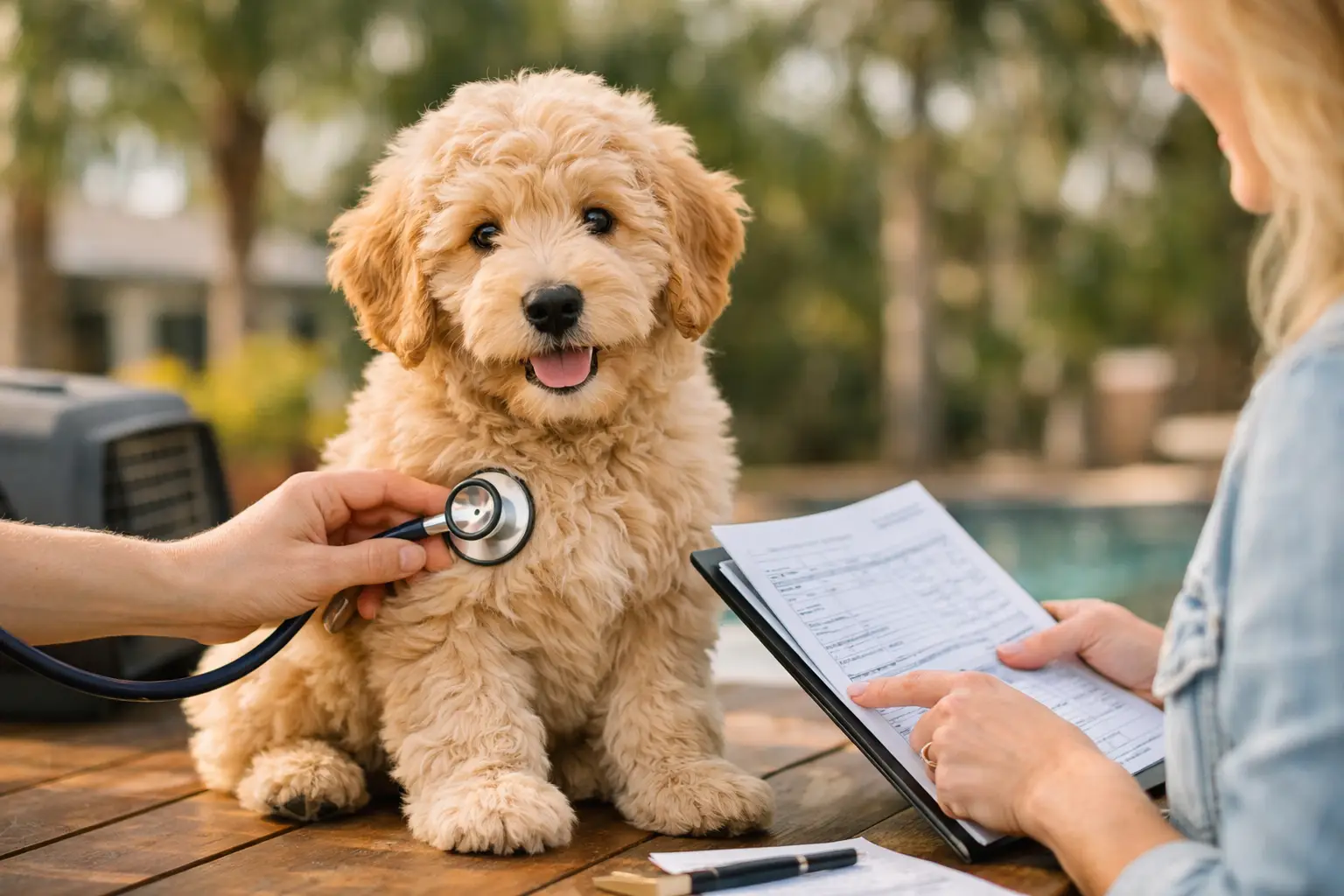
A puppy’s little wagging tail and sweet face can make it easy to get caught up in the excitement. I understand that feeling completely. But before you bring a new puppy home, taking time to verify puppy health records is one of the kindest and smartest things you can do for your future family member.
Health paperwork is not just a folder to tuck away after pickup day. It tells part of your puppy’s early story: the veterinary care they have received, the vaccines they have had, and the health steps their breeder has taken before placing them in your arms. A caring breeder should welcome your questions and be happy to explain every document clearly.
Why Puppy Health Records Matter
A healthy beginning does not promise that a dog will never get sick. Puppies, like people, can still have unexpected health needs as they grow. What good records can show is that your puppy has received appropriate early care and that the breeder has been responsible, honest, and proactive.
For families, especially first-time dog owners, paperwork can also make the transition home easier. Your own veterinarian will need to know which vaccines your puppy has received and when the next ones are due. Clear records help avoid missed doses, unnecessary repeat vaccines, and confusion during those busy first weeks.
When I place a puppy with a family, I want them to feel informed rather than rushed. Asking about records is not being difficult or distrustful. It is part of responsibly preparing for a puppy who will become a beloved member of your home.
How to Verify Puppy Health Records Before You Commit
Start by asking to see the records before pickup day whenever possible. You do not need to be a veterinarian to look through them. You simply need to know what information should be present and be comfortable asking for clarification when something does not make sense.
Look for the puppy’s identifying details
The paperwork should clearly connect to the puppy you are considering. Look for the puppy’s date of birth, breed or description, sex, and coat color when listed. If the puppy has been microchipped, the microchip number should be included in the records or given to you separately.
Names can occasionally change as puppies move from breeder names to their forever-home names, so that alone is not a concern. Still, the dates and identifying information should fit the puppy’s age and match what the breeder has told you.
Review the vaccination record
A proper vaccination record should include the date each vaccine was given, the name of the vaccine, and information identifying the veterinary office or person who administered it. Puppies are usually given a series of age-appropriate vaccines because their young immune systems need time to build protection.
Do not expect a very young puppy to have completed every vaccine in the series. In fact, that would not be typical. The key is whether the puppy has received the vaccines appropriate for his or her age and whether you are given a clear plan for the remaining doses with your own veterinarian.
Ask whether the puppy has received a DHPP or similar core puppy vaccine, which commonly protects against diseases such as distemper and parvovirus. Rabies is generally given later, based on your veterinarian’s guidance and local requirements. A breeder should never suggest that your puppy is fully protected and ready for high-risk public spaces before the vaccine series is complete.
Check deworming information
Deworming is a normal part of responsible puppy care. Even puppies raised in a clean, loving home may need routine deworming because intestinal parasites can be passed from a mother dog to her puppies.
The record should show the dates of deworming and, ideally, the medication used. Your veterinarian may recommend follow-up testing or treatment after your puppy comes home. That is not necessarily a sign anything was done wrong. It is simply good preventive care for a growing puppy.
Ask for the veterinary wellness exam
A veterinary exam is one of the most reassuring records a new puppy family can receive. The document may be called a health certificate, wellness exam, veterinary examination record, or certificate of veterinary inspection. Names vary, but it should show that a licensed veterinarian examined the puppy.
Review the exam date carefully. A recent examination is generally more meaningful than one performed many weeks before pickup. The record may include notes about the puppy’s heart, lungs, eyes, ears, skin, bite, joints, abdomen, and overall condition.
A minor note does not automatically mean you should walk away. Puppies can have small concerns that are monitored, explained, or resolved as they mature. What matters is openness. I believe families deserve to know what the veterinarian observed, what it means, and whether any follow-up is recommended.
Parent Health Testing Deserves Equal Attention
Puppy records tell you about the care a puppy has received so far. Parent health testing gives you important information about the thoughtful decisions behind the litter.
For Goldendoodles, responsible breeding should involve health testing appropriate to the parent breeds. Depending on the dogs and their lines, this may include genetic screening as well as evaluations for concerns such as hips, elbows, eyes, heart health, or patellas. Not every test applies to every dog in the same way, particularly when comparing Standard and Toy Goldendoodles, so it is fair to ask which testing was completed and why.
Ask to see documentation rather than relying only on a verbal assurance that the parents are healthy. A responsible breeder should be able to explain the results in plain language. Genetic testing can help breeders avoid pairing dogs in ways that could create a higher risk for certain inherited conditions, but it cannot predict every future health issue. Honest conversations leave room for that reality.
At Shalom Goldendoodles, I see parent health testing as part of caring for future puppies long before they are born. Families are trusting me with a puppy who will grow up alongside their children, share their daily routines, and become part of their memories. That trust matters deeply to me.
Questions a Caring Breeder Should Welcome
A breeder who truly puts puppies first should not pressure you to stop asking questions. You should feel comfortable asking who performed the vet exam, when the next vaccines are due, whether there were any concerns during the exam, and what health testing was completed for the parents.
You can also ask how the puppies have been raised and socialized. Records are essential, but they are only one part of a healthy start. A puppy raised inside a family home with gentle daily handling, everyday household sounds, and loving interaction has a different early experience than one raised with little individual attention.
Pay attention to how the breeder responds. Clear answers, organized paperwork, and a willingness to talk through the details are all encouraging signs. If you feel rushed, dismissed, or discouraged from contacting the veterinarian listed on a record, pause before moving forward.
Red Flags to Take Seriously
Some concerns deserve more than a quick explanation. Be cautious if a breeder cannot provide written vaccination or deworming dates, offers paperwork with missing puppy details, or gives records that appear altered or inconsistent with the puppy’s age.
It is also concerning when a breeder claims a puppy needs no further veterinary care, says every health issue can be guaranteed away, or refuses to discuss parent testing. No breeder can honestly promise a lifetime without medical surprises. What they can offer is responsible breeding, appropriate early care, transparency, and support.
A very low price paired with vague records can be another reason to slow down. Bringing home a puppy is a meaningful investment of love, time, and responsibility. Choosing based only on the lowest price can lead to painful surprises later.
Take the Records to Your Own Veterinarian
Even after you carefully verify puppy health records, schedule a new-puppy visit with your own veterinarian shortly after bringing your puppy home. This visit gives your family a baseline exam, lets your veterinarian review the paperwork, and provides a chance to discuss feeding, parasite prevention, vaccine timing, training, and any questions you noticed after pickup.
Bring every document you received, including vaccination records, deworming information, the wellness exam, microchip details, and any health guarantee paperwork. Keep copies in a folder or take clear photos for backup. You will be glad to have everything together when your puppy needs future care, boarding, grooming, or travel documentation.
The right puppy should come with more than excitement. They should come with a caring beginning, clear information, and people who want to help your family feel prepared. When you take the time to ask questions and review the records, you are already showing your new puppy the thoughtful love they deserve.