

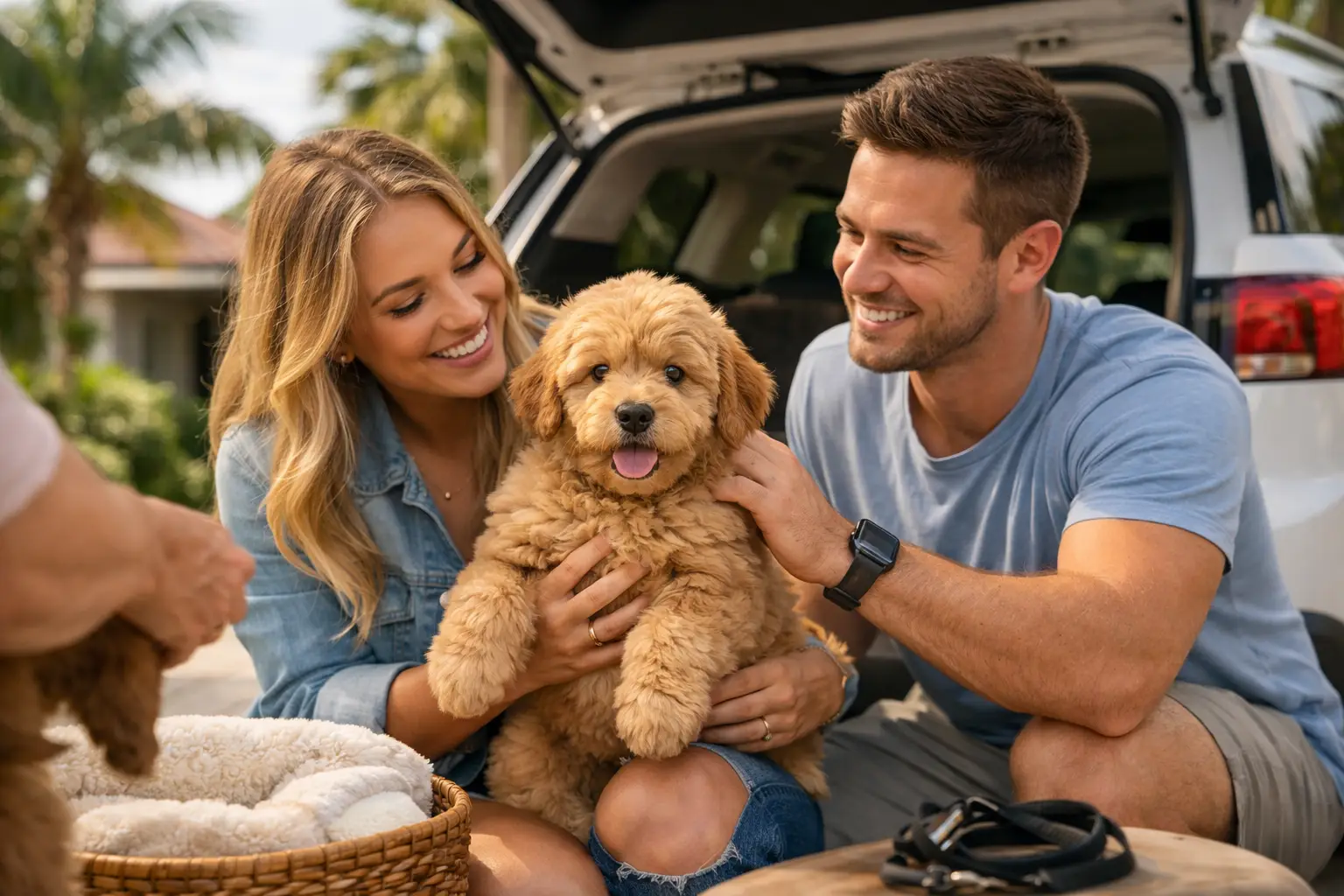
The drive home is often the moment when it all becomes real: the tiny paws, the warm puppy breath, and the sweet little face that is now part of your family. A thoughtful puppy pickup day step by step plan helps keep that exciting day calm for your new puppy and less overwhelming for everyone else. Your puppy is leaving the only home, routine, smells, and littermates they have known, so a gentle beginning matters more than a picture-perfect schedule.
I raise my puppies inside my home with daily love, handling, and household experiences, and I want each one to feel secure as they begin life with their forever family. You do not have to do everything perfectly on pickup day. Your job is simply to help your puppy feel safe, rested, and welcomed.
Before You Leave: Prepare for a Quiet First Day
Try to finish your shopping and setup before pickup day. It is much easier to focus on your puppy when you are not making an extra stop for food or searching for a crate after you get home. Pick one calm area of the house for the crate, bed, water, and a few safe toys. A crate or puppy pen in a family living space is often ideal because your puppy can be near you without having the full house to explore.
For the first week, keep the area simple. Too much freedom too soon can lead to accidents, chewing, and an overtired puppy who does not know where to settle. If you have children, let them know that their new friend will need gentle voices, soft hands, and lots of naps.
Bring these basics with you for pickup:
- A secure crate for the car, lined with a towel or washable bedding
- Paper towels and a small bag for unexpected messes
- A harness or collar and lightweight leash, if recommended for your puppy
- Water and a small bowl for a longer drive
- A familiar blanket or soft item your breeder has sent home
A crate is usually the safest way for a puppy to travel. Holding a puppy in someone’s lap may feel loving, but a sudden stop can be dangerous. For a very short ride, some families use a secured travel carrier. The best choice depends on your vehicle and your puppy’s size, but safety should come first.
At Pickup: Keep the Goodbye Gentle
Pickup is a happy occasion, and I love seeing families meet the puppy they have waited for. Still, it helps to keep the visit calm rather than turning it into a big celebration. Your puppy may be curious and playful at first, or they may be sleepy and a little unsure. Both reactions are completely normal.
Take time to go over the puppy’s records, feeding routine, veterinary information, and the items included with your puppy. Ask questions while you are there. Write them down beforehand if you tend to forget details when you are excited. You should leave knowing what food your puppy has been eating, how much to offer, when meals are served, and what next steps are recommended for veterinary care.
When it is time to leave, say your goodbyes without stretching them out. Your puppy will notice the change, but a calm, confident transition reassures them. Place them safely in the crate or carrier, speak softly, and begin your trip home.
Puppy Pickup Day Step by Step for the Drive Home
Start with a potty break just before you get in the car. Then keep the ride as quiet as you can. It is tempting to bring the whole family, especially when everyone is eager to meet the puppy, but a smaller pickup group is often easier on a young dog. If several children come along, ask them to use indoor voices and give the puppy space to rest.
Your puppy may sleep all the way home, whine for a few minutes, or become carsick. None of this means anything is wrong with your bond. Motion sickness and stress can happen during a puppy’s first car ride. Keep the car cool, avoid a big meal immediately before travel if you have a long drive, and drive smoothly.
For trips longer than a couple of hours, plan quiet potty breaks in a low-traffic, clean area. Until your veterinarian advises otherwise, avoid high-dog-traffic places such as dog parks, pet store floors, and busy rest-stop grass. Young puppies are still building protection through their vaccination schedule. Carrying your puppy to a private spot or using a clean, controlled area is the safer choice.
Do not worry if your puppy does not drink much during the drive. Offer water at breaks, but do not force it. Once you are home and settled, fresh water should be available.
Arrive Home With One Simple Plan
Before anyone carries bags inside or starts taking photos, bring your puppy to their potty area. Stand quietly and give them a few minutes. If they go, offer warm praise right away. This first little success helps begin the routine you will repeat many times each day.
Next, bring your puppy into the home and show them only the space you have prepared. Let them sniff around at their own pace. A puppy does not need a tour of every bedroom, closet, and hallway on day one. A smaller area feels more understandable and makes potty training easier for you.
If you have other pets, introductions should be slow and supervised. A friendly adult dog may still feel confused by a bouncy puppy, while a puppy may be intimidated by a large or eager dog. Start outdoors or in a neutral, roomy space when possible. Keep leashes loose, watch body language, and separate them for breaks. They do not need to become best friends in the first hour.
Children should be invited to sit on the floor rather than crowd around the puppy. Let the puppy approach them. Remind children not to pick up the puppy, chase them, or disturb them while eating and sleeping. This protects both your child and your puppy while trust is growing.
Feed, Potty, Rest, Repeat
Many new families expect pickup day to be full of play. In reality, your puppy may be tired from travel and the big change. Offer the same food your puppy has been eating, in the amount and schedule you were given. A sudden switch in food on the first day can upset a puppy’s stomach, even when the new food is high quality.
After eating, drinking, waking up, or playing, take your puppy to the potty spot. These are the moments when puppies most often need to go. If an accident happens inside, clean it without scolding. Your puppy is learning a brand-new home and has a very small bladder. Quiet consistency will teach far more than punishment ever could.
Keep visitors away on the first day if you can. Grandparents, neighbors, and friends will be excited, but your puppy needs time to decompress. One or two immediate family members at a time is plenty. You will have years for introductions. The first 24 hours are for rest, routine, and connection.
Your First Night Together
The first night can be the hardest part emotionally, especially if your puppy has always slept near littermates. Set the crate close to your bed so your puppy can hear and smell that you are nearby. This does not spoil a puppy. It helps them adjust to a major transition while you begin building trust.
Take your puppy out for a potty break right before bed. Young puppies often need overnight potty trips, so set an alarm rather than waiting for crying to become intense. Keep nighttime trips boring: low lights, a quick potty break, gentle praise, then back to the crate. No games, no long cuddles, and no household tour at 2 a.m.
Some whining is common in the first few nights. Pause for a moment to decide whether your puppy may need to potty, but avoid teaching them that every sound leads to playtime or being released to roam. Consistency is kind. Each calm return to the crate teaches your puppy that this new space is safe.
Give Yourself Permission to Go Slowly
The best pickup day is not the one with the most photos or the most activities. It is the one where your puppy begins to understand that food arrives, people are gentle, naps are protected, and they are not alone. Whether you are bringing home a Standard or Toy Goldendoodle, your puppy’s personality will unfold over time. Some settle in quickly, while others need several quiet days before their playful side appears.
I always encourage my puppy families to reach out when they need reassurance. A new puppy is a joyful adjustment, and questions are part of loving them well. Keep the first day simple, be patient with the little bumps, and let your new companion set the pace as they learn that home is a safe place to be.