

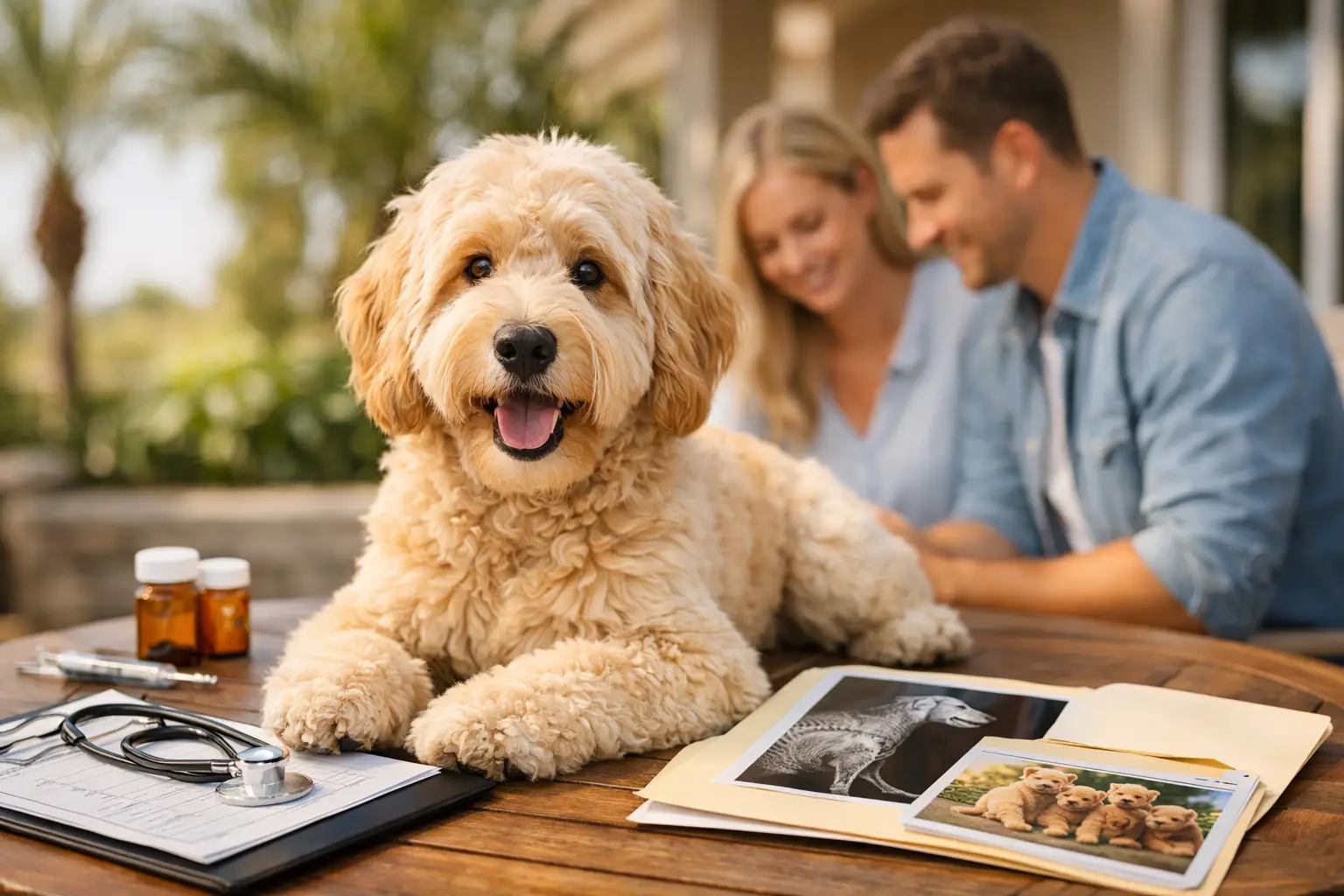
A puppy’s bright eyes and soft coat may be what first captures your heart, but breeder health records are where you learn how that puppy has been cared for long before pickup day. These records are not just paperwork. They are part of the story of your future family member – the care they received, the health information behind their parents, and the steps taken to give them a strong beginning.
As a breeder, I believe families deserve to ask questions and receive clear, honest answers. Bringing home a Goldendoodle is a joyful decision, but it is also a long-term commitment. Knowing what health records to look for helps you choose with both your heart and your head.
Why breeder health records matter
Health records give families a clearer picture of a puppy’s start in life. They can show when a puppy was examined, which routine preventives or vaccinations were given, and whether there were any concerns discussed with a veterinarian. Just as importantly, they help demonstrate that a breeder treats health care as an ongoing responsibility rather than a last-minute item before puppies go home.
No record can promise that a dog will never become sick. Dogs are living beings, and genetics, environment, nutrition, activity, and simple chance all play a role throughout a lifetime. What good documentation can show is that thoughtful steps were taken before a puppy joined your family.
For families, especially first-time dog owners, the value is also practical. Your veterinarian will want to know what care your puppy has already received so they can recommend the right schedule for the next vaccinations, parasite prevention, and wellness visits. Organized records make that first appointment much easier.
The records a responsible breeder should be ready to discuss
Not every breeder presents paperwork in exactly the same format, and veterinary recommendations may differ based on a puppy’s age and individual needs. Still, there are several areas families should expect to discuss openly.
Parent dog health testing
A puppy’s health story begins with the dogs chosen for breeding. Responsible breeding means considering temperament, structure, family history, and appropriate health screening for the parent dogs. Depending on the breeds involved and the individual dogs, testing may include genetic screening and evaluations related to hips, elbows, eyes, heart health, or other inherited concerns.
For Goldendoodles, it is wise to ask about the health background of both the Poodle and Golden Retriever lines. An F1B Goldendoodle has a Goldendoodle parent and a Poodle parent, so understanding both sides matters. The goal is not to hear that a breeder has a long list of tests for show. The goal is to understand how health information was used thoughtfully when planning a litter.
A clear conversation should include what tests were completed, what the results mean, and how any findings were considered. Some genetic results do not automatically mean a dog cannot be bred. In certain cases, responsible pairing decisions can prevent a puppy from being affected. That is why context matters more than a quick yes-or-no answer.
Veterinary examinations for the puppy
Before a puppy goes home, a veterinary wellness examination is an important part of responsible care. The record from that visit may include the puppy’s weight, overall condition, heart and lung sounds, eyes, ears, teeth, skin, abdomen, and other basic findings. It may also document any recommendations from the veterinarian.
Families should feel comfortable asking when the examination took place and whether there is anything they should follow up on with their own veterinarian. A small note on a puppy record does not always mean a serious problem, but it should never be hidden. Honest communication builds trust and helps families give their puppy the care they need.
Vaccination and deworming history
Young puppies receive care in stages. Their age at pickup will affect which vaccinations and deworming treatments have already been given and which ones are still due. A record should clearly state the dates, products, and doses when applicable.
Your veterinarian should guide the rest of your puppy’s vaccination schedule after they come home. Families should avoid assuming that one set of puppy vaccines means full protection. Puppies need a series of vaccinations at carefully timed intervals, and they should be protected from unnecessary exposure to illness until their veterinarian says it is safe.
Microchip information and identification
Microchipping gives a puppy a permanent form of identification that can be especially valuable if they are ever lost. If a puppy is microchipped, families should receive the chip number and clear instructions for registering or transferring the information into their name.
A microchip works best when the registration is current. It is a simple task that can make a tremendous difference if a curious dog slips through a gate or gets separated from family during travel.
Health guarantee and contract details
A health guarantee is separate from a veterinary record, but the two should make sense together. Families should read the agreement carefully before placing a deposit or bringing a puppy home. It should explain what is covered, how long coverage lasts, what documentation may be required if a concern arises, and what responsibilities belong to the new owner.
At Shalom Goldendoodles, I want my puppy families to feel informed rather than rushed. A two-year health guarantee, veterinary records, and open conversation are all part of helping families begin with confidence. A guarantee is not a replacement for routine care, but it is a meaningful sign that a breeder stands behind the puppies they raise.
Questions worth asking before you commit
The best breeders welcome respectful questions because they care where their puppies go. You do not need to be an expert to have a good conversation. Ask which health tests were completed on the parents, whether you can review the relevant records, when the puppy was seen by a veterinarian, and what care will be due after pickup.
It is also helpful to ask how puppies are raised day to day. Health is more than test results. A clean home environment, appropriate nutrition, early handling, gentle socialization, and careful observation all shape a puppy’s early well-being. A puppy raised inside a family home is exposed to the everyday sounds, routines, and loving interaction that can help them adjust more confidently to family life.
Pay attention not only to the answer but also to the spirit of the conversation. A caring breeder should be able to explain records in understandable language, acknowledge what cannot be guaranteed, and remain available when questions come up. Be cautious if someone refuses to share documentation, pressures you to decide immediately, or makes promises that sound too perfect to be true.
How to use the records after your puppy comes home
Keep your puppy’s paperwork in one safe place, whether that is a folder, binder, or a scanned digital file. Bring it to the first veterinary appointment, ideally within the timeframe described in your contract or recommended by your breeder. Your veterinarian can review the records, perform their own examination, and help you plan the next steps for vaccines, prevention, nutrition, and growth.
This is also the time to establish the habits that protect your puppy over the years ahead. Follow veterinary guidance, keep identification current, use appropriate parasite prevention, feed a quality diet, and keep up with routine checkups. For Standard or Toy Goldendoodles, maintaining a healthy body condition and age-appropriate exercise is particularly helpful as they grow.
If something in the records is unclear, ask. There is no such thing as an embarrassing question when you are learning to care for a new puppy. The first weeks can be exciting, tiring, and full of little surprises, especially with children in the home. Having accurate information gives you one less thing to worry about.
Health records are part of a relationship
Families sometimes think paperwork is the least exciting part of choosing a puppy. I understand that. The cuddles, puppy photos, and first trip home are the moments everyone remembers. Yet breeder health records reflect something deeply meaningful: the responsibility a breeder accepts before that puppy ever meets their forever family.
A well-raised Goldendoodle deserves a healthy start, thoughtful care, and a family ready to love them for life. When records are clear and conversations are honest, you can focus on the best part – welcoming a beloved companion into your home and watching their personality bloom.