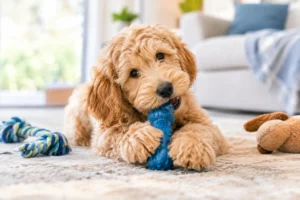

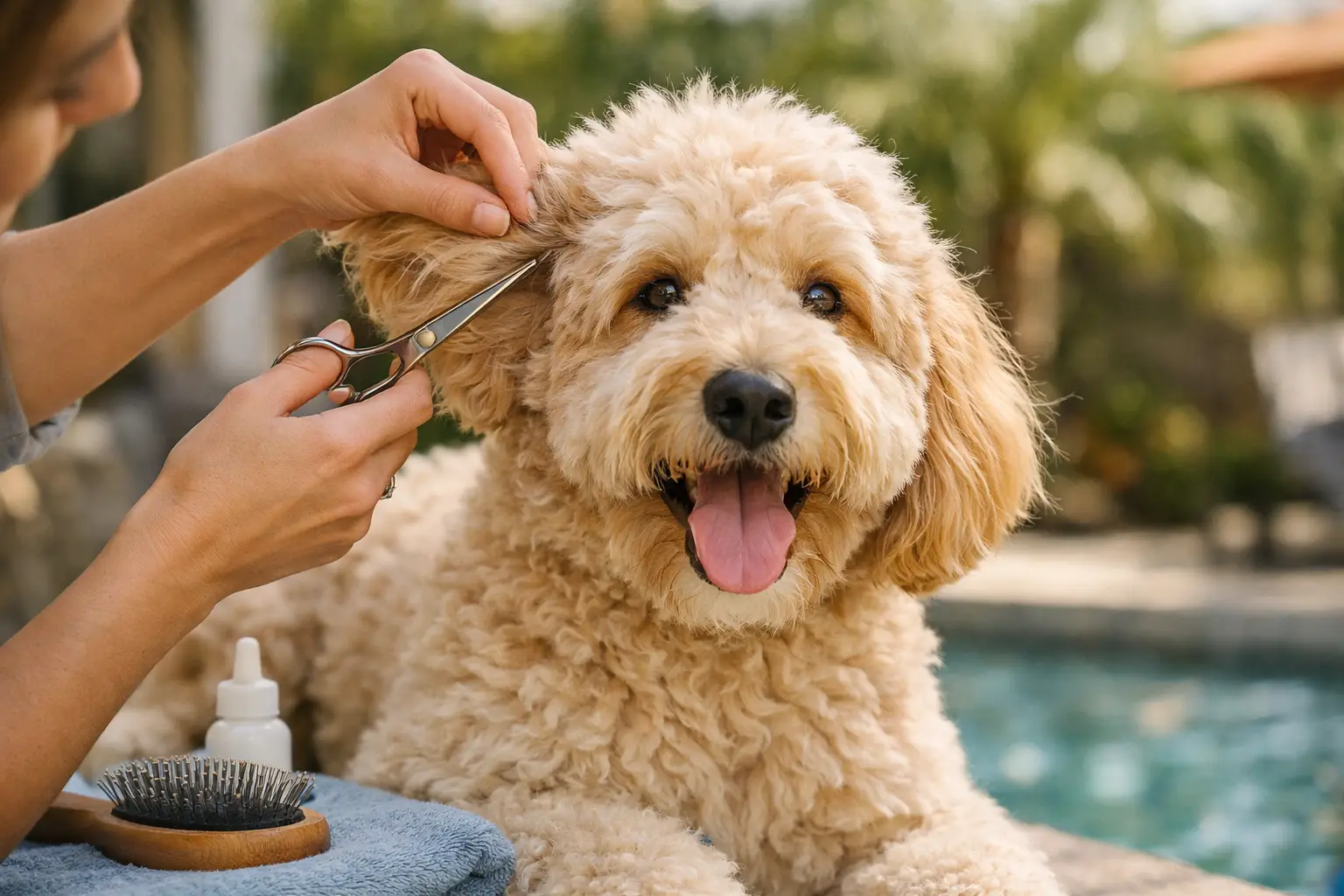
Those soft, fluffy Goldendoodle ears are one of the sweetest things about the breed, but they can also hide tangles, dampness, and irritation. Learning how to groom Goldendoodle ears is a simple part of keeping your dog comfortable, especially for families with curly or wavy-coated doodles. A little gentle routine at home can help prevent painful mats and make professional grooming visits much easier.
I encourage families to begin ear handling when their Goldendoodle is still a puppy. The goal is not to turn grooming into a big production. It is simply to teach your dog that having their ears lifted, touched, and brushed is a calm, normal part of family life.
Why Goldendoodle ear grooming needs extra attention
Goldendoodles often have hair that grows around and sometimes just inside the opening of the ear. Their floppy ears also cover the ear canal, reducing airflow. When loose hair, wax, water, or dirt get trapped beneath that ear flap, the warm and humid environment can become uncomfortable quickly.
This does not mean every Goldendoodle will have ear problems. Coat type, swimming habits, allergies, skin sensitivity, and how much hair grows around the ears all make a difference. Still, regular checks are especially worthwhile for doodles because mats can form behind the ears before a family even notices them.
Ear mats are more than a cosmetic problem. A tight mat can pull on the skin, hold moisture close to the ear, and make brushing painful. The skin behind the ear and at the base of the flap is delicate, so it is much kinder to catch small tangles early than to try to work through a large, tight mat later.
What you need before you begin
You do not need a cabinet full of supplies to care for your Goldendoodle’s ears at home. A quality slicker brush, a metal comb, clean cotton rounds or gauze, dog-safe ear cleaner recommended by your veterinarian, and a towel will cover most routines.
For trimming the hair around the ear leather and opening, many families are most comfortable leaving the actual haircut to a professional groomer. If you do choose to tidy visible hair at home, use blunt-tip grooming scissors and work slowly in a bright, calm area. Never point scissors toward your dog’s skin or ear canal, and never cut a mat that is sitting close to the skin. Mats can pull skin upward, making an accidental cut far too easy.
Avoid cotton swabs inside the ear canal. They can push debris farther down and can hurt your dog if they move suddenly. Also skip alcohol, hydrogen peroxide, essential oils, or homemade mixtures unless your veterinarian has specifically directed you to use them.
How to groom Goldendoodle ears at home
Choose a time when your dog is relaxed, perhaps after a walk or during an evening cuddle. A non-slip mat, a few small treats, and a gentle voice can make a big difference. If your Goldendoodle becomes worried, take a break. Grooming should build trust, not become a battle.
Start by looking and smelling
Lift one ear flap and take a quick look at the skin and the visible entrance to the canal. Healthy ears are generally clean, light pink or skin-colored, and free from strong odor. A little wax can be normal, but heavy buildup, dark debris, redness, swelling, discharge, or a sour or yeasty smell deserves a call to your veterinarian.
Notice your dog’s response as well. If they pull away, cry, scratch at the ear, shake their head often, or seem unusually sensitive when you touch one side, do not push through the grooming session. Those signs can point to discomfort that needs professional attention.
Brush the outer ear and the area behind it
With one hand supporting the ear flap, use a slicker brush to gently brush the hair on the outside of the ear. Work in small sections, beginning near the ends of the hair and moving toward the base. This approach prevents you from tugging down on knots.
Then focus on the area behind and underneath the ear, where mats form most often. Follow the slicker brush with a metal comb. If the comb glides through to the skin without catching, you are in good shape. If it snags, hold the hair near the skin with your fingers to reduce pulling and gently separate the tangle a little at a time.
A small loose tangle may come out with patience. A dense mat, especially one that feels tight against the skin, should be handled by a groomer. Trying to comb out a severe mat can be painful for your dog and may create a lasting fear of being touched around the ears.
Clean only what you can safely reach
If your dog’s ears look clean and have no odor, you may not need to use cleaner at every grooming session. Over-cleaning can irritate some dogs. For a dog that swims often, gets frequent baths, or tends to build up wax, your veterinarian may recommend a more regular cleaning schedule.
When cleaning is appropriate, place the ear cleaner at the entrance of the canal according to the product directions. Gently massage the base of the ear for several seconds. You may hear a soft squishing sound, which is normal. Then let your dog shake their head and use a cotton round or gauze to wipe away loosened debris from the ear flap and the visible opening.
Do not reach down into the canal. If there is material you cannot wipe away easily, that is a job for your veterinarian.
Keep the ear area dry after water fun
Goldendoodles often love swimming, sprinklers, puddles, and bath time. Here in Florida, warm weather makes water play a regular part of life for many families. After a swim or bath, gently towel-dry the outer ear and lift the flap so air can reach the area.
You do not need to aggressively dry inside the canal. The goal is simply to remove water from the visible folds and hair around the ear. If your dog swims frequently or has had ear infections before, ask your veterinarian whether a drying product is appropriate for their individual needs.
Should you pluck hair from a Goldendoodle’s ears?
This is one area where advice can vary. Some Goldendoodles grow very little hair at the ear opening, while others grow more. In the past, routine ear-hair plucking was common for many floppy-eared breeds. Today, many veterinarians and groomers prefer not to pluck routinely because pulling healthy hair can irritate the skin and may cause inflammation.
I recommend letting your veterinarian guide this decision for your specific dog. If your Goldendoodle has repeated ear trouble, excessive hair blocking airflow, or a condition that needs special care, your vet may recommend a certain approach. Do not pull hair from deep inside the ear canal at home just because you see a few hairs near the opening.
A groomer can neatly trim excess hair around the ear opening and outer ear shape, which often helps keep the area easier to inspect and brush without unnecessarily irritating the canal.
Build a routine that fits your dog’s coat
For most Goldendoodles, a quick ear check once a week is a wonderful habit. Run your fingers behind the ears, brush through the outer hair, and look for changes in odor or skin color. This takes only a few minutes and is often enough to catch early tangles.
A more thorough clean and trim may be needed every few weeks, depending on your dog’s coat, lifestyle, and grooming schedule. Curly F1B Goldendoodles can mat faster than families expect, particularly during puppy coat changes and in humid weather. Dogs with straighter, looser coats may need less frequent brushing, but they still benefit from weekly checks.
Professional grooming every four to eight weeks is common for many Goldendoodles, though the right timing depends on coat length and the family’s home brushing routine. A short practical haircut can make ear maintenance easier, while a longer teddy-bear style is beautiful but requires more consistent combing.
When to call the veterinarian
A groomer can help with coat care, but an ear infection or painful ear issue needs veterinary care. Contact your veterinarian if you notice a strong odor, redness, swelling, discharge, dark or unusual debris, repeated head shaking, ear scratching, crying when touched, or a sudden tilt of the head.
Please do not try to treat suspected infection with leftover medication or over-the-counter drops without guidance. Ear problems can have different causes, including yeast, bacteria, mites, allergies, or a foreign object. The right treatment depends on what is actually happening inside the ear.
The best ear-care routine is the one your Goldendoodle can learn to trust. Keep the sessions short, offer praise, and let those soft ears be part of the everyday affection you share. With gentle attention and early care for small tangles, your companion can stay clean, comfortable, and ready for every family cuddle.